As an Amazon Associate, we earn from qualifying purchases. Some links on this site are affiliate links at no extra cost to you. Our recommendations are based on thorough research and editorial judgment.


Why Some Batteries Get Warm During Charging

Batteries warm during charging primarily due to internal resistance, which causes power loss as heat proportional to the square of the charging current (P = I²R), with surface temperatures often exceeding 45°C during fast charging or elevated ambient temperatures above 35°C. Aging batteries generate up to 30% more heat because increased resistance raises I²R losses, while inefficient chargers add thermal stress by wasting energy. Effective thermal management and regulated charging profiles mitigate these effects. Further details explore how battery condition and temperature factors impact heat generation.
Key Takeaways
- Internal resistance causes heat generation as electric current flows through the battery during charging.
- Higher charging currents increase heat due to power loss proportional to the square of the current (P = I²R).
- Aging and degraded batteries have increased internal resistance, leading to more warmth during charging.
- Inefficient chargers produce excess heat by delivering current that doesn’t efficiently store energy in the battery.
- Elevated ambient temperature and nearing full charge reduce heat dissipation, causing batteries to warm during charging.
What Causes Batteries to Heat Up During Charging
Although many users assume batteries simply store electrical energy during charging, internal resistance within the battery components causes power loss that manifests as heat, which increases as charging current intensifies, following the formula P = I²R. This heat emerges when current flows through electrodes and electrolyte, with lithium batteries particularly susceptible to higher temperatures due to their chemistry and internal structure. Charging efficiency decreases as the battery nears full capacity, diverting surplus electrical energy into thermal energy rather than chemical storage. Elevated charging currents exacerbate this effect, leading to escalated heat production that may surpass safe temperature thresholds of 40°C, highlighting the importance of regulated charging profiles. Consequently, the combined influence of electrical resistance, battery type, and charging current determines the extent of heat generated during the charging process, underscoring the need for efficient thermal management to preserve performance. Advanced chargers with dynamic thermal sensors can adjust charging rates based on temperature to prevent overheating and improve battery longevity.
The Role of Internal Resistance in Battery Heating
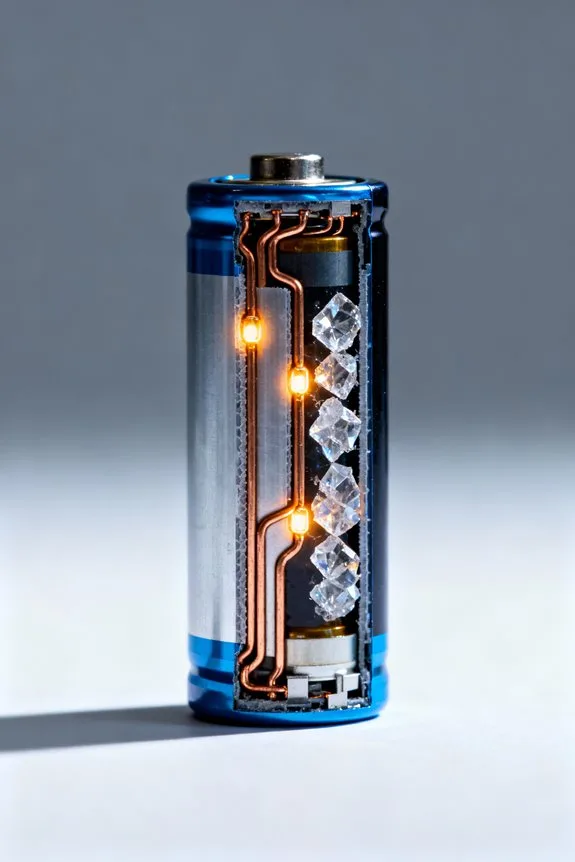
When current flows through a battery, internal resistance generates heat according to the formula P = I²R, where power loss increases with the square of the current, making high charging currents particularly impactful; for example, a resistance of 77 milliohms combined with a 17-ampere current can produce approximately 22.3 watts of heat. This heat generated reduces charging efficiency, as more electrical energy converts into thermal energy rather than chemical storage. Internal resistance typically increases due to battery aging, causing more pronounced heating during both charging and discharging cycles. Excessive heat can accelerate degradation, raising the risk of thermal runaway—a hazardous condition where temperature uncontrollably escalates. Monitoring internal resistance offers essential insight into battery health, enabling early detection of aging or faults that may compromise safety and performance during charging. Proper storage in cool, dry places can help maintain low internal resistance and minimize heating effects during charging.
Recommended Products

【Elite 314Ah Capacity Upgrade】 Stop settling for smaller cells. The DATOUBOSS 314Ah LiFePO4 battery delivers triple the energy of standard 100Ah units. With 64 kWh of total energy, this kit is the perfect foundation for high-performance DIY solar projects, RV bus conversions, or off-grid cabins.

【Top-Flight Performance 】The 51.2V 100Ah liFePO4 battery is manufactured by 16Pcs Automotive Grade A grade prismatic cells with higher energy density, more stable performance & greater power. And has a compact 5.12kWh energy, which is equivalent to 4pcs 12V 100Ah LiFePO4 batteries in 4S (or even 8pcs 12V 100Ah AGM batteries in 8S).

【New Version Upgrades – WiFi Monitoring & Fire Suppression】 Upgraded with WiFi remote monitoring in addition to Bluetooth app control, allowing you to check battery status anytime and anywhere once WiFi is configured. Built-in fire suppression and anti-explosion protection activates within milliseconds when temperature exceeds 170°C (338°F)—helping suppress thermal runaway and extinguish flames before risks escalate
Effects of Charger Efficiency on Battery Temperature
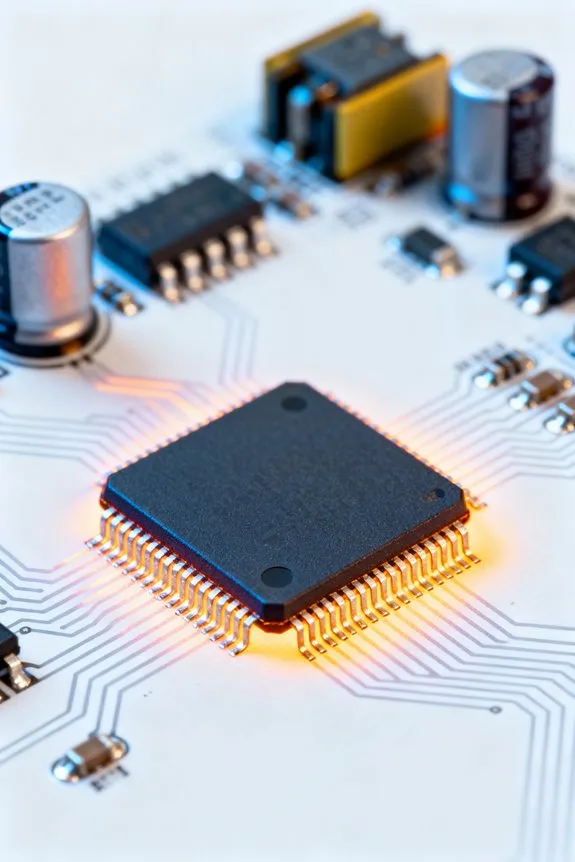
Since charger inefficiencies contribute substantially to thermal output during battery charging, the conversion of electrical energy to heat—such as the observed dissipation of approximately 22.253 Watts in an IRF540PBF-ND MOSFET operating at 17 amperes—plays an essential role in elevating both the charger’s and the battery’s temperature. Lower charger efficiency results in increased power losses, which manifest as heat, raising the overall temperature throughout the charging system. During charging the battery, inefficiencies cause the charger to deliver excess current that does not contribute to energy storage, especially as the battery nears full charge, heightening the risk of overheating. Effective battery management systems monitor charger efficiency and regulate power delivery, mitigating temperature spikes to prevent damage and extend battery lifespan. Poor charger designs lacking these controls more readily induce unsafe temperature increases. Additionally, advances in energy efficiency technologies are critical in reducing such heat generation during charging processes.
Recommended Products

Quick-release CCU docking system for fast, efficient job set-up

【High - Power Generation Capacity】This 5500W system can generate 22Kwh power per day under 4 hours' full sunshine, perfect for home, shed, cabin, farm or as other energy backup. They can also provide enough power for portable AC, air condition, TV, refrigerator, coffee maker, microwave and other devices

COMMERCIAL-GRADE POWER WITH 41HP GAS EQUIVALENT: Dominate large properties with the most powerful electric zero-turn in its class . Powered by advanced brushless motor technology delivering 41HP equivalent power and instant torque—without the noise, fumes, or maintenance of gas engines .
How Battery Chemistry Influences Heat Generation
A substantial variety of battery chemistries influence heat generation during charging due to their distinct electrochemical properties, internal resistances, and energy conversion efficiencies, with lithium-ion cells, for example, exhibiting internal resistances typically ranging from 0.05 to 0.2 ohms that increase as the battery degrades, consequently producing heat proportional to the square of the current (P = I²R). During charging, lithium-ion batteries absorb heat through endothermic reactions but simultaneously experience rises in battery temperature as internal resistance converts electrical energy into thermal energy. Compared to lead-acid batteries, which generate more heat due to lower conversion efficiency, lithium-ion types offer improved thermal profiles. Nevertheless, heat generation intensifies as state of charge nears full capacity, with elevated charging currents accentuating internal resistance losses and raising battery temperature during the charging process. Choosing batteries with waterproof designs can enhance safety by reducing risks associated with overheating caused by environmental factors.
Signs That a Battery Is Overheating
Although batteries are designed to operate within specific temperature ranges, observable symptoms such as surface temperatures exceeding 45°C during standard charging cycles, deformation manifesting as swelling greater than 2 millimeters in thickness, or the detection of smoke or unusual odors serve as clear indicators of overheating. High temperatures typically correlate with increased internal resistance, which impairs battery performance by reducing efficiency and slowing charging speeds. Additional signs include bulging at connection points, which suggests elevated internal pressure and potential overcharging conditions contributing to overheating. Moreover, compromised charging or discharging rates often underscore thermal stress impacting chemical stability inside the cell. Monitoring these quantitative and qualitative signs helps identify batteries operating beyond safe thermal thresholds, enabling timely intervention before accelerated degradation or malfunction occurs. Using a battery tester can help detect early signs of battery weakness due to overheating, providing accurate diagnostics to prevent further damage.
Recommended Products

Provides Clean and Reliable Power, MSP-070-5, 12V power supply charger.

XTOOL Elite OBD2 Diagnostic Tool for Professionals & DIYers: D9S PRO is an advanced diagnostic scanner built for ECU pr0gramming and c0ding. Delivers full system diagnostics with 45 services and 4K+ bidirectional controls for comprehensive diagnostic and maintenance. Supports FCA/DoIP/CAN FD for fast, stable communication with modern vehicles. Features topology map and 8 Pids live data for structured module display and real-time multi-parameter analysis. Supports pre/post scan and customizable reports (printable/shareable). Covers 150+ brands and supports accessories for flexible performance expansion. Added AI assistant analyzes reports and provides repair suggestions (for reference only)

[6X Faster than Regular Car Chargers] - With Charger 1, charges the Elite 200 V2 portable power station at a maximum 560W input, 6X faster than traditional car chargers (<100W), delivering uninterrupted portable power on the go.
Risks Associated With Excessive Battery Heat
Numerous studies have demonstrated that battery temperatures surpassing 45°C during charging cycles greatly accelerate capacity degradation and reduce cycle life, with lithium-ion cells exhibiting capacity losses exceeding 20% after continuous exposure to such heat levels over 100 cycles; this thermal stress not only diminishes runtime but also increases internal resistance, which impairs charging efficiency, particularly as the state of charge approaches 100%, where excess current generates heat without storing additional energy, thereby compounding the risk of irreversible damage such as electrolyte loss, separator deformation, and heightened susceptibility to thermal runaway events characterized by rapid temperature spikes and potential combustive failures. High-power applications intensify these effects, while poor-quality chargers exacerbate excessive heat buildup, increasing the likelihood of lithium cell swelling, leakage, or catastrophic thermal runaway that compromises overall battery safety and performance. Similar to how selecting proper wire coatings and tensioning tools can prevent damage and ensure safety in string light setups, managing heat and load effectively is critical in optimizing battery longevity and preventing failures associated with corrosion protection.
Best Practices to Reduce Battery Heating While Charging
When batteries are charged using equipment that precisely matches their voltage and current specifications, the risk of excessive heat generation diminishes greatly, as improper chargers can elevate battery temperatures beyond safe thresholds, causing accelerated degradation and safety hazards; studies indicate that utilizing smart chargers capable of modulating current output during different charging phases, particularly the float phase when cells approach full capacity, reduces thermal buildup by up to 30%, thereby prolonging battery life and enhancing efficiency. To further prevent battery overheats, it is critical to guarantee that the battery employs a Battery Management System (BMS) monitoring temperature and charging or discharging rates to limit exposure to high levels. Charging in shaded areas maintains ideal temperature conditions, while regularly inspecting terminal connections reduces resistance-related heating during current flow. Additionally, choosing chargers with advanced thermal monitoring can provide safer operation by adjusting charging parameters in response to temperature changes.
Recommended Products

Whole-Home Off-Grid Power: Still worried about power outages or unstable electricity? This system includes six 51.2V 100Ah LiFePO4 batteries and one 10000W MPPT hybrid inverter. It can support high-power appliances such as refrigerators and air conditioners, enabling stable whole-home power supply. It meets the needs of off-grid living and backup power, providing a reliable solution for energy independence.

24/7 Autonomous Snow Clearing: YARBO autonomous snow blower clears snow day and night as it falls. Never shovel again in freezing weather. It handles the job automatically, giving you back precious time to relax and enjoy winter from the warmth of your home.

Expandable capacity - Increase the capacity of DELTA Pro Ultra&DELTA Pro Ultra X with an extra 6144Wh.
The Impact of Ambient Temperature on Battery Heat
Ambient temperature markedly influences the thermal behavior of batteries during charging, as elevated temperatures reduce the battery’s capacity to dissipate internally generated heat, causing the cell temperature to rise more sharply. Chemical reactions within the battery accelerate when ambient temperature exceeds the ideal operating temperature range of 20-30°C, increasing internal resistance and generating excess heat. This heightened heat production, particularly during fast charging, can elevate the risk of thermal runaway—a dangerous, self-sustaining temperature increase. Testing reveals that batteries charged at ambient temperatures above 35°C exhibit considerably higher temperature spikes compared to those charged in shaded or climate-controlled environments. Consequently, maintaining moderate ambient temperature conditions is essential to limit battery overheating, preserve performance, and mitigate safety hazards associated with uncontrolled heat generation during charging cycles. Using devices with real-time monitoring features can help detect and respond to dangerous temperature rises promptly.
How Battery Age and Condition Affect Heat Production
Beyond the influence of ambient temperature, the age and overall condition of a battery play a significant role in its heat production during charging cycles, often compounding the thermal challenges observed under elevated environmental heat. As aging batteries experience increased internal resistance, the I²R losses rise, generating more heat when current is applied, sometimes by 20-30% compared to new units. Batteries with compromised chemical efficiency require greater current to reach full charge, further exacerbating thermal output. Additionally, physical signs such as swelling signal internal damage, elevating temperatures and increasing risks of thermal runaway. Monitoring battery life through regular inspections is essential for extending battery performance, as degraded units prone to excessive heating should be replaced to maintain safety and efficiency during charging sessions. Proper cooling and maintaining the thermal performance of battery systems are critical for managing heat generation throughout their lifespan.
Technologies and Features That Help Manage Battery Temperature
Although heat generation during battery charging is inevitable, modern technologies and design features greatly mitigate thermal buildup, ensuring safer and more efficient performance; advanced chargers equipped with microprocessor controls tailor charging currents dynamically, reducing heat by up to 25% compared to fixed-rate chargers under standardized testing conditions, while temperature-compensated maintainers employ precise sensors to adjust voltage levels within ±0.05 volts based on real-time temperature readings, enhancing charge acceptance without excessive warming. Battery management systems further improve thermal management by continuously monitoring cell temperatures and modulating power output and charging rate to prevent overheating. Additionally, multi-phase charging protocols and improved heat dissipation designs in high-quality lithium-ion batteries reduce thermal stress. Together, these features maintain peak performance, protect battery lifespan, and minimize risks associated with thermal buildup during power delivery and charging cycles. Regular maintenance using battery terminal cleaning tools can further improve performance and prevent overheating caused by poor electrical connections.
Recommended Products

The GL622N pro Laser Level tool kit comes with a HL760 Laser meter, C70 rod clamp, RC602 remote control, and is rechargeable with its 10 Ah NiMH batteries and included charger

Pure sine Wave output

Your purchase includes One Xantrex Freedom SW Series 815-3012 Inverter & Charger and one battery temperature sensor
Frequently Asked Questions
Is It Normal for Batteries to Get Hot When Charging?
It is normal for batteries to generate heat during charging due to battery chemistry and energy loss. Faster charging speed increases heat generation; consequently, safety measures, including proper chargers and temperature monitoring, are critical to prevent overheating and guarantee longevity.
What Does It Mean When Batteries Get Warm?
When batteries get warm, it indicates battery temperature effects potentially reducing charging efficiency. Heat dissipation mechanisms must function properly to minimize battery life impact, necessitating safety precautions to prevent overheating, performance degradation, or safety hazards during charging.
Is It Bad if My Battery Is Hot?
If a battery is hot enough to rival a furnace, it signals serious battery safety concerns. Overheating consequences include shortened battery lifespan and potential damage. Proper charging techniques and efficient heat dissipation are essential to prevent risks.