As an Amazon Associate, we earn from qualifying purchases. Some links on this site are affiliate links at no extra cost to you. Our recommendations are based on thorough research and editorial judgment.

How Extreme Cold Affects Battery Charging Efficiency

Extreme cold reduces battery charging efficiency by decreasing electrochemical reaction rates and increasing internal resistance, causing lithium-ion batteries to retain about 95-98% capacity near 0°C but extend charging time by an average of nine minutes at 0°F. Charging below freezing without proper management can induce lithium plating, damaging capacity irreversibly. Preconditioning batteries to 25°C–35°C before charging improves ion mobility and reduces risks. Further insights reveal strategies to preserve battery health and optimize performance in freezing conditions.
Key Takeaways
- Extreme cold increases internal resistance, reducing battery charging efficiency and slowing the electrochemical reactions essential for energy storage.
- Charging lithium-ion batteries below freezing risks lithium plating, causing irreversible capacity loss and long-term damage.
- Preconditioning warms batteries to optimal temperatures, improving ion mobility and significantly enhancing charging speed and efficiency.
- Safe cold charging requires lower charge rates (≤0.1C above 14°F and ≤0.05C below 14°F) to prevent overheating and battery degradation.
- Without temperature management, cold conditions increase charging time and reduce overall battery health and longevity.
Impact of Cold Temperatures on Battery Chemistry
The impact of extreme cold on battery chemistry primarily manifests as a significant reduction in electrochemical reaction rates, which directly diminishes both energy output and overall performance; for example, lithium-ion batteries maintain approximately 95 to 98 percent of their capacity near 32°F (0°C), while lead-acid batteries experience a more severe drop, retaining only about 20 to 30 percent under the same thermal conditions. Cold temperatures reduce electrolyte conductivity, slowing lithium ion movement and impairing charging efficiency by limiting chemical reactions essential to energy storage and release. Moreover, charging lithium-ion batteries in extreme cold can induce lithium plating on the anode, causing irreversible capacity loss and mechanical instability. Consequently, operational efficiency declines significantly, especially for batteries left idle in cold environments, as diminished internal heat generation further restricts essential reaction kinetics. Selecting batteries with appropriate certifications and safety compliance can mitigate risks associated with extreme temperatures, ensuring better performance and longevity.
Charging Speed Variations in Low Temperatures
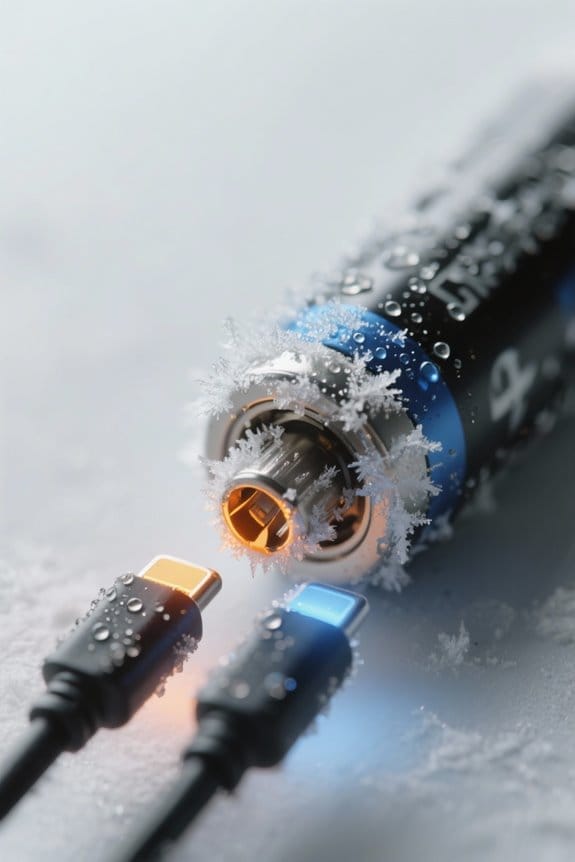
Charging speed variations in low temperatures present a nuanced challenge for electric vehicle (EV) users, as thorough analysis of over 200,000 charging sessions at 0°F reveals an average increase of merely nine minutes compared to warmer conditions, indicating a surprisingly modest overall impact on charging duration. Lithium-ion batteries exhibit reduced charging efficiency in cold weather due to increased internal resistance, which limits the rate at which the battery can accept power, thereby affecting capacity restoration. Although cold temperatures can slow charging speed, risks such as lithium plating may cause permanent battery health degradation if charging occurs below freezing without temperature management. While preconditioning enhances charging speed by warming the battery, strict adherence to proper charging practices—including slow charging rates in cold conditions—is essential to preserve battery capacity and long-term health. Extreme temperature performance in lithium batteries ensures optimal usage despite harsh weather conditions.
Recommended Products

AI-POWERED SMART CHARGING & APP CONTROL – This ev charger level 2 uses Autel’s AI-integrated smart app to schedule charging around time-of-use utility rates, helping lower your monthly bill while boosting station utilization. Start or stop sessions remotely, adjust current from low to high amps, view real-time energy data, and get alerts if anything looks off.

INSTALL WITH CONFIDENCE: The Enphase HCS-50 EV Charger, formerly known as ClipperCreek, delivers award-winning durability and reliability. Installation is quick and straightforward—connect it to a dedicated 50 Amp circuit by any licensed electrician.

FAST, RELIABLE POWER: Hardwired Level 2 DEWALT EV Charger delivers up to 48 Amps, 240V, and 11.5 kW—charging up to 46 miles per hour. Includes 25 ft UL-certified cable, LCD screen, and adjustable current (12–48A). Compatible with all SAE J1772 EVs (Tesla adapter sold separately)
Preconditioning Batteries for Improved Charging
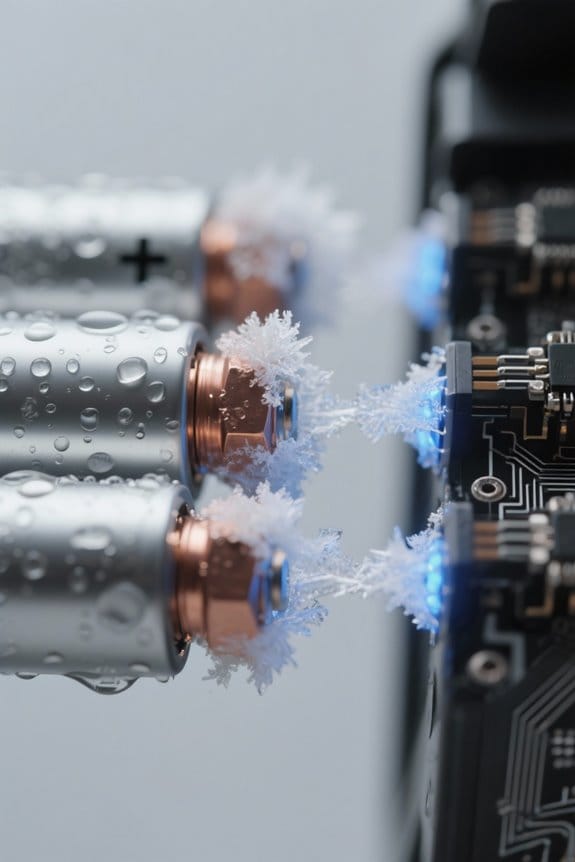
Warming lithium-ion batteries to a prime temperature before power input, a process known as preconditioning, greatly enhances charging efficiency by maintaining electrolyte viscosity near its best range, typically between 25°C and 35°C, which facilitates improved ion mobility and lowers internal resistance. In cold weather, preconditioning prepares batteries by elevating their temperature, reducing internal resistance, and fine-tuning the charging process, which helps prevent long-term damage such as lithium plating. Battery management systems automate preconditioning by actively warming lithium batteries until reaching these ideal temperatures, ensuring safer charging and increased battery longevity. Studies confirm that preconditioned batteries achieve faster charge rates and shorter charging durations compared to those charged at ambient cold temperatures, making preconditioning essential for efficient, reliable battery performance during extreme cold conditions. In addition, certain universal battery testers offer features like no-battery operation and instant response time, which can aid in quickly diagnosing battery health and readiness for preconditioning.
Risks of Fast Charging Cold Batteries
Although fast charging may seem advantageous during colder months, it poses significant risks when applied to batteries operating at suboptimal temperatures, particularly below 32°F. Lithium batteries exhibit increased internal resistance in freezing temperatures, resulting in heightened susceptibility to overheating and lithium plating during rapid charge cycles. Fast charging at such extreme temperatures compromises battery health by inducing mechanical instability and potential failure. Recommended charging rates for cold weather are ≤0.1C between 32°F and 14°F, and further reduced to ≤0.05C between 14°F and -4°F, to mitigate damage. Operating outside these parameters, high charging rates degrade battery capacity and accelerate wear. Consequently, neglecting temperature considerations in fast charging protocols jeopardizes long-term performance and safety, emphasizing the necessity for controlled, gradual charge strategies under cold weather conditions. For maintaining battery health and ensuring accuracy in testing, it is advisable to use high-quality models that deliver voltage accuracy to 0.01 V and perform comprehensive health assessments.
Recommended Products

elf-Heating Technology for Reliable Winter Performance: Equipped with an advanced self-heating function, the WT5100 51.2V 100Ah LiFePO4 battery automatically warms battery cells in low-temperature environments to support safer charging and improved winter performance. Compared with standard lithium batteries, this 48V server rack battery delivers more reliable power in cold climates, making it ideal for solar energy storage, off-grid systems, cabins, RV power, and home battery backup.

Self-Heating Function: Automatically activates when charging at -20°C to 5°C (-4°F to 41°F). Choose between Regular and Energy-efficient heating modes via the LiTime APP for optimal cold-weather performance.

【3300 lbs Electric Pallet Jack】 Perfect for high-volume logistics; this heavy-duty power pallet truck handles standard 48"x27" US pallets.
Best Practices for Charging in Extreme Cold
Proper management of lithium battery charging in extreme cold necessitates careful adherence to reduced charging rates, specifically maintaining ≤0.1C between 32°F and 14°F and further decreasing to ≤0.05C from 14°F down to -4°F, to prevent internal damage and capacity loss. Preconditioning by warming batteries to room temperature prior to charging enhances battery efficiency and reduces electrochemical stress. Employing smart chargers with temperature compensation capabilities guarantees charging in cold weather is both safer and more effective, maximizing battery life without risking fast charge-related damage. Insulation methods, such as battery blankets, help maintain a stable thermal environment, minimizing performance degradation. Additionally, avoiding immediate charging of frozen batteries is critical to prevent structural failures. Together, these practices form a thorough approach to maintaining ideal charging rates, preserving battery integrity, and maximizing operational longevity under cold weather conditions. Many trickle chargers(trickle chargers) are designed with integrated thermal sensors that adapt to environmental conditions, making them ideal for maintaining battery performance in varying temperatures.
Recommended Products

The GL622N pro Laser Level tool kit comes with a HL760 Laser meter, C70 rod clamp, RC602 remote control, and is rechargeable with its 10 Ah NiMH batteries and included charger
![Xantrex Freedom SW3012 12V 3000W Inverter/Charger [815-3012] & 809-0921 Xanbus System Control Panel/no Cable](https://m.media-amazon.com/images/I/31Ob0JGOQ4L._SL500_.jpg)
Product 1: Your purchase includes One Xantrex Freedom SW Series 815-3012 Inverter & Charger and one battery temperature sensor

Your purchase includes One Xantrex Freedom SW Series 815-3012 Inverter & Charger and one battery temperature sensor
Technologies Enhancing Cold Weather Charging Efficiency
When temperatures plunge below freezing, advances in battery charging technology become essential to maintain efficiency and prevent damage, as demonstrated by smart chargers like CTEK models that adjust voltage and current dynamically according to ambient conditions, enabling safe charging down to -4°F. The RELiON LT Series exemplifies cold weather capability by integrating heating elements to sustain ideal temperature and capacity during charging. Complementary thermal management systems, including battery blankets, maintain consistent battery warmth, thereby enhancing charging efficiency. In addition, preconditioning methods used in electric vehicles raise battery temperature before charging, improving performance and reducing lithium plating risks. Multi-stage charging protocols enable gradual capacity restoration at low temperatures, balancing charge speed with safety. Load banks with programmable load steps can simulate real-world duty cycles even in extreme cold, ensuring precise evaluations of battery performance. Collectively, these technologies form a robust approach to maintaining reliable charging efficiency amid severe cold weather conditions.
Recommended Products
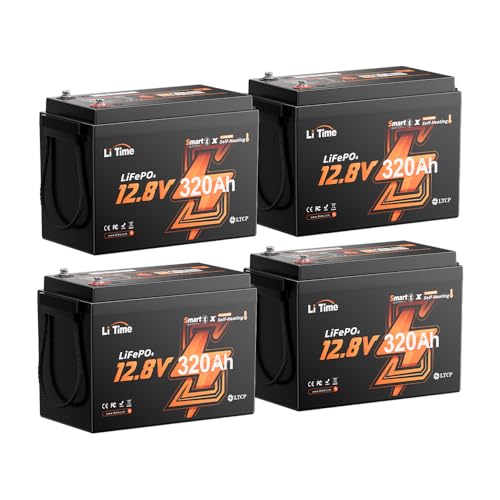
2 Upgraded Heating Modes: 12V 320Ah Mini Self-Heating Battery comes with Regular and Energy-Efficient options. Regular mode activates heating below 41℉(5℃) when charged, stops at 50℉(10℃) to begin charging—suits cold-weather needs.

Self-heating & Low-temp Protection: 12V 320Ah Mini Self-Heating Battery with 2 Heating Modes, Regular mode activates heating below 41℉(5℃) when charged, stops at 50℉(10℃) to begin charging. Prevents cold damage and extend battery life, smart low-temp protection function is stops charging <32°F, stops discharging <-4°F.

Smart Bluetooth 5.0: Scan the QR code on the battery for instant pairing with Litime APP. Monitor real-time SOC, voltage, and current, control discharge, and run system diagnostics directly from your phone for total power system control.
Frequently Asked Questions
What Is the 40 80 Rule for Batteries?
The 40-80 rule for lithium-ion batteries maintains battery capacity between 40% and 80%, optimizing battery lifespan, reducing harmful charging cycles, balancing energy density, mitigating temperature effects, and serving as essential battery management and maintenance tips for cold weather performance metrics.
Are Batteries Less Efficient in the Cold?
Batteries exhibit reduced efficiency in cold temperatures due to increased internal resistance and electrolyte viscosity, causing voltage drops and slower charging rates. Lithium-ion performance declines, impacting energy storage and battery lifespan, necessitating effective thermal management.
How Often Should I Start My Car to Keep the Battery Charged in Winter?
Starting the car weekly guarantees battery maintenance, supports engine tuning, and preserves battery life during winter months. Adapting driving habits, performing battery checks, following charging tips, and avoiding jump starting safeguards car systems effectively in cold weather.
What Can Help Maximize Battery Performance in Extremely Cold Temperatures?
Maximizing battery performance in extreme cold involves battery insulation and thermal blankets for temperature regulation, employing careful charging techniques like preconditioning, using battery maintainers or solar chargers, selecting suitable battery types, and adapting usage habits to optimize chemical reactions.