As an Amazon Associate, we earn from qualifying purchases. Some links on this site are affiliate links at no extra cost to you. Our recommendations are based on thorough research and editorial judgment.

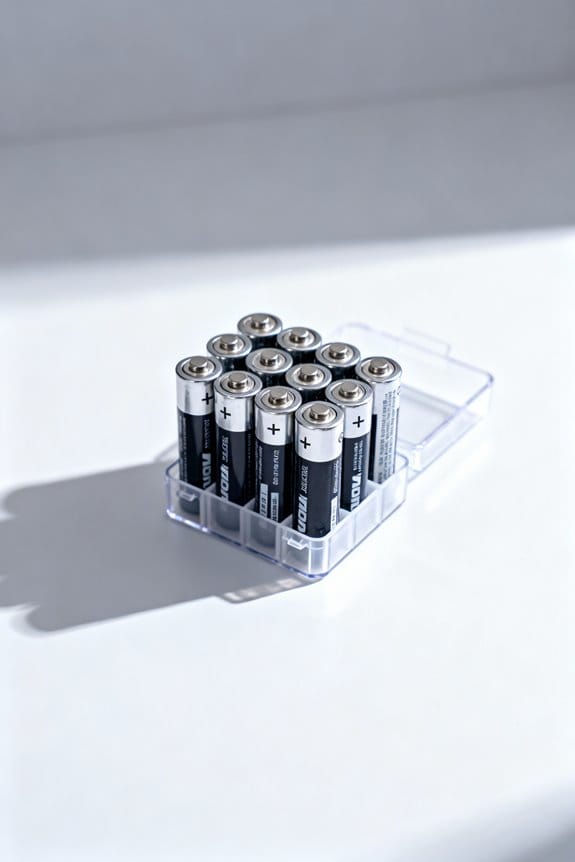
How to Store Rechargeable Batteries for Maximum Lifespan

Rechargeable lithium-ion batteries achieve maximum lifespan when stored at 40-60% charge, ideally maintained between 15°C and 25°C, while avoiding temperatures above 30°C to reduce accelerated capacity loss. Relative humidity should stay below 50% to prevent corrosion and degradation. Regular voltage monitoring, inspection every one to three months, and protection from direct sunlight or mechanical damage are essential. Depth of discharge and temperature critically influence cycle life, with every 0.10V drop below 4.20V potentially doubling longevity. Further guidelines address safety and environmental controls for peak storage outcomes.
Key Takeaways
- Store lithium-ion batteries at 40-60% charge to minimize stress and extend cycle life.
- Keep batteries in a cool, dry environment between 15°C and 25°C with humidity below 50%.
- Avoid full charges or deep discharges during storage to prevent accelerated capacity loss.
- Regularly inspect batteries every 1-3 months and recharge if voltage drops below optimal range.
- Use protective cases and terminal covers to prevent physical damage and follow safety regulations.
Understanding Rechargeable Battery Chemistry
Although rechargeable batteries come in several types, the most prevalent chemistries—lithium-ion, nickel-metal hydride (NiMH), and nickel-cadmium (NiCad)—each exhibit distinct electrochemical properties that influence operational efficiency and lifespan. Lithium-ion batteries offer superior energy density and reduced self-discharge rates compared to their nickel-based counterparts, resulting in prolonged cycle life when maintained between 40% and 60% state of charge. The chemical reactions within these batteries involve ion transfer through electrolytes, impacting capacity and internal resistance, which typically increases as batteries age. Depth of discharge (DoD) has a significant effect on longevity, with shallower discharges enabling more cycles before capacity diminishes significantly. Proper storage conditions optimize battery performance by minimizing chemical degradation and maintaining internal resistance at favorable levels, thereby preserving capacity and extending overall lifespan. Advanced battery management systems (Smart BMS) further enhance lifespan by preventing overcharging, overheating, and short circuits.
Ideal Temperature Conditions for Battery Storage
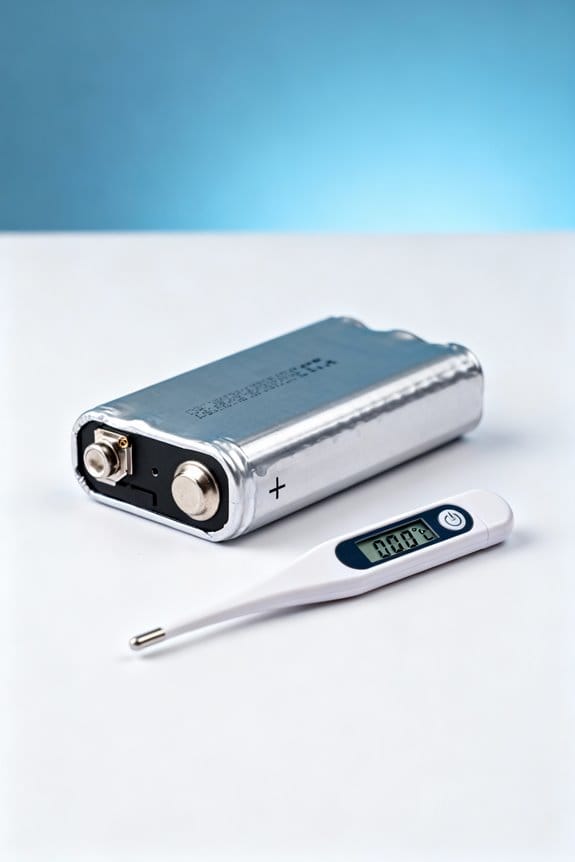
Performance and lifespan characteristics derived from battery chemistry understanding highlight the importance of environmental factors in storage, particularly temperature. The ideal temperature for storage ranges between 15°C (59°F) and 25°C (77°F), where batteries maintain stability and minimize chemical degradation. Storage temperatures exceeding 30°C (86°F) accelerate capacity loss considerably, while conditions below -20°C (-4°F) risk impairing battery performance. Batteries should not be stored fully charged or fully discharged to reduce stress on their chemistry. Instead, maintaining a 40-60% charge level balances preservation efforts. Regularly monitoring batteries for damage, swelling, or other degradation indicators during storage guarantees they remain in good condition. Adhering to these storage temperatures and routine inspections effectively prolongs the operational lifespan and reliability of lithium-ion and nickel-based rechargeable batteries. Using proper battery management tools, such as universal battery testers, can help ensure batteries remain in optimal condition and prevent unexpected failures.
Recommended Products

GL722 Dual Grade Laser for long range, high accuracy elevation control; Automatic self-leveling, advanced radio remote, grade matching, Planelok, and automatic axis alignment allow quick and accurate set-ups for any fine grading or major construction project

Dedicated Sony Camera Compatibility: The FJ400 strobe offers features like High-Speed Sync, TTL, and more. It is designed with a proprietary Sony hot shoe mount for the Sony camera

【Massive 4.01kWh per Battery for Large-Scale Power】Dumfume 12V 314Ah LiFePO4 battery in this 4-pack delivers a substantial 4.01kWh of energy, perfect for building extensive home solar storage, powering off-grid cabins, or supporting long-term RV living. This 314ah lifepo4 battery set ensures reliable energy for high-demand scenarios. For optimal battery health during storage, we recommend performing a full charge/discharge cycle every 6 months.
Optimal Charge Levels Before Storing Batteries
When storing lithium-ion batteries for extended periods, maintaining a suitable charge level between 40% and 60% is critical to minimizing capacity loss and chemical degradation, as empirical studies indicate that fully charged or deeply discharged batteries experience accelerated decline in performance and increased internal resistance. Ideal charge levels for storing rechargeable batteries typically range between 30% and 50% state of charge, promoting prolonged shelf life and enhanced longevity. Storing batteries at partial charge, especially within this range, greatly reduces the risk of capacity loss compared to fully charged or near-empty states. To preserve battery health, users should regularly check stored batteries and recharge them as necessary to maintain the appropriate state of charge. Additionally, combined with cool environments, this approach further supports minimizing degradation and improving lifespan during storage periods. It is also important to consider the low self-discharge characteristic of certain NiMH batteries, as these retain more capacity over time compared to standard rechargeable cells.
Recommended Products
Canon USA Authorized. Items Include: Canon EOS R5 Mark II Mirrorless Camera | 45MP Full Frame Sensor 8K Video Recording, Canon RF 100-500mm f/4.5-7.1L IS USM Lens, 64GB SF-G TOUGH Series UHS-II SDXC Memory Card, Canon EOS 200ES Shoulder Bag

Canon USA Authorized. Items Include: Canon EOS R5 Mark II Mirrorless Camera | 45MP Full Frame Sensor 8K Video Recording, Canon RF 24-70mm f/2.8L IS USM Lens, Canon Mount Adapter EF-EOS R, Canon LP-E6P Lithium-Ion Battery, 64GB SF-G TOUGH Series UHS-II SDXC Memory Card, Canon EOS 200ES Shoulder Bag

Battery resistance, dc and ac voltage, dc and ac current, ripple voltage, frequency and battery temperature
Humidity and Environmental Considerations
A controlled environment featuring humidity levels consistently below 50% and temperatures near 15°C (59°F) is crucial for the effective storage of rechargeable batteries, as higher moisture and heat exposure accelerate corrosion and chemical degradation, diminishing overall capacity. Storing batteries in cool conditions minimizes chemical reactions that promote aging, while high temperatures particularly reduce lifespan, with capacity loss tripling as storage temperatures increase from 25°C to 55°C. Direct sunlight should be avoided, as it raises temperatures and fosters thermal degradation. Incorporating desiccants within storage containers further controls moisture, enhancing battery stability and preventing corrosion. Maintaining these environmental parameters during storage guarantees the batteries retain functional capacity for extended periods, optimizing performance and maximizing lifespan by mitigating the adverse effects caused by humidity, excessive heat, and chemical changes. For optimal long-term results, it is also important to consider the battery type, as lithium AAA batteries offer significantly longer shelf lives compared to alkaline alternatives.
Risks Associated With Improper Battery Storage
Several critical risks are associated with improper storage of rechargeable lithium-ion batteries, involving thermal, chemical, and mechanical hazards that can substantially undermine safety and functionality. Self-heating can occur at charge currents above 10 amps within -20 to 5°C, possibly causing fires or explosions. Storing batteries fully charged in high temperatures accelerates chemical degradation and capacity loss, while also increasing internal resistance. Exposure to direct sunlight and humidity above 50% compromises battery integrity and promotes corrosion. Neglecting monitoring stored batteries for leaks or damage raises the risk of hazardous chemical exposure. Thermal runaway, triggered by overheating in one battery, may ignite adjacent units, creating complex fire hazards that challenge extinguishing efforts. Maintaining strict battery safety protocols during storage is essential to prevent these risks, preserve performance, and extend battery lifespan. Additionally, regular use of battery maintenance solutions can help mitigate degradation during storage and prolong battery life.
Recommended Products

【About Shipment】Please note: Due to the weight of the package, we will send the portable power station and solar panel separately in 2 packages, so the arrival time of the 2 packages will be different. If you receive one package first, please don't worry about missing the other one, just wait patiently for the arrival of the remaining packages, thank you!

Compact (7.6 in. front to back), lightweight design fits into tight areas. Variable speed trigger allows for control and precision on delicate work surfaces.

Dyson V11 Cordless Vacuum, Wand, Docking Station, Charger, Mini Soft Dusting Brush, Crevice Tool, Hair Screw Tool, Motorbar Cleaner Head, Lithium Ion Battery (1)
Safe Handling and Mechanical Protection
Proper storage safety extends beyond chemical and thermal considerations to include careful handling and mechanical protection measures that greatly reduce the risk of physical damage or electrical faults. Safe handling requires using protective cases to shield batteries from impacts and environmental exposure, while covering battery terminals with caps or non-conductive tape prevents short-circuits during storage or transport. Stored batteries should undergo regular inspection, focusing on signs of swelling, leakage, or corrosion, which may compromise safety. Additionally, integrating battery management systems enhances mechanical protection by monitoring voltage, temperature, and preventing overcharging, thereby minimizing risk. Employing these combined strategies supports the maintenance of rechargeable batteries’ integrity, extending lifespan by mitigating damage caused by mishandling, mechanical stress, or electrical faults. Overall, adhering to rigorous protocols maximizes both safety and battery performance over extended periods. Using battery organizers with fireproof materials also helps protect stored batteries from overheating and potential fire hazards.
Recommended Products

NIKON USA Authorized Model - Includes FULL USA Warranty | Nikon Z 8 - Ready. Action. The Ultimate Hybrid Camera - Powerful performance. Professional build. Compact, lightweight handling. A dream camera for videos and stills. Video features include 12-bit 8K/60p and 4K/120p RAW plus 10-bit ProRes 422 HQ internal video recording. Photography features include a 45.7MP stacked CMOS sensor, a silent, vibration-free electronic shutter, 120 fps burst shooting and a blackout-free viewfinder.

Processor: Inte.l Core Ultra 9 processor 288V Series 2 (12MB Cache, 8 cores, up to 5.1 GHz)

Processor: Inte.l Core Ultra 9 processor 288V Series 2 (12MB Cache, 8 cores, up to 5.1 GHz)
Recommended Storage Locations and Methods
Ideal storage locations for rechargeable batteries require maintaining a stable environment characterized by temperatures near 15°C (59°F), relative humidity below 50%, and minimal exposure to direct sunlight or heat sources, as these conditions collectively preserve chemical stability and electrical performance over extended periods. To store batteries effectively, cool, dry environments are essential, with the use of desiccants recommended to maintain low humidity levels and prevent corrosion or moisture damage. Rechargeable batteries, especially lithium-ion types, should be stored at a partial charge level between 40% and 60%, reducing self-discharge and capacity loss risks. Regularly inspect stored batteries for swelling, leakage, or other damage to guarantee safety and functional integrity. Avoid placing batteries in direct sunlight or near heat sources, as these factors accelerate degradation and shorten overall battery lifespan. Additionally, selecting storage materials with UV and weather resistance can further protect batteries from environmental damage over time.
Effects of Temperature and Charge on Battery Aging
Maintaining the recommended storage environment, such as temperatures close to 15°C (59°F) and moderate humidity, directly influences how rechargeable batteries age, particularly lithium-ion types. Elevated storage temperature above 30°C accelerates battery aging and causes permanent capacity loss, reducing overall cycle life. Charge levels between 40% and 60% are ideal, as higher charge accelerates self-discharge and degradation through continued growth of the solid electrolyte interphase (SEI) layer, which negatively impacts performance. Significantly, each 0.10V reduction below 4.20V per cell can approximately double lithium-ion batteries’ cycle life by enhancing stability. Consequently, managing both storage temperature and charge carefully is critical to minimizing aging effects and extending usable lifespan, ensuring rechargeable batteries retain capacity and function effectively when returned to active use. Additionally, the use of NiMH rechargeable batteries is recommended for high-drain devices, as they can reduce costs and waste over time.
Monitoring Stored Battery Health Over Time
Why is consistent monitoring essential for batteries stored over extended periods? Maintaining ideal battery health requires regular inspection of stored batteries every one to three months to identify damage, swelling, or leakage, preserving their integrity and reliability. Monitoring voltage levels to guarantee batteries remain within the recommended 30-50% charge range helps prolong lifespan by minimizing stress and chemical degradation. Implementing a Battery Management System enables continuous tracking of performance metrics, facilitating timely interventions if abnormalities occur. Accurate records of storage conditions and battery usage assist in predicting potential issues and enhancing practices, while utilizing the FIFO principle ensures older batteries are used first, reducing risk of degradation from prolonged storage. Together, these practices provide a thorough approach to monitoring stored battery health and extending usable life. Using specially designed battery holders with terminal protection can further safeguard batteries during storage by preventing accidental discharge and physical damage.
Regulatory and Safety Guidelines for Battery Storage
Although the inherent risks of storing lithium-ion batteries demand rigorous oversight, compliance with regulatory standards such as NFPA 855 and OSHA is essential for preventing hazards like thermal runaway and fire outbreaks. Adhering to established storage guidelines involves integrating climate control systems, maintaining temperatures between 20-25°C with 40-60% humidity, and installing fire suppression systems capable of rapid response. Battery storage management includes systematic segregation of varying lithium batteries, utilizing containment units to minimize chemical exposure and cross-contamination. Regular inspections evaluating structural integrity, temperature, and humidity ensure ongoing compliance with safety regulations. Proper labeling and adherence to hazardous materials transport codes further safeguard handling processes. These measures collectively mitigate risks, enhance long-term battery stability, and uphold facility safety, demonstrating that thorough regulatory compliance is critical for optimizing the safe storage of rechargeable lithium battery inventories. Additionally, using reliable electrical testing devices like the TM-510 Digital Multimeter can ensure battery conditions are accurately monitored to prevent malfunctions during storage.
Frequently Asked Questions
How Do You Store Rechargeable Batteries When Not in Use?
Battery storage tips emphasize controlling temperature effects, maintaining voltage levels, and ensuring humidity control. Using battery cases and label organization aids safety precautions. Periodic charging supports energy conservation, enabling effective long term storage while preserving battery integrity and performance.
What Is the 80 20 Rule for Lithium Batteries?
The 80/20 rule for lithium chemistry involves maintaining discharge levels between 20% and 80%, reducing battery degradation, extending charging cycles, minimizing self discharge rate, and enhancing shelf life by avoiding heat exposure in controlled storage environments and ideal temperatures.
Is It Better to Store a Rechargeable Battery Charged or Uncharged?
Charged vs uncharged storage impacts battery lifespan considerably; partial charge enhances chemical stability, reduces self-discharge rates, and improves capacity retention. Heat exposure effects and storage temperature importance necessitate periodic charging and battery health monitoring to optimize shelf life.
How to Make Rechargeable Batteries Last Longer?
To make rechargeable batteries last longer, one must master battery maintenance tips such as precise charge cycle management, temperature control importance, proper voltage levels, usage frequency impact, shelf life considerations, self-discharge rates, battery health monitoring, environmental impact factors, and recycling options available.