As an Amazon Associate, we earn from qualifying purchases. Some links on this site are affiliate links at no extra cost to you. Our recommendations are based on thorough research and editorial judgment.

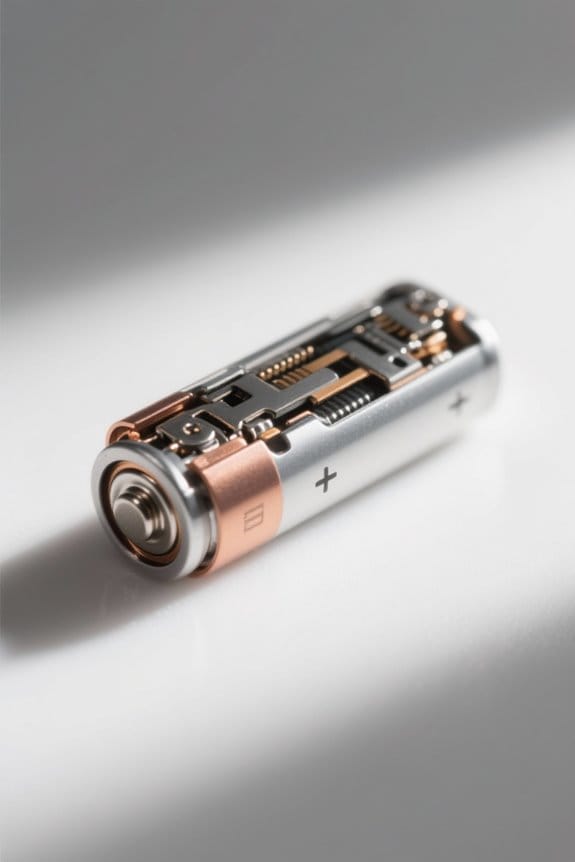
Understanding What Battery Internal Resistance Tells You

Battery internal resistance measures the opposition to current flow inside cells, influenced by chemistry, temperature, and charge state, typically staying below 20mΩ for healthy lithium-ion batteries and reaching around 12mΩ in quality 18650 cells. Elevated resistance, which rises with age and extreme charge levels, causes voltage drops and performance loss. Accurate assessment often uses four-wire testing at 20–25℃ and mid-charge voltages. Understanding these factors sheds light on battery health, efficiency, and longevity, inviting a deeper exploration of maintenance and measurement techniques.
Key Takeaways
- Internal resistance reveals battery health by indicating aging and chemical degradation before visible signs appear.
- It affects performance, with higher resistance causing voltage drop and reduced current delivery under load.
- Typical healthy lithium-ion batteries have internal resistance below 20mΩ, with higher values signaling deterioration.
- Internal resistance varies with temperature, charge level, battery chemistry, and age, influencing power efficiency.
- Measuring internal resistance helps detect issues early, guiding maintenance like cleaning terminals and controlling storage conditions.
Definition and Importance of Battery Internal Resistance
Although often overlooked, battery internal resistance constitutes an essential parameter that quantifies the opposition to electric current flow within a battery’s cells, influenced by variables including temperature fluctuations, cumulative charge-discharge cycles, and the battery’s overall age. Measuring internal resistance provides critical insights into battery health, often revealing aging or degradation before other symptoms arise. For instance, healthy lithium-ion cells typically exhibit internal resistance below 20mΩ, with well-performing 18650 cells measuring approximately 12mΩ, which correlates to superior discharge capabilities and efficiency. Elevated internal resistance manifests as voltage drops under load, hindering battery performance and potentially causing unexpected device shutdowns. Regularly evaluating this metric enables more effective battery management, ensuring sustained voltage stability and extended service life, particularly in applications demanding sustained high power output and reliability. Furthermore, using a reliable monitor with a 1% accuracy or better can help in measuring these critical metrics, providing users with precise data for better battery management.
How Internal Resistance Affects Battery Performance
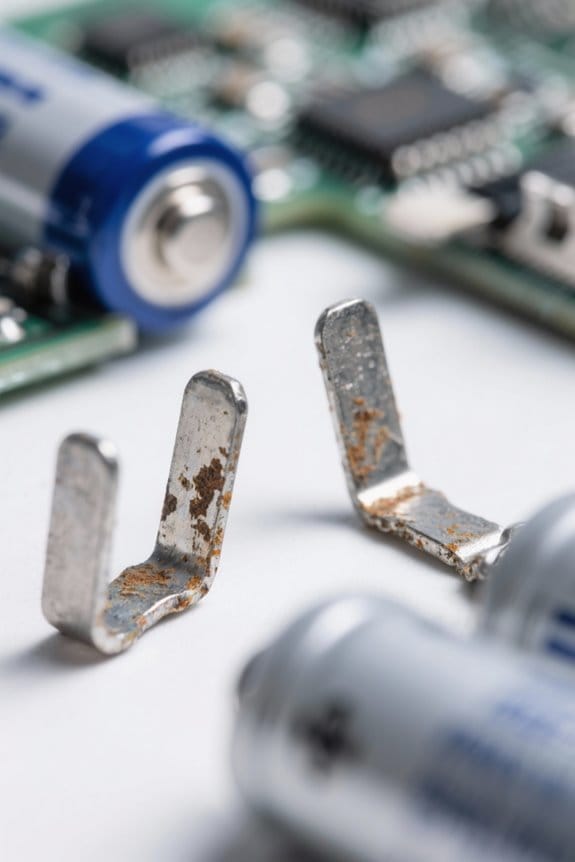
A majority of battery performance issues can be traced directly to variations in internal resistance, which, when kept below approximately 20mΩ in standard lithium-ion cells and near 12mΩ in well-maintained 18650 formats, facilitates efficient energy transfer with minimal voltage drop and heat generation; conversely, increased internal resistance results in pronounced voltage sag when the battery is under load, measurable through specialized impedance spectroscopy or DC load testing, leading to reduced current delivery and potential premature device shutdowns, especially in high-drain scenarios such as power tools or electric vehicles. Higher internal resistance not only causes significant voltage drops but also contributes to energy wastage through excess heat, while lower internal resistance correlates with improved battery performance and prolonged battery health, highlighting the importance of regular monitoring to avoid accelerated degradation and maintain best functionality. The use of battery recycling containers helps in the safe disposal and proper recycling of batteries, contributing to environmental sustainability and compliance with waste regulations.
Typical Internal Resistance Values for Different Battery Types
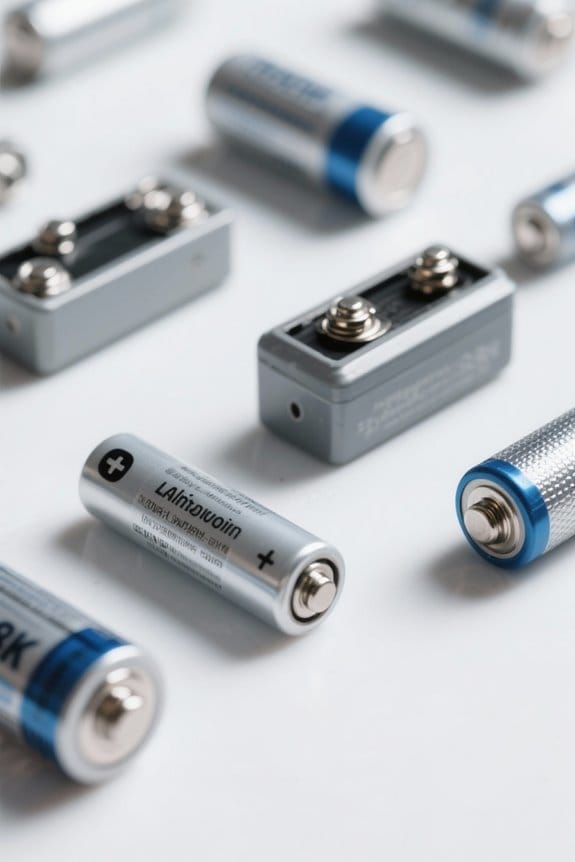
When comparing internal resistance values across various battery chemistries, lithium-ion cells typically demonstrate the lowest readings, with healthy standard variants staying below approximately 20 milliohms and well-maintained 18650 cells achieving around 12 milliohms; in contrast, nickel-metal hydride (Ni-MH) batteries usually exhibit higher resistance values under 50 milliohms, although high-drain models can range between 10 and 20 milliohms. Alkaline AA batteries show typical internal resistance values near 100 milliohms but experience substantial increases as battery age progresses, sometimes reaching several hundred milliohms. Lead-acid batteries vary widely, typically from a few milliohms to several ohms depending on design and condition. Overall, internal resistance increases with battery age across all types, reflecting chemical and structural changes that impact performance and efficiency. Additionally, understanding resistance ratings for different materials, such as those found in outdoor electrical tapes, can provide insight into how environmental factors affect electrical components.
Recommended Products


Supports 10+ battery chemistries: Li-ion, Li-ion HV, LiFe, NiMH, NiCd, NiZn, RAM, LTO, Na-ion

CHARGE FUNCTION: Upon insertion, the charge mode starts and charges the battery fully, individually. charged individually. Rechargeable batteries of different types, different capacities and different charge conditions can be inserted and charged/discharged. Then, the charger automatically switches to pulse maintenance charging to keep the battery at 100%. Individual battery cells can be removed and new ones inserted without influencing the charge procedure in the other charge bays.
Factors That Influence Battery Internal Resistance
The internal resistance of a battery is influenced by several interrelated factors, including its chemical composition, environmental conditions, and usage history, each affecting performance metrics such as voltage drop and power delivery. Battery resistance varies markedly across types, with lithium-ion batteries typically exhibiting internal resistance in batteries below 20mΩ, whereas nickel-metal hydride models range from 10mΩ to 50mΩ. Temperature impacts internal resistance considerably; colder environments thicken electrolytes, raising resistance and reducing efficiency. Battery ages provoke chemical reactions that progressively increase resistance through charge-discharge cycles. Additionally, the charge level affects resistance, peaking near 0% and 100% charge, while ideal performance occurs between 40% and 80%. Performance Testing of battery adapters shows negligible resistance compared to true C batteries under continuous draw, which is critical for understanding how internal resistance can influence power delivery in adapted battery systems. Recognizing these factors affecting battery internal resistance enables better management, ensuring consistent power delivery and prolonged battery lifespan.
Methods to Measure Battery Internal Resistance
Several reliable methods exist to measure battery internal resistance with varying degrees of precision, including the use of intelligent chargers such as the XTAR, which offer convenient testing either within the charger slots or through external probes that enhance accuracy by minimizing line resistance interference. Internal resistance testing is most accurate during a discharge cycle, ideally within voltage ranges of 1.3V to 1.4V for Ni-MH cells and 3.6V to 3.8V for Li-ion cells. Battery testers applying the four-wire method, often combined with Ohm’s law calculations, provide precise DC resistance values by eliminating lead and contact resistance. Maintaining clean terminals and solid connections further refines measuring internal resistance. This thorough approach guarantees resistance values reflect real battery performance parameters, essential for reliable diagnostics and longevity assessments. For optimal results, employing battery testers with 99.6% accuracy like the ANCEL BA101 ensures precise health evaluations and diagnostics.
Recommended Products

The ideal test tool for maintenance, troubleshooting and performance testing of individual stationary batteries and battery banks used in critical battery back-up applications
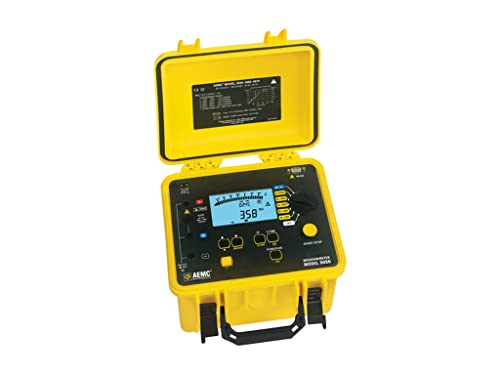
True megohmmeter digital, analog bar graph, backlight, alarm, timer, 500V, 1000V, 2500V, 5000V, auto DAR/PI/DD

Universal Battery Testing Made Easy - Quickly test AA, AAA, C, D, 9V, NiMH, NiCd, and alkaline batteries to check health, charge level, and load performance with simple one-button operation.
Pros and Cons of Testing Internal Resistance in Charger Slots
A notable advantage of testing battery internal resistance within charger slots lies in its straightforward convenience, as this method requires no additional equipment or external probes, allowing immediate readings that help quickly assess battery health. Measuring the internal resistance through a smart battery’s charger slot supports rapid battery management decisions, especially in portable power applications, by monitoring how internal resistance affects battery voltage under load. However, charger slot testing can yield less accurate results due to the combined internal resistance of the charger and line connections, potentially skewing performance and lifespan assessments. Ensuring clean terminals and tight battery-to-charger contact improves reliability, but inherent limitations remain compared to external methods. Despite these drawbacks, slot testing remains valuable for quick diagnostics when balancing convenience against precision. True four-wire testers, such as those mentioned in the knowledge source, offer more precise diagnostics that help overcome some of these limitations.
Recommended Products

MULTIGAS DETECTION: Equipped to measure Lower Explosive Limit (LEL), Oxygen (O2), Hydrogen Sulfide (H2S) and Carbon Monoxide (CO), designed for virtually no cross-channel interference

[LAUNCH X431 PAD VII Elite: Does-It-All for Pros] From tricky ECU c0ding to deep full-system reflashing it handles 99% of workshop challenges. >> 13.1" massive display & 8GB+256GB beast-mode specs paired with dual-band WiFi: deliver a silky-smooth workflow instant boot-ups; see every live data stream at a glance and multitask with zero lag! Wrist-strap grip + rugged rubber armor keep it steady in oily hands safe from shop-floor drops. Get this intelligent scan tool step up your work

ULTIMATE SELF-SUSTAINING HOME KIT – 4096Wh capacity + dual 240W panels. Complete off-grid backup for prolonged outages.
Benefits of Using External Probes for More Accurate Testing
Many battery testing professionals prefer external probes for internal resistance measurements because they employ a four-wire method that effectively minimizes the influence of line and contact resistances, resulting in readings that are greatly more accurate than those obtained through charger slot methods. External probes, when applied to clean battery terminals—properly prepared with alcohol—enhance current flow and measurement precision. The discharging method, favored for accurate testing, combined with external probes, delivers more consistent and stable results, particularly when ambient temperatures are maintained between 20℃ and 25℃. In contrast, charger slot testing sacrifices some accuracy for convenience. Interestingly, motion sensor specifications like a detection range of at least 30 feet can enhance security by alerting homeowners to movements, demonstrating how technology advances can improve both home security and battery testing. Consequently, external probes represent the superior choice for internal resistance evaluations, as they reduce extraneous resistance effects and improve reliability, providing battery professionals with essential data to assess battery health with greater confidence.
Recommended Products

Qualifies cabling performance for 10/100/Gig Ethernet, tests all copper media cabling: twisted pair (Category 5-6A), coax, and audio

Incorporates a TDR, tone generator, and telephone test set for testing VDV cabling as well as POTS quality on live DSL lines without disrupting data services

Fault finder TDR with tone generator locates open and short circuits, measures cable length, finds multiple bridge taps, helps isolate individual wire pairs, and reports any AC/DC voltage on the line
How Temperature and Voltage Impact Internal Resistance Readings
Accurate internal resistance measurements depend not only on testing methodology but also on controlling environmental and operational factors such as temperature and voltage, which directly influence battery performance metrics. In lithium-ion batteries, ambient temperature plays a vital role; testing under controlled conditions between 20℃ to 25℃ helps guarantee stable readings, as lower temperatures thicken the electrolyte, increasing internal resistance and reducing overall battery performance. Additionally, maintaining the voltage range within an ideal voltage window, typically 3.6V to 3.8V, minimizes resistance deviations caused by charge extremes. Internal resistance tends to peak near 0% or 100% state of charge but remains lowest—and battery performance most favorable—between 40% and 80% charge. These factors combined highlight the importance of standardized temperature and voltage conditions for reliable internal resistance evaluation. It is also important to select testers with high-quality models that deliver voltage accuracy to 0.01 V and measure internal resistance for comprehensive health assessments.
Signs Indicating a Battery Has High Internal Resistance
Although internal resistance is not always directly visible, its impact becomes apparent through several measurable signs, especially when values exceed the healthy threshold of 20 milliohms; voltage sag during discharge, which can lead to unexpected shutdowns, serves as a critical indicator, while excessive heat generation during operation—often evidenced by a rapid temperature rise—signals worsening battery condition. Batteries exhibiting high internal resistance demonstrate poor performance by cutting power prematurely, illustrating compromised battery health. Monitoring voltage sag alongside temperature changes enables the early detection of chemical degradation and aging effects within the battery. Regular assessments of internal resistance provide insights into ongoing wear and potential failure, highlighting the necessity of vigilant monitoring in maintaining reliable device operation and extending battery lifespan. Selecting high-quality batteries with proper safety certifications like CE and RoHS can help ensure stability and longevity, reducing the risk of high internal resistance.
Relationship Between Internal Resistance and Battery Aging
The progression of battery aging is fundamentally linked to the gradual increase in internal resistance, a phenomenon driven by slow chemical reactions and mechanical wear within the cell’s internal components; for example, lithium-ion batteries commonly exhibit internal resistance exceeding 20 milliohms as they approach the end of their service life, signaling diminished capacity and efficiency. As internal resistance rises, battery performance degrades due to efficiency loss and pronounced voltage sag, which compromises energy delivery under load. Nickel-based batteries similarly experience internal resistance growth beyond 50 milliohms during aging, intensifying heat generation and further reducing operational effectiveness. Monitoring this parameter offers insight into the battery’s state, as increasing internal resistance directly correlates with chemical reaction byproducts and physical deterioration that collectively undermine performance and signal the need for timely replacement. The 25-year shelf life of Energizer Ultimate Lithium AA batteries exemplifies exceptional reliability and longevity, providing a contrast to the typical aging process experienced by other battery types.
Tips for Maintaining Low Internal Resistance in Batteries
Maintaining low internal resistance in batteries requires consistent attention to environmental factors and usage habits, as improper handling can accelerate resistance increases beyond 20 milliohms in lithium-ion cells or 50 milliohms in nickel-based variants, thereby diminishing operational efficiency; regular cleaning of terminals with isopropyl alcohol reduces contact resistance, while storing batteries at a mid-charge level—ideally between 50% and 60% state of charge—helps prevent stress caused by overcharged or deeply discharged states that contribute to chemical degradation and mechanical wear. Additionally, controlling temperature within 20℃ to 25℃ during usage and storage is significant, as elevated temperatures intensify internal resistance buildup. Avoiding overcharging minimizes electrolyte breakdown and electrode damage, further preserving battery internal resistance. Employing appropriate chargers with built-in resistance testing enables timely detection of rising resistance, supporting ideal battery maintenance through regularly scheduled assessments and cleaning.
Recommended Products

Battery resistance, dc and ac voltage, dc and ac current, ripple voltage, frequency and battery temperature

Easily Scales Up. Adapt power to your lifestyle with expandable capacity from 3kWh to 11kWh. Add extra batteries to cover multi-day blackouts, RV living, or extended outdoor trips. Flexible, future-proof design grows with your needs—no compromises.

Meets the following UL and CSA standards for Flexible Cords and Cables: UL62 and CSA C22.2 . SOOW stands for S = Service Cord, OO = Oil Resistant (both inside and outside insulation), W = Weather and Water Resistant.
Role of Internal Resistance Measurement in Battery Quality Control
Since internal resistance directly impacts battery efficiency and lifespan, measuring this parameter plays a pivotal role in quality control during battery manufacturing, where consistent resistance values—typically below 20 milliohms for lithium-ion cells and considerably higher for alkaline variants—guarantee that individual cells meet strict performance thresholds; these measurements, often conducted using impedance spectroscopy or pulse current methods, help identify defects, material inconsistencies, or early signs of degradation, thereby preventing the incorporation of substandard cells into battery packs, which could otherwise reduce overall capacity and operational uniformity. Monitoring internal resistance also aids in detecting aging within cells, enabling manufacturers to maintain battery quality and functionality over time, especially for lithium-ion batteries where precise performance criteria must be upheld to guarantee reliable operation of battery packs in various applications.
Frequently Asked Questions
Can Internal Resistance Predict Exact Battery Lifespan?
Internal resistance measurement alone cannot precisely predict battery lifespan estimation. While it reflects age-related degradation and performance predictions, usage cycle impacts, temperature effects, and maintenance practices also considerably influence overall battery longevity and must be considered thoroughly.
Does Internal Resistance Affect Battery Memory Effect?
Internal resistance weaves silently into the battery’s story but doesn’t script the memory effect. Though it influences voltage drops and capacity fading, memory retention hinges more on usage patterns, charge cycles, and effective maintenance techniques than on this single predictor factor.
How Does Internal Resistance Impact Fast Charging Times?
Internal resistance impacts fast charging by reducing charging efficiency through increased energy loss and heat generation. Higher resistance limits power delivery, affects battery performance, raises temperature effects, and necessitates safety considerations to prevent damage during fast charging cycles.
Is Internal Resistance Affected by Battery Chemistry Changes During Use?
Internal resistance is affected by battery chemistry changes during use as chemical reactions and aging effects alter material properties. Usage impact, temperature influence, and voltage drop contribute to resistance changes within the battery over time.
Can Internal Resistance Testing Detect Internal Short Circuits?
Internal resistance testing aids short circuit detection by revealing abrupt resistance drops, essential for battery health assessment. This highlights performance degradation, informs maintenance strategies, and addresses safety implications through effective testing methodologies emphasizing the significance of resistance changes.