As an Amazon Associate, we earn from qualifying purchases. Some links on this site are affiliate links at no extra cost to you. Our recommendations are based on thorough research and editorial judgment.


How to Match Battery Capacity to Your Device’s Energy Needs

Matching battery capacity to a device’s energy needs begins by calculating total energy consumption in watt-hours (Wh), multiplying the device’s power rating in watts (W) by its intended runtime in hours, then dividing by battery voltage to find ampere-hours (Ah). Designers should account for peak power demands, incorporate a 20-30% safety margin for efficiency losses, and consider temperature effects on capacity, as higher heat can reduce performance. Selecting appropriate voltage, chemistry, and configuration guarantees reliable power. Further details clarify these calculations and best practices for ideal results.
Key Takeaways
- Calculate total energy consumption by multiplying device power (W) by intended runtime (hours) to find watt-hours (Wh) needed.
- Convert energy needs to battery capacity (Ah) by dividing watt-hours by battery voltage (V), accounting for efficiency losses.
- Choose battery configuration (series or parallel) to match voltage and capacity requirements of your device accurately.
- Include a safety margin of 20-30% to accommodate real-world inefficiencies and peak power demands.
- Consider environmental factors like operating temperature to ensure battery performance aligns with your device’s energy needs.
Understanding Battery Capacity and Energy Consumption
Many electronic devices require carefully matched battery capacities to operate efficiently, as battery capacity, commonly measured in ampere-hours (Ah) or milliampere-hours (mAh), quantifies the total electrical charge a battery can store and deliver over time. Determining the right capacity involves understanding the device’s energy consumption, typically expressed in watt-hours (Wh), which combined with the power supply voltage, helps calculate necessary battery capacity using the formula: Battery Capacity (Ah) = Total Energy Consumption (Wh) / Battery Voltage (V). It is essential to account for peak power demands during startup or intensive operation, which temporarily increase energy requirements. Additionally, efficiency losses caused by factors such as temperature variation and discharge rates must be integrated into calculations, ensuring the selected battery capacity sufficiently meets actual energy needs without risking premature depletion or performance degradation. Considering energy-efficient LED technology can also contribute to reducing overall power consumption, helping optimize battery usage in electronic devices.
Assessing Your Device’s Power Requirements

Accurately evaluating a device’s power requirements begins with consulting its user manual or technical datasheet, where power consumption is typically specified in watts (W) or milliwatts (mW), providing a foundational metric for battery matching; this analysis must also consider peak power demands, which represent the maximum load the device imposes during startup or intensive operation, to ascertain the selected battery can deliver continuous, reliable performance without voltage drops that may disrupt functionality. Calculating total energy consumption involves multiplying power consumption by intended runtime to express needs in watt-hours (Wh), which informs the right battery capacity selection. Choosing an appropriately sized battery guarantees effective operation by preventing premature shutdowns or performance degradation, while undersized capacities risk interrupted energy supply, accordingly understanding these parameters is critical for matching the battery capacity precisely to a device’s specific power requirements. Utilizing battery desulfator chargers can help maintain and extend battery life, ensuring your device consistently receives the power it needs over its lifespan.
Recommended Products

【Elite 314Ah Capacity Upgrade】 Stop settling for smaller cells. The DATOUBOSS 314Ah LiFePO4 battery delivers triple the energy of standard 100Ah units. With 64 kWh of total energy, this kit is the perfect foundation for high-performance DIY solar projects, RV bus conversions, or off-grid cabins.

HIGH-PERFORMANCE MOTOR: Powered by a robust 8000W motor, this electric hydrofoil surfboard (eFoil) reaches exhilarating speeds of up to 37.28 MPH (60 km/h). Enjoy instant torque and powerful acceleration that gets you flying above the water in seconds. Whether you’re launching from a dock or beach, every ride begins with a thrilling burst of energy
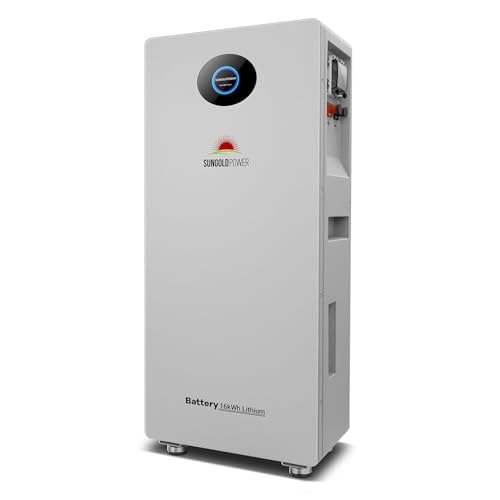
[High Capacity Solar Battery]: SUNGOLDPOWER UL1973 and UL9540A 48V 314Ah LiFePO4 lithium battery with over 8,000 deep cycles. Parallel up to 16 pcs ,maximum capacity of 16.07kWh.Ideal for solar systems, off-grid living, and whole-home backup power with reliable long-lasting performance.
Calculating Required Runtime for Your Device
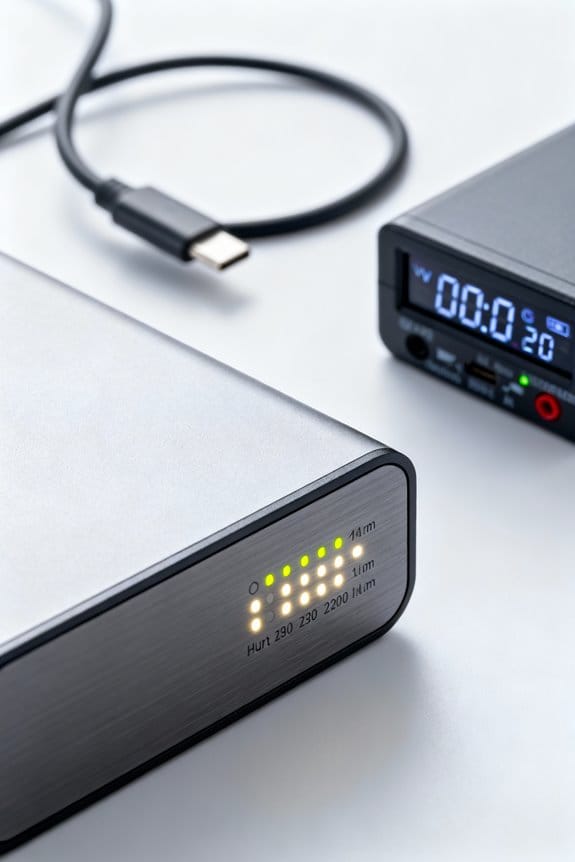
Following the evaluation of a device’s power consumption and peak load requirements, determining the required runtime involves quantifying the total energy demand over a specified period, which is calculated by multiplying the device’s power usage in watts (W) by the intended operating hours (h) to yield energy in watt-hours (Wh); for instance, a 50W device intended to run for four hours necessitates a battery capable of providing at least 200Wh. To translate this energy into battery capacity, divide the total watt-hours by the battery voltage, resulting in ampere-hours (Ah); consequently, a 12V battery would need about 16.67Ah. When planning capacity, efficiency losses and power consumption variability require adding a safety margin to guarantee reliable energy supply during operation. Incorporating components with high energy efficiency can reduce overall power requirements and extend runtime.
Recommended Products
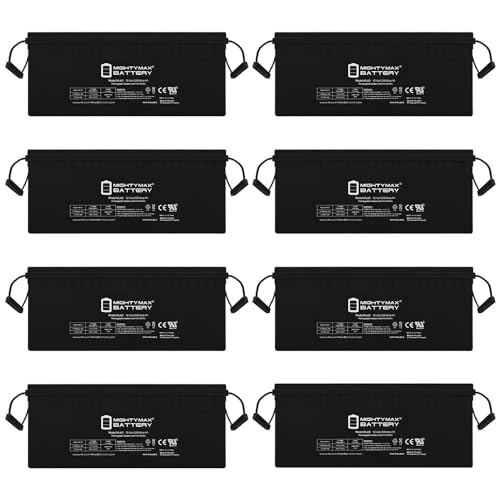
ML4D SLA is a 12V 200AH Sealed Lead Acid (SLA) rechargeable maintenance free battery, Pack of 8 - UL Certified

Slim Compact Build: 40.8% smaller standard 200Ah LiFePO4 battery, fits Group 31 trays for tight RV/marine spaces. 44.5 lbs, 65% lighter than lead-acid, simpler installation & less back strain.

【Upgraded Built-in 100A BMS Ideal for Trolling Motor】Power Queen 12V200Ah lithium battery is equipped with a upgraded 100A BMS, well-suited for 12V-36V trolling motor with 70-120lbs thrust, supports Max. 1280W load power. Ideal to power the trolling motors and other load on board like fish finder, GPS, sonar, electric outboard motor etc
Determining Energy Consumption in Watt-Hours
How does one effectively determine the total energy consumption of a device over a specified period? The calculation involves multiplying the device’s power requirement, measured in watts, by the duration of use in hours, resulting in energy consumption expressed in watt-hours (Wh). For instance, a device needing 10 watts operating continuously for 5 hours consumes 50 Wh. It is essential to evaluate peak power demands, especially for devices with fluctuating power needs, ensuring the battery capacity can support moments of maximum energy use. Regular assessment of usage patterns is recommended, as shifts in operation time or intensity directly affect energy consumption. This precise calculation informs appropriate battery capacity selection, thereby optimizing battery life and maintaining consistent performance aligned with real-world power and runtime requirements. Additionally, proper weatherproof protection of outdoor electrical components is crucial to safeguard energy sources and maintain reliable device operation in various environmental conditions.
Factoring in Efficiency and Safety Margins
Considering real-world inefficiencies and operational safety margins is essential for selecting a battery capacity that consistently meets a device’s energy demands, since typical battery output can decrease by 10-20% due to factors like temperature fluctuations and internal resistance. To address efficiency losses, incorporating a safety margin of 20-30% in capacity calculations guarantees reliable performance during peak power demands and prevents underperformance. Additionally, the battery’s discharge rate must be considered, as higher discharge rates reduce available capacity, necessitating batteries with suitable discharge characteristics. Lithium-ion batteries typically offer better retention of capacity with fewer efficiency losses compared to older chemistries. Accurate assessment of a device’s energy consumption and usage patterns supports the integration of these factors, optimizing battery capacity selection for safety and efficiency across operational conditions. Moreover, understanding the impact of thermal cycling on battery lifespan can further refine capacity planning to ensure durability under varying temperatures.
Selecting the Appropriate Battery Voltage and Chemistry
Beyond accounting for capacity efficiency and safety margins, selecting the appropriate battery voltage and chemistry demands precise alignment with the device’s operational requirements, as inaccurate voltage matching may cause malfunction or permanent damage. Battery voltage must closely correspond to device specifications, typically around 3.6 to 3.7 volts per cell for lithium-ion batteries, which offer a high energy density suited for portable electronics. Conversely, lead-acid batteries, with lower energy density but higher current output, serve automotive applications better despite their bulk. Battery chemistry influences performance, charging behavior, and lifespan; thus, it is vital to evaluate device requirements like operational voltage, current draw, and physical constraints. Assessing these factors guarantees optimized device efficiency, safety, and durability by matching battery voltage and chemistry precisely to the power demands established by device specifications. Additionally, choosing between alkaline, lithium, or NiMH chemistries depends on device needs, as alkaline batteries generally fit low-drain use while NiMH excels in high-drain applications.
Recommended Products

24 bit digital, dual frequency (true stereo) transmitter and receiver

Best sounding assistive listening system on the market with True Stereo equipped with two digital chips per transmitter and receiver.

[Upgrade NANOVNA] ORIGINAL NanoRFE VNA6000 is a 6GHz Transmission/Reflection vector network analyzer, measuring the S11 Reflection coefficient and the S21 Transmission coefficient of a high frequency network; Not only testing standing wave impedance of the antenna, but also can debug the duplexer, the insertion loss of the filter, the isolation and testing the attenuation of the cable, shorten the coefficient, the phase, the amplification of the antenna amplifier
Battery Configuration: Series and Parallel Connections
A significant consideration in matching battery capacity to a device’s energy needs involves understanding the implications of series and parallel connections, as these configurations directly affect voltage and capacity parameters critical to device performance. In a series connection, individual battery voltages combine while the capacity, measured in ampere-hours (Ah), remains constant; for example, two 12V batteries connected in series yield 24V at the same Ah rating as one battery. Conversely, a parallel connection maintains a constant voltage but sums the capacities of each battery, such as two 12V, 100Ah batteries producing 12V at 200Ah. Properly configuring batteries using series or parallel connections guarantees the device receives the necessary charge and voltage, optimizes capacity, and maintains efficient, safe operation without degrading performance. Additionally, using high-quality maintenance tools with ergonomic grips and corrosion control features can help preserve battery health and ensure reliable energy delivery through these configurations, as recommended by top battery maintenance kits.
Recommended Products

HOME BACKUP POWER, ≤3% THD: The Westinghouse iGen12000TFc tri fuel inverter generator provides whole home backup power that's safe for sensitive electronics; It also has a 50A outlet; Gasoline: 12,000W peak/9,000W running; Propane: 11,000W peak/8,100W running; Natural gas: 9,800W peak/7,200W running

【800W Solar Panel Kit】The 800W off grid solar system complete kit is equipped with 25.2% High-Efficiency Solar Cell 200W bifacial solar panels and 12V 3000W inverter charger for the first time. It not only has higher power generation efficiency, more beautiful all-black appearance, and easier installation, but also uses the UPS power function to provide you with extremely fast conversion power supply of two energy sources. It can not only generate electricity with solar energy, but also charge with mains electricity, allowing you to enjoy your RV trip without worries

Unlock a 30% Tax Credit: You will be eligible to claim a residential clean energy tax credit, on qualified solar electric property. Contact your utility provider, for further information and to confirm specific eligibility and requirements for the Residential Clean Energy Credit Program.
Considering Environmental and Usage Factors
Although battery capacity ratings often assume standard conditions, real-world environmental and usage factors play a critical role in actual performance, particularly temperature variations and operational demands. Environmental factors like temperature greatly impact batteries, as capacity can increase by up to 12% at 50°C but diminish capacity and lifespan when exceeding the ideal 20°C to 25°C range due to elevated internal resistance. Usage patterns also influence energy stored, with high-demand devices such as gaming systems requiring nearly twice the energy compared to standby modes, affecting the necessary capacity. For backup power, calculating total energy consumption over intended outage duration, combined with a 60% depth of discharge (DOD), guarantees adequate capacity. Considering efficiency losses due to thermal conditions and discharge rates, proper margins must be included to maintain reliable performance across varying environmental and operational settings. It is also crucial to select batteries with appropriate temperature tolerance ratings to ensure stable operation across the full spectrum of expected conditions.
Best Practices for Battery Maintenance and Longevity
When lithium-ion batteries are maintained within a charge range of 20% to 80%, their operational lifespan is considerably extended, as avoiding deep discharge reduces electrode wear and capacity degradation over repeated cycles; studies indicate that this practice can improve cycle life by approximately 30% compared to batteries frequently charged to full capacity or fully drained. Regular battery maintenance, including prompt recharging after use and storing batteries at around 59°F (15°C) in dry conditions, sustains battery performance by preventing prolonged low charge states and thermal-induced capacity loss. For lead-acid variants, avoiding overcharge mitigates sulfation, preserving the battery’s lifespan. Additionally, routine cleaning of terminals and corrosion checks guarantee reliable energy transfer, thereby optimizing the capacity of a battery to meet a device’s energy demands efficiently while maximizing the battery’s lifespan and overall functionality. Using battery testers with reverse-polarity protection and accurate diagnostics helps ensure safe and reliable battery maintenance practices.
Recommended Products
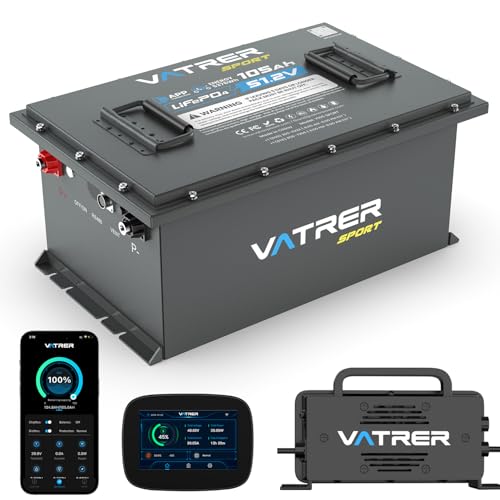
AI Intelligent Optimization & Full-Lifecycle Smart Management: 48V golf cart battery equipped with AI-powered 300A BMS, it monitors cell temperature, voltage, and current in real-time with <3% SOH(state of health)prediction error, pre-warning potential risks. Adapts charging/discharging curves to load, temperature, and driving habits, ensuring stable performance in extreme conditions. Extends cycle life to 6000+ times with 80% capacity retention.

【3000W Peak Powerful Dual Motor】: Equipped with double 1000W(peak 1500W) brushless motor, delivers impressive acceleration and climbing capability, the cargo ebike provide strong 160 N/M of torque, effortlessly conquering gradients of up to 40 degrees, help you conquer even the most rugged terrain easily, 8-speed transmission system, allow to smooth and precise shifting based on terrain, easily suffice your daily commute and adventurous riding.

This camera bundled comes with manufacturer in box accessories as well as bundled accessories. The camera comes with a Sony 1-Year Manufacturer Warranty
Frequently Asked Questions
How to Determine Battery Capacity Needed?
How can one guarantee battery capacity aligns with device needs? By analyzing device requirements, load calculations, energy consumption, usage patterns, efficiency ratings, and matching battery specifications accordingly, accurate capacity determination supports ideal performance and longevity under various conditions.
How Do You Convert Battery Capacity to Energy?
Battery energy conversion involves multiplying amp hour calculations by the battery voltage to establish watt hour relationships. Voltage influence is critical, aligning with device energy requirements, while efficiency factors affect the practical usable energy derived from capacity.
How Long Will a 100AH Battery Run an Appliance That Requires 400W?
Battery runtime calculation estimates a 100AH battery powers a 400W appliance for about 3 hours. Energy consumption analysis incorporates appliance wattage estimation, discharge rate consideration, battery type selection, and efficiency factors affecting actual runtime.
How to Compare Battery Capacity?
Comparing battery capacity involves analyzing battery specifications such as mAh and voltage requirements, aligning them with device energy consumption and compatibility. Consider charging cycles and performance factors to guarantee reliable, efficient battery use under real-world conditions.