As an Amazon Associate, we earn from qualifying purchases. Some links on this site are affiliate links at no extra cost to you. Our recommendations are based on thorough research and editorial judgment.


Understanding Battery Voltage: Why Most AA Batteries Are 1.5V

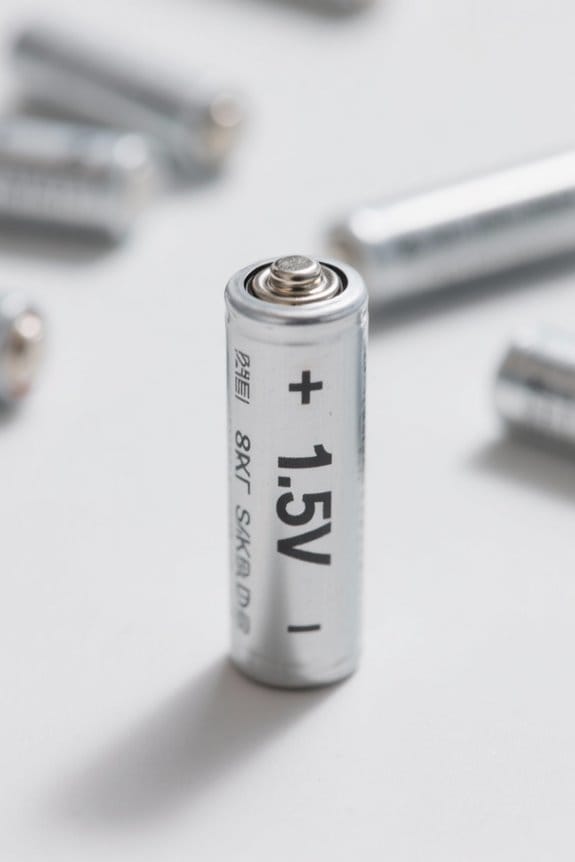
Most AA batteries have a nominal voltage of 1.5 volts due to the electrochemical reaction between zinc anodes and manganese dioxide cathodes, which produces consistent output essential for medium-drain devices. Fresh alkaline cells peak near 1.65 volts but effective performance requires a minimum of 1.2 volts, with internal resistance rising as batteries age. Alternative chemistries, like lithium at 1.8 volts and rechargeable NiMH at 1.2 volts, offer different voltage profiles under load. Exploring these factors reveals ideal battery selection.
Key Takeaways
- Most AA batteries deliver 1.5 volts due to the chemical reaction between zinc anodes and manganese dioxide cathodes in alkaline cells.
- The 1.5V nominal voltage meets the power requirements of a wide range of low to medium drain devices efficiently.
- 1.5 volts is a standardized voltage that balances energy output, cost, and compatibility across various consumer electronics.
- Internal chemistry and cell design in common AA batteries result in a stable voltage around 1.5 volts during most of their usage.
- Maintaining 1.5V ensures device functionality without excessive voltage drop, supporting reliable performance until the battery is nearly depleted.
The Standard Voltage of AA Batteries
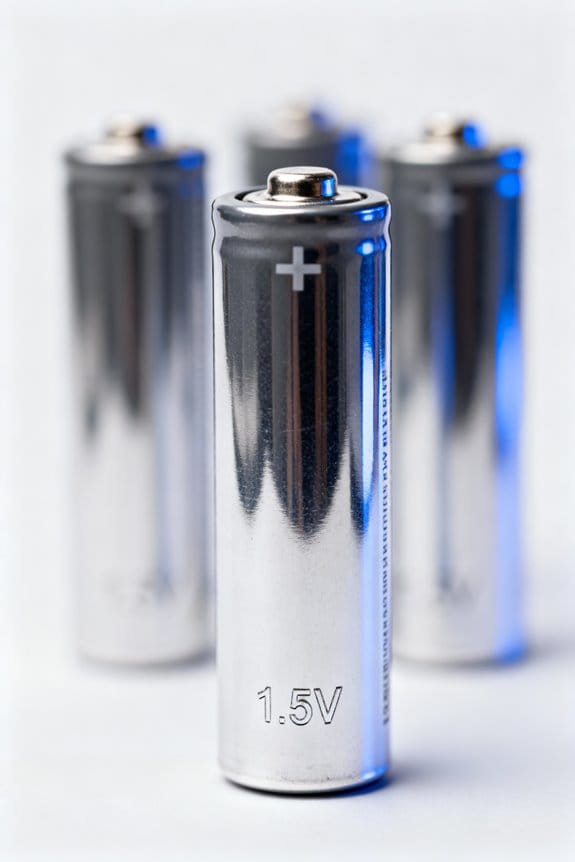
The standard voltage of AA batteries is primarily set at a nominal 1.5 volts, a specification rooted in the chemical composition of disposable alkaline cells widely employed across consumer electronics; this voltage level meets the operational design criteria of most low to medium drain devices, ensuring consistent energy delivery and compatibility. While typical alkaline AA batteries maintain this nominal voltage, rechargeable NiMH variants offer a slightly lower nominal voltage of 1.2 volts immediately after charging, yet still provide adequate capacity for most applications. Lithium AA batteries, by contrast, deliver a higher initial voltage close to 1.8 volts, maintaining stable performance especially in extreme temperatures. The harmonization of the 1.5-volt nominal voltage standard consequently promotes broad compatibility, allowing consumers to interchange between alkaline, NiMH, and lithium chemistries in numerous devices without compromising functionality or safety. Understanding the different battery chemistries is essential for selecting the optimal AA battery for specific device requirements.
Chemistry Behind the 1.5V Nominal Voltage
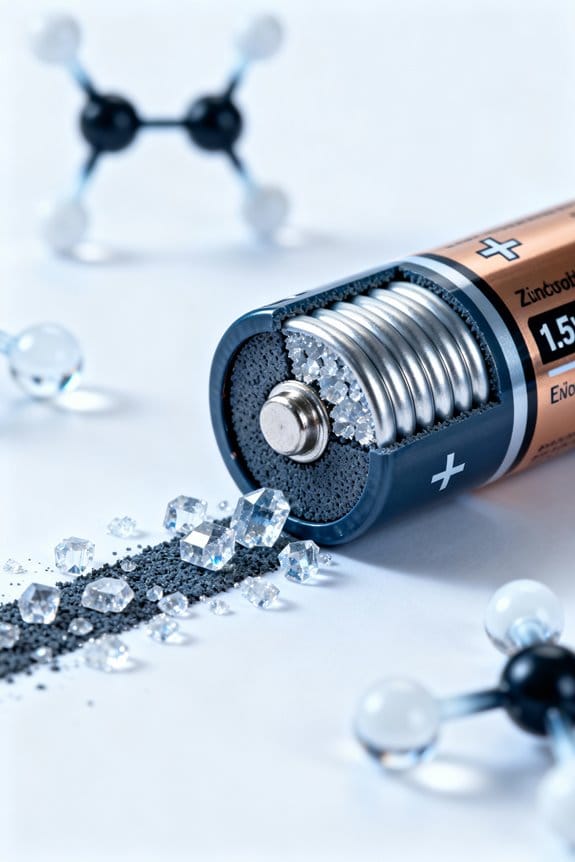
Several common AA battery chemistries converge around a nominal voltage near 1.5 volts, a value largely determined by their internal electrochemical reactions; alkaline cells, for example, generate this voltage through a zinc anode reacting with manganese dioxide cathodes, producing consistent output under typical load conditions measured in standardized discharge tests at 25°C. Zinc-carbon batteries also maintain approximately 1.5 volts but exhibit higher internal resistance and reduced performance in high drain devices due to faster chemical degradation. Lithium batteries, particularly lithium iron disulfide types, can exceed 1.5 volts under no load due to higher energy density, while NiMH batteries have a lower nominal voltage of 1.2 volts because their nickel-based chemistry limits cell potential. Battery chemistry consequently dictates nominal voltage and impacts performance, internal resistance, and suitability for various electronic applications. Advances in Battery Management Systems help maintain voltage stability and enhance battery safety across these different chemistries.
Voltage Thresholds and Battery Performance

Examining voltage thresholds reveals that disposable AA batteries typically exhibit a nominal voltage of 1.5 volts, with fresh alkaline cells capable of peaking near 1.65 volts under no load conditions before replacement is necessary; rechargeable nickel-metal hydride (NiMH) batteries contrast by providing a lower nominal voltage around 1.2 volts, which corresponds to their distinct electrochemical properties. The minimum voltage for effective device performance is approximately 1.2 volts, below which voltage drops indicate the battery’s diminishing energy. Internal resistance rises as batteries age, accelerating voltage drops and reducing overall performance. Lithium AA batteries maintain stable battery voltage and superior performance in extreme cold, unlike alkaline cells that lose capacity. Discharge rate also influences how quickly voltage declines, impacting device function and lifespan across battery chemistries and use scenarios. For devices with consistent power needs like toys and flashlights, high-capacity alkaline batteries are recommended to maximize runtime and reliability, especially in high-drain applications.
Identifying Low Voltage in AA Batteries
How can one reliably identify when AA batteries have dropped below ideal voltage, signaling the need for replacement or recharge? Measuring the voltage of an AA battery with a voltmeter offers the most accurate assessment, as alkaline batteries typically start at 1.5 volts but indicate significant depletion below 1.2 volts. Similarly, lithium batteries maintain up to 1.8 volts when fresh, yet fall below the usability threshold near 1.2 volts during depletion. Rechargeable NiMH AA batteries, nominally at 1.2 volts when fully charged, require close monitoring to maintain device performance. Rapid voltage drops or readings substantially lower than these nominal values reveal diminished capacity and a battery’s inability to sustain proper energy output. Consistent voltage measurement guarantees devices operate efficiently and helps determine when a battery no longer meets functional criteria. Regular load testing under mid-drain performance conditions provides additional insight into battery reliability beyond simple voltage readings.
Differences Between Disposable and Rechargeable AA Batteries
What distinguishes disposable AA batteries from their rechargeable counterparts lies primarily in their voltage characteristics, chemical composition, and usage lifespan; disposable types like alkaline and lithium typically provide a nominal voltage of 1.5 volts—sometimes peaking at 1.65 volts when fresh—to power devices effectively until they fall below approximately 1.2 volts, signaling replacement, whereas rechargeable Nickel-Metal Hydride (NiMH) batteries deliver a lower nominal voltage of 1.2 volts but maintain a more stable output under load, making them preferable for high-drain applications; additionally, lithium disposables outperform alkaline batteries in extreme temperatures but, like alkaline cells, cannot be recharged, in contrast to NiMH batteries that support hundreds of recharging cycles, offering a cost-effective, environmentally conscious alternative despite their lower initial voltage. Disposable AA batteries serve low-drain devices well due to energy density, but NiMH batteries excel in long lifespan and sustained performance. When selecting chargers for these batteries, it’s essential to use ones with independent charging channels to ensure safety and efficiency during the charging process.
Measuring AA Battery Voltage With a Voltmeter
Accurately measuring the voltage of an AA battery requires disconnecting it from any attached devices or circuits to prevent interference, then setting a voltmeter to a DC voltage range above 1.5 volts to capture the full potential of fresh alkaline cells, which typically read between 1.5 and 1.65 volts; when testing, the red probe is placed on the positive terminal and the black probe on the negative terminal, ensuring proper polarity to obtain precise readings. Measuring voltage this way differentiates alkaline batteries from NiMH batteries, with rechargeable NiMH cells showing around 1.4 volts even when fully charged. To assess battery capacity accurately, the voltmeter must be regularly calibrated, and devices should be fully disconnected, as load can cause inaccurate voltage readings, misleading users about the battery’s true remaining energy. For more precise assessment of battery condition, using a tester that performs real-load testing can provide a more accurate measure of usable battery capacity beyond simple voltage readings.
Choosing the Right AA Battery for Your Device
Selecting the appropriate AA battery type depends largely on the device’s power demands, as variations in voltage output, internal resistance, and discharge rates greatly influence operational efficiency and battery lifespan. For low-drain devices, such as remote controls, alkaline batteries offer cost-effective battery performance with a nominal voltage of 1.5V and adequate longevity. Medium-drain devices, including digital cameras, require battery types providing voltage consistency and a long lifespan, making alkaline or lithium batteries suitable. High-drain devices, for example gaming controllers, benefit from rechargeable batteries like NiMH, which deliver a stable 1.2V and exhibit lower internal resistance, supporting extended use. Choosing the right battery also involves aligning battery characteristics with device needs; consulting voltage charts guarantees ideal selection, enhancing both performance and battery life across diverse applications. Additionally, purchasing batteries in bulk can reduce the overall cost per cell and ensure a steady supply for frequent use.
Frequently Asked Questions
Why Are Most Batteries 1.5 V?
Most batteries embrace a graceful equilibrium at 1.5V, reflecting battery chemistry that optimizes voltage behavior. Alkaline advantages and energy density enhance discharge rates and battery life, while industry standards guide performance comparison and encourage rechargeable options, mindful of environmental impact.
Are All AA Batteries 1.5 V?
Not all AA batteries are 1.5V; voltage standards vary by battery chemistry. Rechargeable options typically offer 1.2V. Performance differences, charging methods, lifespan comparison, cost analysis, environmental impact, and usage applications influence AA battery types choice.
Why Are Some AA Batteries 1.2 V and Some 1.5 V?
Voltage differences arise from battery chemistry; rechargeable options like NiMH yield 1.2V due to composition, while alkaline disposables provide 1.5V. Discharge rates, device compatibility, performance metrics, manufacturer standards, usage scenarios, environmental impact, and cost comparison influence these choices.
What Voltage Should AA Batteries Be?
AA batteries should measure 1.5 volts for alkaline types, 1.2 volts for rechargeable options, and up to 1.8 volts for lithium batteries. Voltage types influence device compatibility, energy output, discharge rates, battery lifespan, and environmental impact considerations.