As an Amazon Associate, we earn from qualifying purchases. Some links on this site are affiliate links at no extra cost to you. Our recommendations are based on thorough research and editorial judgment.
Understanding the Difference Between Indoor and Outdoor String Light Ratings

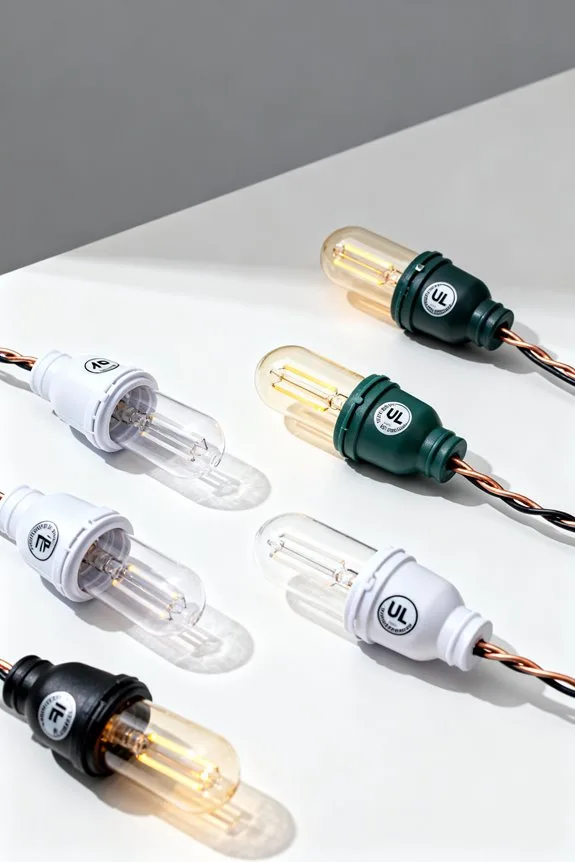
Indoor and outdoor string light ratings differ primarily in weather resistance, safety certifications, and durability, with outdoor models requiring a minimum IP65 rating to guarantee dust-tight protection and withstand water jets. Outdoor lights feature weatherproof materials like PVC, shatterproof LED bulbs rated between 15,000 and 50,000 hours, and UL listings for wet or damp locations, while indoor lights lack waterproofing and have shorter lifespans near 1,000 hours. Understanding these specifications clarifies safe use and performance across environments.
Key Takeaways
- Outdoor string lights have higher IP ratings (at least IP65) ensuring protection against dust and water, unlike indoor lights designed for dry environments.
- UL listings differ, with outdoor lights rated for wet or damp locations, while indoor lights are listed only for dry conditions.
- Outdoor lights use durable, weatherproof materials like PVC and shatterproof bulbs, whereas indoor lights have delicate fabric cords and less robust bulbs.
- Lifespan varies significantly; outdoor LED string lights last 15,000-50,000 hours, while indoor incandescent lights typically last about 1,000 hours.
- Proper outdoor installation requires weatherproof electrical connections and routine maintenance to ensure safety and performance in varying weather conditions.
Key Design Differences Between Indoor and Outdoor String Lights
Although both indoor and outdoor string lights serve decorative or functional lighting purposes, their design differences stem primarily from the environments in which they are used, leading to distinct material choices and structural features. Outdoor string lights incorporate durable materials such as PVC coatings and weatherproof construction to guarantee moisture protection and resistance to UV exposure, boasting IP ratings of at least IP65 that certify dust and water ingress protection. In contrast, indoor string lights lack such robust features, often using delicate fabric cords unsuitable for wet conditions. Additionally, the lifespan of outdoor LED string lights ranges from 15,000 to 50,000 hours, far surpassing the approximate 1,000 hours typical of incandescent indoor lighting options. These design elements directly impact energy efficiency and adherence to safety standards, making proper selection essential for reliable, long-lasting installation. High IP ratings like IP65 waterproofing ensure outdoor string lights maintain performance under harsh weather conditions.
Understanding Safety Standards and UL Ratings for String Lights
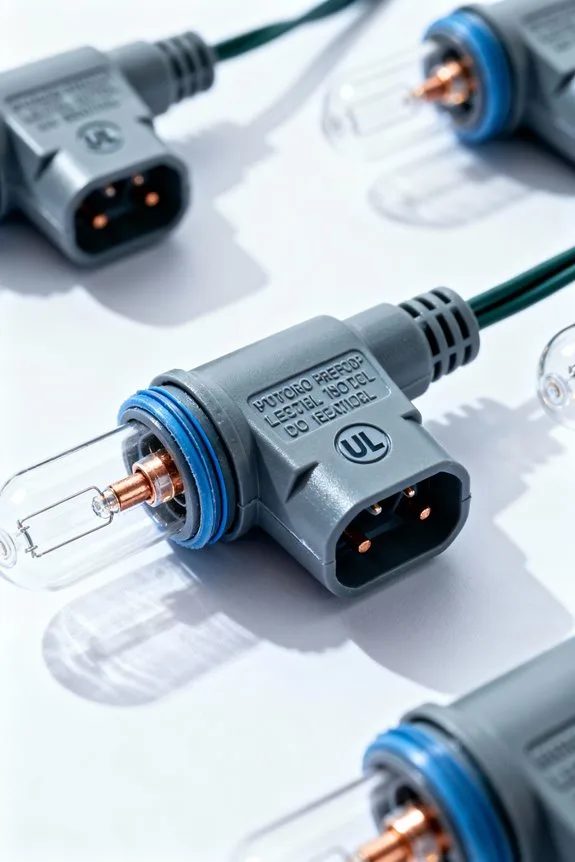
How do safety standards and Underwriters Laboratories (UL) ratings impact the reliability and suitability of string lights for various environments? String lights intended for outdoor use must be UL-listed specifically for wet or damp locations, verifying compliance with stringent safety standards that address moisture exposure and potential electrical hazards. In contrast, indoor lighting string lights are typically UL-listed only for dry locations, lacking the waterproof ratings or IP ratings necessary for reliable outdoor installation. Evaluating IP ratings, with IP65 as a recommended minimum for outdoor use, helps consumers gauge protection against dust and water ingress. Proper installation and wiring are essential to maintain these safety assurances, preventing short circuits and ensuring that string lights function safely in their designated environments, whether indoors or exposed to harsher outdoor conditions. Many high-quality outdoor string lights feature heavy-duty wiring and ETL certification to enhance durability and safety under various weather conditions.
Recommended Products

CREATE CUSTOMIZED LIGHT DISPLAYS - This professional grade 1000’ C9 cable has 2000 empty C9 sockets spaced 6 inches apart (plugs not included), allowing unique light string variations in lengths for any occasion. Use custom colors to represent Christmas or other holidays, team colors, party themes, and more.

Flexible silicone cased tape light for enhanced Damp location listing. Peel and stick3 construction adhesive on back. Indicator marks every 2 inch for field cutting

14AWG, 4 CONDUCTORS, BLACK JACKET, 500FT BOX. Premium 14 gauge speaker cable, featuring 105 strand Oxygen-Free Copper conductors and a super-luxe outer jacket. Built to exacting standards with zero compromises.
Importance of Waterproof and Weather Resistance Ratings
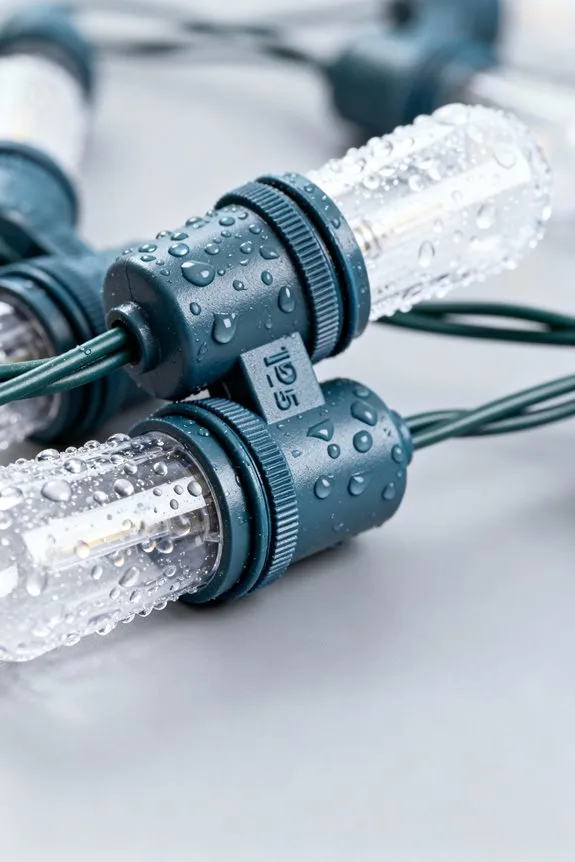
When evaluating the suitability of string lights for outdoor applications, it is essential to take into account waterproof and weather resistance ratings, typically expressed as Ingress Protection (IP) scores, which quantify the degree to which electrical enclosures resist dust and water intrusion under controlled testing conditions; for example, an IP65 rating requires complete protection against dust ingress and the ability to withstand water jets from any direction without causing harmful effects, thereby ensuring reliable operation in rain, snow, or dusty environments. High-quality outdoor string lights featuring robust moisture protection and sealed fixtures resist corrosion and maintain safety despite environmental factors, considerably extending lifespan to between 15,000 and 50,000 hours, unlike indoor models lacking such ratings that can deteriorate rapidly and pose hazards when exposed to moisture. Proper weather resistance and IP ratings are vital for ensuring durability and operational integrity outdoors. Additionally, products with shatterproof bulbs enhance safety and longevity by minimizing the risk of breakage during installation and use in harsh conditions.
Recommended Products

Widened Cedar Wood Frame: Designed with the widened size 4.7"x4.7", our durable hardtop gazebo has exceptional strength and stability. The wood column create a timeless look, effortlessly complementing the natural beauty of your outdoor space

Massive 33FT Flagpole Light Tree – Stunning Holiday Centerpiece:Transform your existing flagpole into a breathtaking 33-foot Christmas tree. With 8,400 ultra-bright LEDs, this mega display instantly becomes the highlight of your home, business, or community.

BRIGHT: Enjoy 8000 Lumens of crisp, natural white light (4500K) with replaceable LED strips and drivers. Instantly experience energy savings and improved visibility. Lightly frosted lens cover for optimal light distribution.
Choosing the Right Bulb Types for Indoor and Outdoor Use
Following a detailed understanding of waterproof and weather resistance ratings, selecting the appropriate bulb type becomes an essential factor in optimizing the performance and safety of string lights for their designated environment. Indoor lights typically employ standard LED bulbs or incandescent types, prioritizing warmth and ambiance but lacking the weather-resistant features vital for outdoor durability. Conversely, outdoor lights demand LED bulbs designed for outdoor use, featuring a minimum IP65 rating, which guarantees protection against dust and water jets, thereby enhancing brightness and longevity. These bulbs demonstrate superior durability under rain, snow, and temperature extremes, achieving efficient energy consumption without sacrificing illumination quality. Multi-colored outdoor LED bulbs contribute both to ambiance and functional lighting, underscoring the importance of matching bulb specifications with environmental requirements to maintain safety and effectiveness in diverse settings. It is also important to choose bulbs with shatterproof design and an appropriate base type like E12 or E26 to ensure both durability and ease of installation outdoors.
Recommended Products
BRIGHT: Enjoy 3600 Lumens of crisp, natural white light (4500K) with replaceable LED strips and drivers. Instantly experience energy savings and improved visibility. Lightly frosted lens cover for optimal light distribution.

INCLUDES (1) Pre-installed Inline RGB Mini-Controller

One-Piece 5MM Commercial Decoration LIGHTS : 600ft 1200 LED Lights (50 Lights 25ft X24Groups), 6-inch spacing. Green wires have a wide range of uses and are perfectly integrated with green plants or shrubs.no extra adapter is needed,bulbs are cool to touch,with the rectifier,keep the light steady (not twinkle).
Installation Requirements for Indoor vs. Outdoor String Lights
In the context of string light installation, indoor and outdoor settings demand distinct approaches tailored to their environmental challenges and safety protocols, as indoor string lights integrate easily with standard 120-volt indoor outlets and typically require only straightforward plug-and-play connections without weatherproof considerations. Outdoor string lights necessitate secure attachment methods, proper spacing to withstand wind, and a weatherproof electrical source, such as hardwiring or solar panels, with an IP rating of IP65 or higher to guarantee resistance against rain and moisture. Indoor installation prioritizes aesthetics and room layout, while outdoor setups emphasize safety and durability through weatherproofing standards and routine maintenance checks. Both require regular inspections; however, outdoor models demand more frequent evaluations to prevent damage caused by environmental exposure, fulfilling distinct installation requirements essential for peak performance. Additionally, using a weatherproof power strip with at least an IP44 rating ensures safe and reliable outdoor electrical connections.
Recommended Products

Upgraded Festive Lighting: The new anti-glare lens design reveals a better triangular lighting effect. Choose from 75 scene modes and 16 million colors to light up your home with RGBWWIC patio lights outdoor for every occasion

YEAR-ROUND USE: Once you've installed your permanent outdoor string lights, leave them up and use them whenever you like -not just for special occasions; light your home every day of the year.

Year-Round RGBIC Lighting: No more hassle of hanging every year, Govee Permanent Outdoor Lights 2 can be installed just once and used for year-round enjoyment. Perfect for roof, backyard and patio with 16 million colors and 100 scene modes
Assessing Energy Efficiency and Durability in String Lights
Proper installation of string lights, whether indoor or outdoor, directly influences their operational efficiency and longevity, but evaluating energy efficiency and durability requires consideration of design characteristics specific to each environment. Outdoor lights incorporate weather-resistant materials and higher IP ratings that provide superior moisture resistance, protecting electrical components from corrosion and ensuring consistent ambient lighting. Energy efficiency chiefly depends on LED technology, which can reduce power consumption by up to 80% compared to incandescent bulbs, and offers a long lifespan, typically between 15,000 to 50,000 hours. Durability stems from heavy-duty construction and waterproof coatings, enabling outdoor string lights to endure UV exposure and harsh weather conditions without significant performance degradation. Maintenance remains essential to uphold energy efficiency and durability, particularly in preventing moisture-related damage, thereby extending the functional life of outdoor installations. Additionally, features such as built-in hooks and end-to-end connection capabilities simplify installation and enhance flexibility in outdoor lighting setups.
Recommended Products

The Tallest of the PURPLE LEAF Pergolas: This creates a grand, open atmosphere with ample space for gatherings. It is perfect as a standalone piece or an extension for dining, outdoor furniture, hot tubs, or kitchens/bars.

Upgrade Yarn-dyed Curtain: Made with advanced techniques, our upgraded fabric offers strong fade resistance for at least 2 years and stays intact even after a month in extreme conditions.

Heavy Duty & Durable Design – Crafted from premium spruce wood and reinforced with a double metal roof, this permanent gazebo offers long-lasting stability and structural strength for your outdoor space all year round
Tips for Proper Maintenance and Longevity of String Lights
Maintaining ideal functionality and extending the lifespan of string lights necessitates routine inspections, focusing on identifying frayed cords, compromised insulation, and burnt-out bulbs, all of which can degrade electrical performance and increase safety risks; in particular, outdoor string lights benefit from periodic cleaning to remove accumulated dirt and debris that diminish luminous efficacy, while storing them indoors during severe weather or off-season periods mitigates moisture ingress and corrosion typically caused by prolonged exposure to humidity and temperature fluctuations. To guarantee safety and maintenance longevity, users should regularly inspect both outdoor lights and indoor fixtures for wear or damage, replace burnt-out bulbs promptly with those adhering to the original IP rating, and secure installation according to manufacturer guidelines to prevent wind-related hazards during extreme weather. Cleaning the lights periodically optimizes brightness and overall durability. Choosing lights with a weather rating of IP65 or higher ensures better protection against environmental elements and reduces maintenance frequency.
Frequently Asked Questions
What’s the Difference Between Indoor and Outdoor String Lights?
The difference between indoor and outdoor string lights lies in string light features like weather resistance, wiring quality, safety standards, voltage differences, and design aesthetics. Outdoor lights offer greater energy efficiency, light intensity, and durable bulb types, requiring specific installation tips.
How to Tell if Christmas Lights Are Rated for Outdoor Use?
How can one identify outdoor light ratings? Checking for UL certification standards, weather resistant materials, proper insulation properties of electrical components, appropriate voltage specifications, and following outdoor usage guidelines guarantees safer installation, especially considering light bulb types and indoor light safety.
What Is the Difference Between an Outdoor Light and an Indoor Light?
An outdoor light differs from indoor light specifications by featuring enhanced weather resistance, durable cord materials, compliance with safety standards, voltage variations, wattage considerations, energy efficiency ratings, bulb types differences, and installation requirements designed for rugged outdoor light durability.
Can I Use Outdoor String Lights Inside?
Outdoor string lights can be used inside if safety standards, electrical requirements, and light durability are met. However, indoor string aesthetics, energy efficiency, bulb types, installation tips, and decorative options should be considered to maintain desired ambiance and appeal.