As an Amazon Associate, we earn from qualifying purchases. Some links on this site are affiliate links at no extra cost to you. Our recommendations are based on thorough research and editorial judgment.

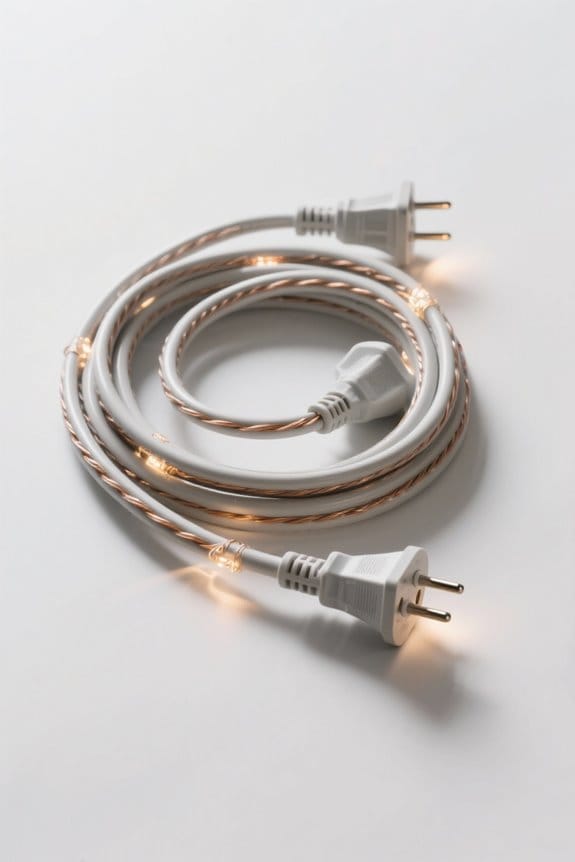
What You Need to Know About String Light Extension Cords

String light extension cords for outdoor use should feature SOOW ratings for durability against sunlight, water, and oil, and measure about 20 feet to maintain stable voltage with minimal drop below 3%. Selecting 12- to 14-gauge wire guarantees safe amperage capacity aligned with combined string light loads. GFCI protection and IP65 waterproofing add essential safety against shock and weather exposure. Proper handling and matching cord specs mitigate overheating and performance loss. Additional details reveal ideal cord choices and extension strategies.
Key Takeaways
- Choose outdoor-rated SOOW extension cords designed for durability against sunlight, water, and oil for string light use.
- Match the cord’s amperage rating to your string lights’ total draw to prevent overheating and ensure performance.
- Select appropriate gauge size, typically 12-14 AWG, based on cord length to avoid voltage drop and dimming.
- Always plug extension cords into GFCI-protected outdoor outlets for shock prevention and enhanced safety.
- Inspect cords regularly for damage and avoid running them through doors or windows to maintain insulation integrity.
Choosing the Appropriate Outdoor Extension Cord
How can one guarantee safety and peak performance when selecting an outdoor extension cord for string lights? Outdoor extension cords should be labeled SOOW, indicating they are durable against sunlight, water, and oil spillage, assuring reliable function in varied weather conditions. Selecting a length near 20 feet permits a secure connection to a GFCI outlet, which provides essential ground-fault protection during outdoor use. The extension cord’s amperage rating must match or exceed the combined amperage of the string lights to prevent electrical overloads. Furthermore, cords specified for outdoor use, often found on packaging, confirm suitability for harsh environments. Prioritizing these factors guarantees peak power transmission, reduced risk of short circuits, and extended cord longevity, all critical for maintaining safe and effective outdoor lighting installations under fluctuating environmental stresses. Some of the top-rated analyzer-chargers are designed with reverse-polarity cutoffs and over-current protection, ensuring safety in electrical systems.
Recommended Products

SECURE HIGH-POWER CONNECTION Designed for consistent power transfer in demanding environments, this 50 amp twist lock extension cord connects a CS6365C male plug to a CS6364C female connector for stable 125/250V performance. The locking design helps minimize accidental disconnects during generator operation, temporary power setups, RV connections, construction sites, and industrial equipment use where steady electrical flow is essential for uninterrupted operation.

DURABLE CUSTOM BUILT CONSTRUCTION: Made in the USA, this NEMA L21-20 extension power cord features industrial-grade Pass and Seymour components. The durable Dupont nylon housing provides excellent protection against impacts, weather, and diverse conditions. With internal dust boots and strain relief, this extension cable ensures reliability and safety, making it a dependable choice for both indoor and outdoor use.

ROBUST CONSTRUCTION FOR HEAVY-DUTY USE: Built with premium materials, this IronBox Electric generator extension cord features a durable NEMA L14-30P plug to L14-30R connector. Ideal for powering generators and industrial equipment, it ensures reliable performance.
Understanding Extension Cord Gauge Ratings
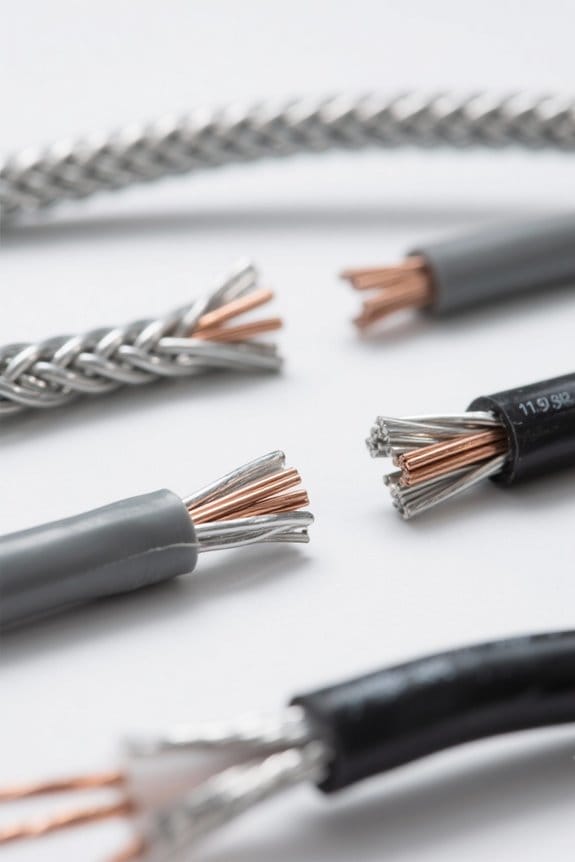
A fundamental aspect of selecting an extension cord for outdoor string lights involves understanding gauge ratings, which denote the thickness of the internal conductors measured by the American Wire Gauge (AWG) system. Gauge ratings inversely indicate conductor diameter, with a lower AWG number such as 10 gauge signifying a thicker wire that offers higher amperage capacity compared to a thinner 14-gauge wire. For safety, thinner cords, like 14 gauge, suit shorter runs of holiday lights, while 12 or 10-gauge cords are recommended for longer distances to minimize voltage drop and prevent overheating. Selecting an extension cord with the appropriate gauge rating aligned to amperage capacity guarantees safe and efficient operation, thereby reducing the risk of fire hazards and electrical malfunctions during holiday lighting use. For outdoor lighting options, consider the IP65 waterproof rating that ensures durability and resistance to wet conditions.
Recommended Products

This selection includes 500 Feet of 12/3 SJOOW cable.

Marinco Cordset, 50A 125/250V, 50', Yellow, part number 6152SPP

This selection includes 250 Feet of 12/4 SJOOW cable.
Matching Extension Cords to Your Lighting Power Needs
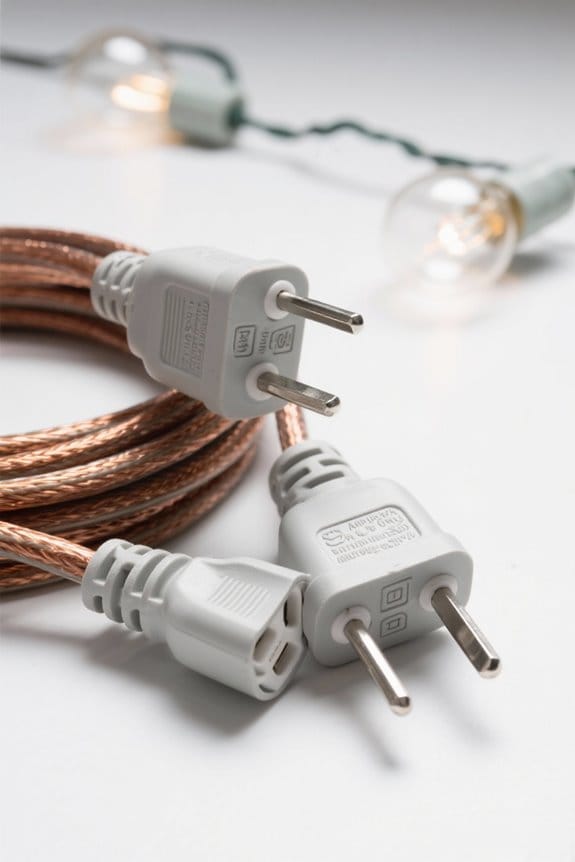
Why is it essential to match the extension cord’s amperage rating to the total electrical load of string lights, especially when dealing with runs of varying length and outdoor conditions? Extension cords must have an amperage rating equal to or exceeding the combined draw of the lights, generally up to 20 amps, to maintain safety and prevent overheating. For runs 25 feet or less, a 16-gauge cord suffices; for longer distances, a 14-gauge cord is recommended to reduce voltage drop, which can impair light performance. Extension cords rated for outdoor use, such as SOOW types, withstand moisture and sunlight exposure effectively. Mixing cords with differing gauge ratings or using under-rated amperage cords increases fire risks. Matching the right cord guarantees ideal voltage delivery and enhances the overall safety and durability of outdoor string lighting setups. It is also important to ensure that smart outdoor lights are compatible with your setup to optimize energy efficiency and utilize advanced features like app control and voice assistant integration effectively.
Importance of Grounding and GFCI Protection
Ground Fault Circuit Interrupter (GFCI) protection plays an indispensable role in outdoor string lighting systems by rapidly detecting current imbalances as low as 4 to 6 milliamperes and disconnecting power within 1/40th of a second, thereby greatly reducing the risk of electrical shock from ground faults. Outdoor extension cords typically connect to three-prong outlets designed to accommodate grounding and GFCI mechanisms, which collectively enhance safety by mitigating shock hazards caused by moisture and environmental exposure. In installations where grounding may be absent, especially in older homes, GFCI technology functionally supplements this deficiency by interrupting fault currents promptly. Usage of GFCI-protected outlets for powering outdoor extension cords and string lights is highly recommended to maintain a critical safety barrier, ensuring safe operation under variable weather conditions while adhering to electrical safety regulations. Additionally, IP66 waterproof ratings in outdoor outlet boxes provide maximum protection against dust and water, further ensuring the safety and longevity of your outdoor electrical installations.
Tips for Extending String Lights Safely
When extending string lights outdoors, selecting extension cords rated specifically for outdoor use, such as SOOW cables, guarantees resistance against moisture, UV exposure, and temperature fluctuations, thereby preserving electrical integrity; cords must match or exceed the string lights’ amperage requirements to prevent overheating and potential fire hazards, while using gauge sizes of 14 or lower is advisable for longer distances to maintain current flow and minimize voltage drop, consequently assuring consistent illumination performance and safety. It is essential to avoid overload by ensuring the total current of connected string lights does not surpass the cord’s amperage rating. Regular inspection for wear, along with proper storage to keep cords dry, supports longevity and reduces risk. For extra safety, consider using weatherproof power strips with IP44 ratings or higher to protect against moisture and ensure reliable operation in outdoor environments. These measures collectively enhance safety and functionality when using extension cords outdoors.
Recognizing Certified and Safe Extension Cords
Selecting extension cords that meet recognized safety certifications, such as UL Listed or ETLus Listed labels, confirms adherence to rigorous testing standards involving electrical load management, insulation durability, and resistance to environmental factors like moisture and UV exposure. Outdoor cords should bear a double insulation symbol, ensuring suitability for external environments and enhancing protection against shock hazards. Incorporating GFCI protection in outdoor outlets further reduces the risk of electric shock by interrupting current flow during ground faults. The gauge of the extension cord is critical, with lower numerical values such as 12-gauge or 10-gauge recommended for appliances demanding higher amperage to minimize voltage drop and overheating. Checking the manufacturer’s specifications for maximum amperage and voltage ratings is essential, guaranteeing compatibility with the intended string light setup and promoting overall safety and efficiency. For enhanced durability and weather protection, materials with UV stabilization and impact resistance, such as polycarbonate or die-cast metal, are recommended for outdoor outlet covers.
Managing Cord Length and Voltage Drop
Although extension cords provide convenient power access for outdoor string lights, their length directly influences voltage drop due to increased electrical resistance, which can reduce luminescence and overall performance. For cord lengths exceeding 25 feet, using a 14-gauge extension cord is recommended to minimize voltage drop and maintain proper power levels. Longer distances or higher amperage demands warrant a larger gauge, such as 12 or 10, to guarantee stable voltage and prevent noticeable dimming—often occurring with as little as a 3% drop. Improper matches between cord length and gauge may lead to overheating, raising potential safety hazards. Careful assessment of cord length relative to gauge size is essential for consistent light output and to mitigate risks associated with excessive electrical resistance in outdoor string light setups. It’s crucial to understand that high-quality materials enhance durability and user satisfaction, especially when dealing with electrical applications.
Preventing Common Extension Cord Hazards
Since outdoor string light setups often rely on extension cords to deliver power over varying distances, preventing common hazards associated with these cords is critical to guaranteeing safety and performance. Utilizing outdoor-rated extension cords, specifically those labeled SOOW, is essential to resist moisture and UV exposure, which can degrade insulation. It is imperative to ascertain the total amperage of connected string lights does not exceed the cord’s maximum rating to avoid overheating and fire risks. To minimize electrical short circuits, extension cords should never run through doors or windows where insulation might be compromised. Regularly inspecting extension cords for wear, fraying, or damage considerably reduces shock and fire hazards, while organizing cords to remain elevated lessens tripping hazards, preserving both functionality and safety in outdoor environments. For the best performance in cold environments, consider using lithium AA/AAA batteries, which are known for their superior performance compared to alkaline batteries in low temperatures.
Handling and Storing Extension Cords Properly
Properly handling and storing extension cords markedly enhances safety and extends the functional lifespan of outdoor string light setups, especially when dealing with cords rated for outdoor use such as SOOW types designed to withstand moisture and UV exposure. To maintain ideal safety, extension cords should be stored in cool, dry locations, avoiding damp conditions that accelerate insulation degradation. Regularly inspecting cords before and after use, focusing on identifying frayed wiring or damaged insulation, is critical to prevent electrical hazards. Employing the “over-and-under” coiling method minimizes kinks and tangles, preserving cord integrity. Additionally, disconnecting cords from outlets when not in use reduces risks of electrical malfunctions or tripping. These practices collectively guarantee both enhanced safety and prolonged lifespan for extension cords used in exterior string lighting applications. For optimal performance, ensure your extension cords have an IP65 waterproof rating to protect against dust and water ingress in outdoor conditions.
Selecting Ready-Made Versus Custom Extension Solutions
Several factors influence the decision between ready-made and custom extension cords for string light installations, including length requirements, compatibility with existing lighting components, and durability standards such as SOOW ratings for outdoor use; typically, ready-made cords in lengths near 20 feet offer ease of use and GFCI outlet compatibility, whereas custom solutions—constructed using two-core appliance wire or speaker cable with appropriate gauge—allow for tailored lengths and connector configurations, albeit requiring soldered or terminal block connections to maintain electrical integrity and meet current load specifications. Ready-made extension cords guarantee outdoor durability and convenience, but may lack compatible connectors for specialized lighting systems. Custom extension solutions demand careful wire gauge selection and connector matching, allowing greater adaptability for varied string light setups and longer runs beyond standard lengths, supporting future installation needs. A waterproof rating like IP54 is essential for ensuring that outdoor cords remain protected against environmental hazards.
Frequently Asked Questions
What Should Never Be Plugged Into an Extension Cord?
Heat-generating appliances and high-amperage tools should never be plugged into extension cords. Observing safety precautions, voltage ratings, appliance compatibility, and limiting cord length is essential to prevent overload risks and guarantee safe usage.
What Gauge Extension Cord for LED Christmas Lights?
Though some might default to thinner cords, a 16-gauge extension cord suits LED light safety for short lengths under 25 feet. Amp rating considerations and power consumption efficiency increase, needing 14-gauge for longer string light placement.
Do I Need a Special Extension Cord for Outdoor Lights?
A special extension cord is necessary for outdoor lights to guarantee safety. Proper extension cord ratings prevent voltage drop effects, accommodate power requirements, and align with outdoor safety tips, optimizing outdoor lighting options while maintaining electrical integrity.
Can I Use a Regular Extension Cord for Christmas Lights?
Regular extension cords are not recommended for Christmas lights due to string light safety concerns. Outdoor lighting tips emphasize using properly rated cords, practicing extension cord maintenance, managing electrical load correctly, and following seasonal lighting ideas for safe installations.