As an Amazon Associate, we earn from qualifying purchases. Some links on this site are affiliate links at no extra cost to you. Our recommendations are based on thorough research and editorial judgment.


How to Calculate the Right String Light Length for Your Space

To calculate the right string light length, first measure the intended linear installation area meticulously, including any corners or obstacles, then add 2 to 6 feet for natural swag and design flexibility; select a hanging pattern suited to the space’s width, accounting for extra cable length if swags span 6 to 12 inches, and guarantee total wattage aligns with power source limits to avoid safety risks. Further guidance will clarify hardware choices and power calculations.
Key Takeaways
- Measure the total linear distance of the installation area, including corners and any obstacles along the light path.
- Add 2 to 6 feet extra to accommodate natural swag and ensure balanced light distribution.
- Account for bulb spacing, typically 4 to 5 feet apart, when choosing string light length.
- Consider the hanging pattern type and include additional cable length for swags or zig zag layouts.
- Purchase string lights with adjustable lengths or end-to-end connections for flexible installation options.
Measuring Your Space Accurately
Although measuring the linear length of the space where string lights will be installed may seem straightforward, it requires careful attention to detail, including accounting for any contours, corners, or obstacles that influence the path of the lights. To measure the area accurately, the linear length must factor in dips or shadows created by the hanging lights, ensuring the acquired length accommodates the natural swag typical of string installations. Since standard string light lengths often range from 24ft to 100ft, it is prudent to purchase an appropriate length that exceeds the measured linear span by two to six feet. Experts recommend measuring twice, confirming dimensions to secure enough material for the desired hanging pattern, all while preventing shortages that could disrupt the final aesthetic or functionality. Additionally, considering the end-to-end connection feature can help extend lighting coverage without needing excessively long single strands.
Recommended Products

Permanent Holiday Lights: These color-changing, permanent Christmas lights provide multi-seasonal holiday lighting. Valentine's lighting? Check. Easter decorations? Yep! Fourth of July lights? Of course. Halloween lighting! Heck yeah!

HOLIDAY MAGIC: Experience the holiday magic with our 250-foot C9 magnetic Christmas light spool, ideal for indoor and outdoor festive decorations.

【Enhanced RGBCW Outdoor Lighting】Elevate your outdoor ambiance with ASAHOM permanent outdoor lights. Powered by ASAHOM app with AIGC intelligence and WLED integration for endless DIY creativity. 144 upgraded RGBCW LEDs deliver 50lm per light, 2700K-6500K tunable white, and 30,000+ lighting combination. Dual output extends up to 800ft. Smart schedule. 92 preset scenes for Halloween, Christmas decor and accent lighting. Perfect for roof, backyard, patio, gazebo, garage, porch, fence, etc.
Choosing the Ideal Hanging Pattern
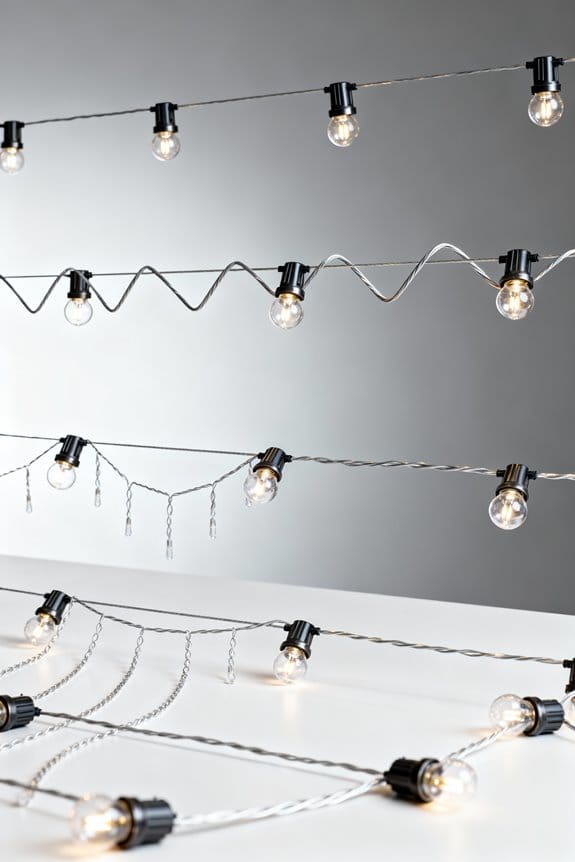
Determining the ideal hanging pattern for string lights involves evaluating the spatial dimensions and desired ambiance, as this choice directly impacts both the visual effect and the total linear footage required; for instance, selecting a zig zag or scallop pattern demands additional cable length to accommodate swags typically ranging from 6 to 12 inches per segment, which should be calculated beyond the measured perimeter to confirm coverage without light overlap or excessive tension. The hanging pattern should correspond to the space layout, with narrower areas favoring V or W designs, while wider spaces benefit from X or grid arrangements. Proper calculation of linear feet guarantees the hanging arrangement avoids illumination overlaps and shadows, thereby optimizing visual effects and enhancing ambiance through a well-planned design that balances aesthetics and function. Additionally, choosing string lights with end-to-end connections can provide greater flexibility when planning your lighting layout to accommodate different hanging patterns.
Recommended Products

75 FT Outdoor String Lights: 75 ft with 24+2 bulbs (2W bulbs much brighter than 1W). This patio hanging string light with plastic LED bulbs emits a soft 2700K warm glow, creating a comfortable and cozy ambiance in your backyard for a happy time

**Stunning Chevron Design:** Introducing our Wood Bead Curtain "Wavery" featuring a captivating chevron pattern meticulously strung across 52 strands, adorned with decorative wooden beads.Each strand consists of small and some large wood beads whi
Total Length: 328 ft outdoor lights with 1000 multicolor LEDs blanket an entire yard, zig-zag across patio, or outline fence lines. Every light is evenly spaced for a seamless glow that turns whole landscapes into instant winter wonderlands
Accounting for Lighting Types and Bulbs
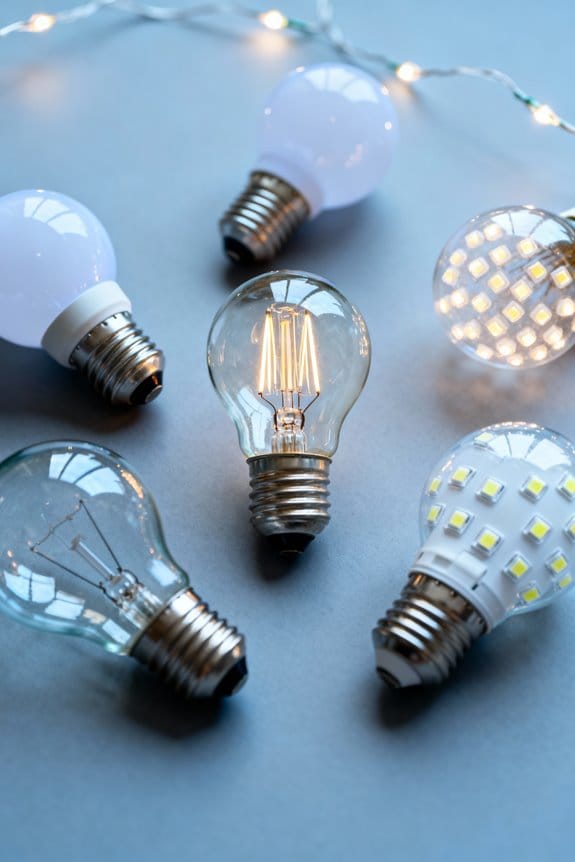
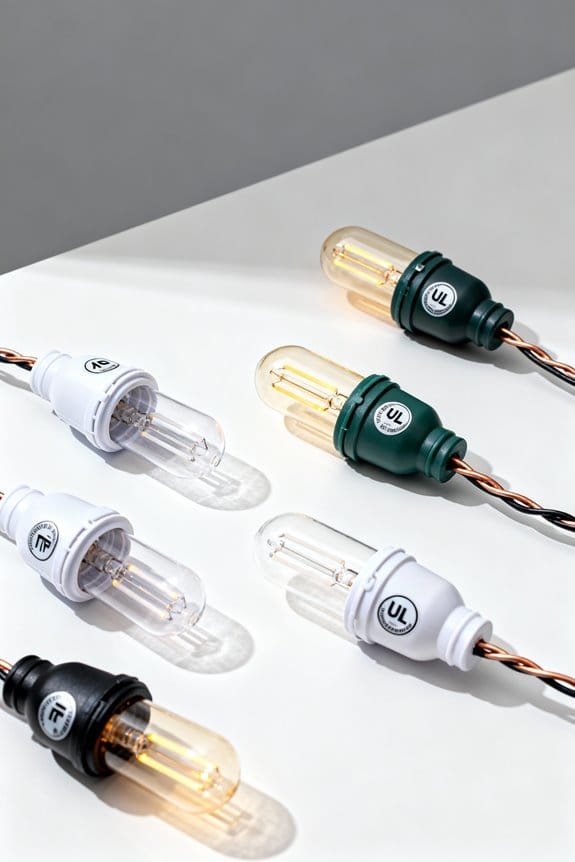
Three primary factors influence the selection of string light types for any installation: bulb technology, physical size, and base compatibility, each affecting overall design, safety, and performance. LED bulbs typically use about 1 watt to achieve brightness equivalent to an 11-watt incandescent bulb, offering superior energy efficiency for string lighting. Compatibility hinges on bulb base size, such as the common E12 Base for C7 bulbs, ensuring proper fitting and function. The hanging configuration must accommodate bulb size variations—for instance, larger Edison-style bulbs require more spacing and secure mounting. Additionally, the maximum wattage capacity of the power source must not be exceeded by the combined wattage of all bulbs. When planning to hang strings, consider whether mixing incandescent and LED bulbs necessitates compatible dimmers to maintain consistent brightness without exceeding specified limits or adding unnecessary additional length. For enhanced energy management and safety, integrating a battery monitoring system can help monitor power usage and prevent overloads in string light setups.
Recommended Products

【Luxury 7-Tier Crystals Chandelier】Uses 490 high-grade K9 crystals, which is clear and strong refraction,This Crystal Chandelier selected the TOP K9 crystal and the highest standards in the industry have been adopted from the manufacturing stage. Modern Crystal Chandelier with finished is a beautiful piece. With its sophisticated beauty and stunning details will fits your every space

【Modern Round Chandelier】This chrome chandelier lighting fixture, with high-quality metal frame, chrome plated finish, clear tassel rain drops crystal, cake tiered pattern, will in love with this pretty funky fringe chandelier

【Stunning Modern Design】Transform your dining space with this 40-inch rectangular crystal chandelier. The sleek chrome frame adorned with cascading crystal prisms creates a mesmerizing waterfall effect, making it a perfect statement piece for contemporary homes.
Incorporating Swag and Extra Length
While selecting appropriate bulb technology and guaranteeing compatibility set the groundwork for string light installations, incorporating additional length to accommodate swag or arcs in the lights enhances both functionality and appearance. When measuring for string lights, it is essential to calculate an extra 2 to 6 feet beyond the linear dimensions to allow for natural swag, which increases visual appeal and improves illumination distribution. Ideal spacing for hanging lights generally falls between 4 to 5 feet, a factor that must be included in overall measurements to avoid shortages. Purchasing string lights longer than the measured area provides flexibility, enabling users to double up excess length at the ends. This method guarantees balanced lighting and facilitates precise alignment, ultimately achieving ideal results in both illumination and aesthetic presentation. Additionally, selecting string lights with adjustable length options ensures greater coverage and reduces installation hassles when accommodating swag.
Selecting Suitable Hardware and Supports
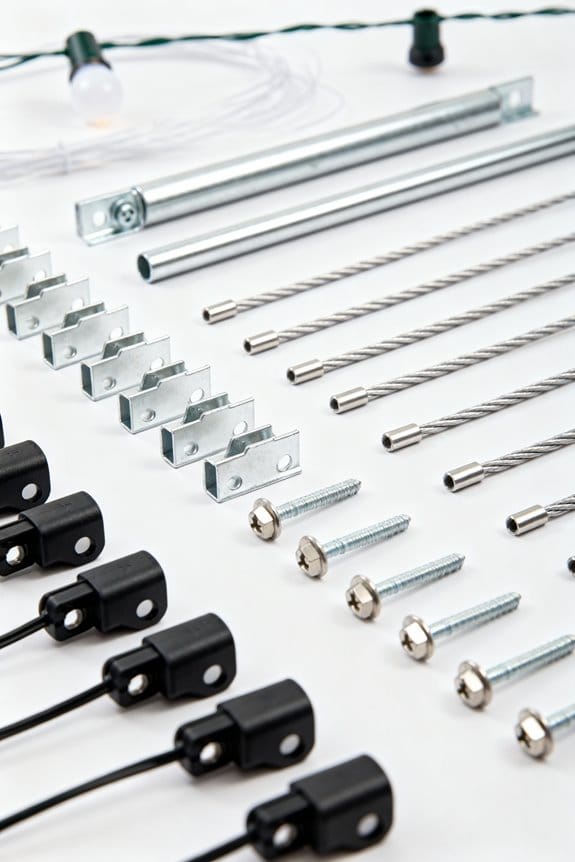
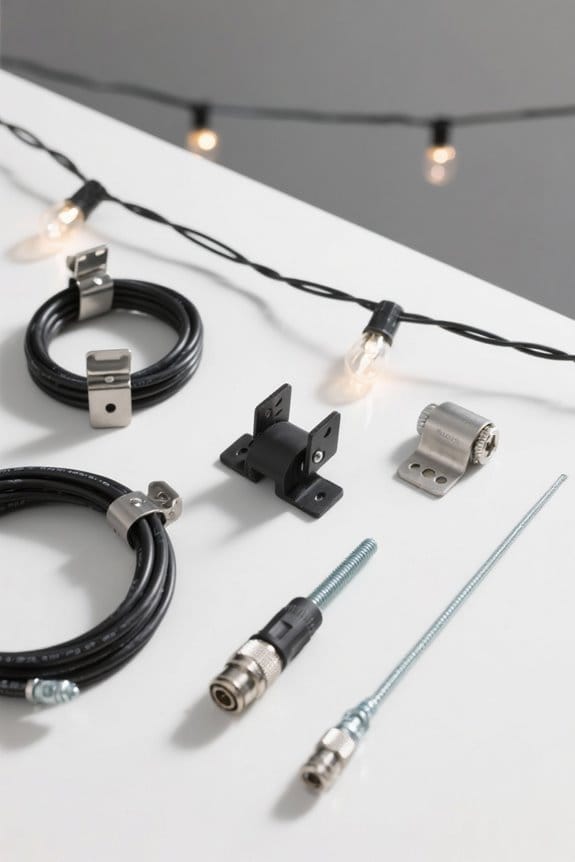
Because adequate support directly influences the structural integrity and longevity of string light installations, selecting suitable hardware is paramount; heavy-duty hooks or clips specifically designed to bear substantial weight and tension should be employed, ensuring they are securely anchored to withstand environmental variables such as wind speeds exceeding 20 miles per hour and moisture exposure, which commonly affect outdoor configurations. Lighting supports must accommodate the natural dip of the string lights without causing sagging, and incorporating guy wires is advisable for longer runs or heavier bulbs, providing additional stability. The mounting hardware should be properly secured at a minimum height of 8 to 10 feet, allowing sufficient clearance for pedestrians and minimizing obstruction risks. For ideal results, professional installation is recommended to verify anchor integrity and compliance with safety clearances. Additionally, using outdoor hardware with an IP66 waterproof rating ensures durability and protection against dust and water in harsh weather conditions.
Recommended Products

Outdoor Living Space for Backyard Lounge Setup: Place sofas, dining sets, TVs, or hot tubs to transform your patio into a fully functional outdoor living room where you can relax, entertain guests, and enjoy daily outdoor living just like indoors.

Upgrade Yarn-dyed Curtain: Made with advanced techniques, our upgraded fabric offers strong fade resistance for at least 2 years and stays intact even after a month in extreme conditions.

DUAL-LAYER METAL ROOF - Our hardtop gazebo features a dual-layer roof with inner netting to allow better air circulation. Instead of fabric or polycarbonate material, the galvanized steel panels are firmer to withhold harmful UV rays, strong wind and snow to protect you in all weather. Three hooks inside the roof can be used to hang fans, lights and decorations.
Calculating Power Requirements and Safety
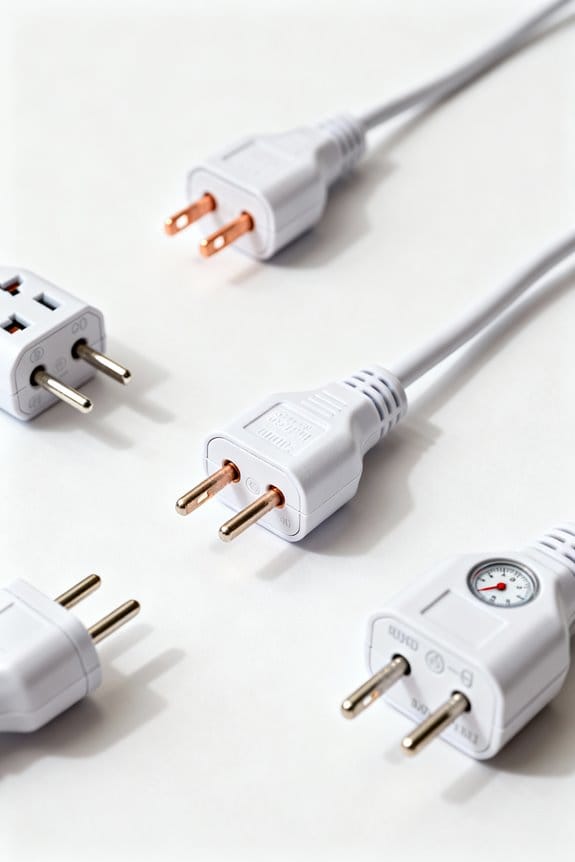
Effective power management constitutes a critical aspect of string light installations, requiring thorough calculation of total wattage by multiplying each bulb’s wattage by the number of bulbs deployed to guarantee compatibility with the power source’s capacity. Calculating power requirements involves ensuring the total wattage remains below 80% of the maximum capacity of the circuit to maintain safety and prevent blown fuses or electrical hazards. When connecting multiple strands of string lights, adhering to manufacturer guidelines for maximum connections is essential to avoid exceeding wattage capacity. Additionally, for outdoor installations, using extension cords rated for external use minimizes risks associated with moisture and wear. Incorporating circuit breakers or surge protectors provides further safety precautions, particularly when powering string lights over extended distances, thereby safeguarding the overall electrical setup. It is also important to select fixtures with an appropriate IP rating to ensure weather resistance and reliable outdoor performance.
Recommended Products

HIGH-QUALITY CORD - The extension cord is made with thicker 16 AWG wire diameters which can handle more amperage, Get more from your heavy-duty 3-Prong extension cord with a high capacity of 1625 Watt rating (13 Amps, 125V). Link additional extension cords, power strips, surge protectors, plug adders, and devices up to a max of 1625W.

Prevents GFCI Trips & Moisture Damage – Seals out rain, sleet, and snow to stop GFCI outlets from tripping and protect electrical connections year-round.

Delivers up to 28 minutes of run time at mid-speed (15,800 RPM) using two 18V LXT 5.0Ah batteries
Frequently Asked Questions
How to Calculate String Light Length?
Calculating string light length involves measuring linear distance, considering string light styles and decorative lighting options, and applying light spacing guides. Outdoor lighting tips boost energy efficient lights, event lighting themes, festive decor ideas, seasonal lighting trends, and room ambiance enhancement.
How Long Should My String Lights Be?
Like a painter choosing a canvas, the ideal string light length embraces string light styles, hanging techniques, and outdoor or indoor decoration ideas, balancing energy-efficient bulbs, color temperature choices, safety considerations, portable string lights, and festive atmosphere tips for seasonal themes.
How Many Feet of String Lights Do I Need for a 10X10 Room?
For a 10×10 room, approximately 42 to 46 feet of string lights suit desired lighting ambiance. Consider room dimensions, design aesthetics, string light types, installation tips, energy efficiency, color temperature, dimming options, outdoor use, and seasonal decorations.
What Size Light for a 12X12 Room?
For a 12×12 room, G50 or Edison-style bulbs suit diverse lighting styles and decorative themes, offering warm tones and enhancing room ambiance. Proper spacing techniques and safety measures guarantee energy-efficient, visually pleasing installations suitable for both indoor and outdoor setups.