As an Amazon Associate, we earn from qualifying purchases. Some links on this site are affiliate links at no extra cost to you. Our recommendations are based on thorough research and editorial judgment.

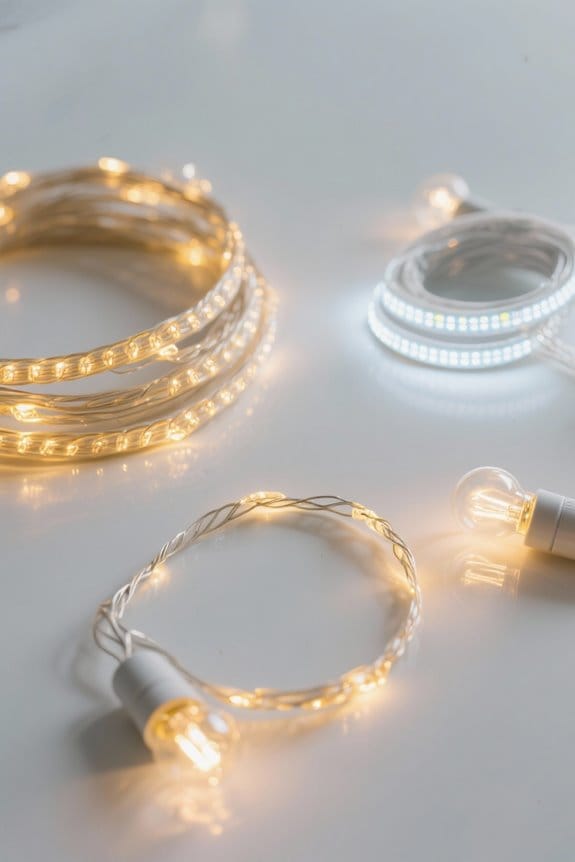
How LED String Lights Use Less Power Than Incandescent

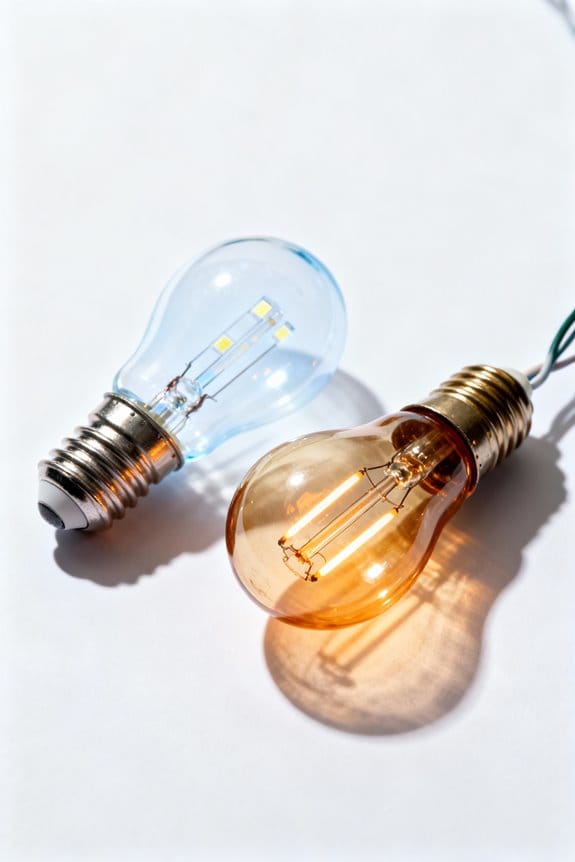
LED string lights use less power than incandescent bulbs primarily because they convert electrical energy directly into visible light via electroluminescence, consuming only 5 to 10 watts per hour compared to about 40 watts for similar brightness, resulting in an 80% reduction in energy use. Their directional light emission reduces power waste, and accelerated aging tests simulating 5,000 hours confirm their efficiency and durability. Exploring the distinctions in lifespan, environmental benefits, and cost savings reveals further advantages of LEDs.
Key Takeaways
- LED string lights use electroluminescence to convert electricity directly to light, consuming only 5-10 watts versus 40 watts for incandescent bulbs.
- LEDs emit directional light, minimizing wasted energy and eliminating the need for power-consuming reflectors.
- Low heat emission in LEDs means less energy loss compared to incandescent bulbs, which generate significant heat alongside light.
- Smart LEDs include automatic sensors that turn lights off when not needed, further reducing power consumption.
- Higher energy efficiency of LEDs leads to an 80% reduction in electricity usage, cutting monthly operating costs drastically compared to incandescent lights.
The Science Behind LED Energy Efficiency
The energy consumption profile of LED string lights demonstrates superior efficiency derived from electroluminescence, a phenomenon whereby electrical energy is directly converted into visible light, contrasting sharply with incandescent bulbs that generate light through resistive heating of a filament, a process inherently wasteful due to thermal energy dissipation. LED string lights consume roughly 9-12 watts per hour, achieving up to an 80% reduction in electricity consumption compared to typical 60-watt incandescent bulbs. This increased energy efficiency stems from LEDs’ directional light emission, which reduces wasted power through unnecessary heat and eliminates the need for reflectors. Additionally, LEDs exhibit dramatically longer lifespans of up to 50,000 hours versus 1,000-3,000 hours for incandescent bulbs, delivering significant cost savings and lowering environmental impact by reducing replacement frequency and associated waste. Many smart outdoor lights feature automatic on/off sensors, further enhancing energy efficiency by ensuring that lights are only in use when necessary.
Comparing Power Consumption: LED vs. Incandescent
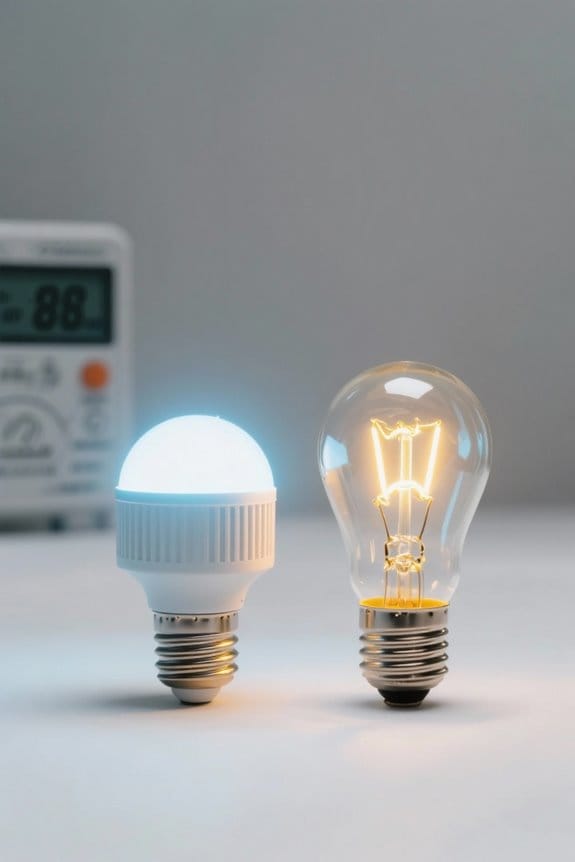
A thorough comparison of power consumption between LED string lights and traditional incandescent bulbs reveals stark differences in energy demand, with LED models consuming approximately 5 to 10 watts per hour, contrasted against incandescent sets averaging around 40 watts for equivalent brightness levels; this disparity translates into energy savings of 80 to 90 percent, which, when analyzed over typical monthly usage periods, results in operating costs as low as $0.14 to $0.29 for LEDs compared to roughly $1.15 for incandescent lighting, figures derived from standardized testing protocols that simulate common household usage durations and verify consistent luminous output while accounting for electrical load variations. Consequently, LED string lights offer lower electricity bills and long-term savings, while their superior energy efficiency greatly reduces carbon emissions associated with electricity consumption. Additionally, LED string lights feature weather-resistant materials that enhance durability and make them suitable for long-lasting outdoor use, as highlighted in the knowledge section.
Lifespan and Durability of LED String Lights
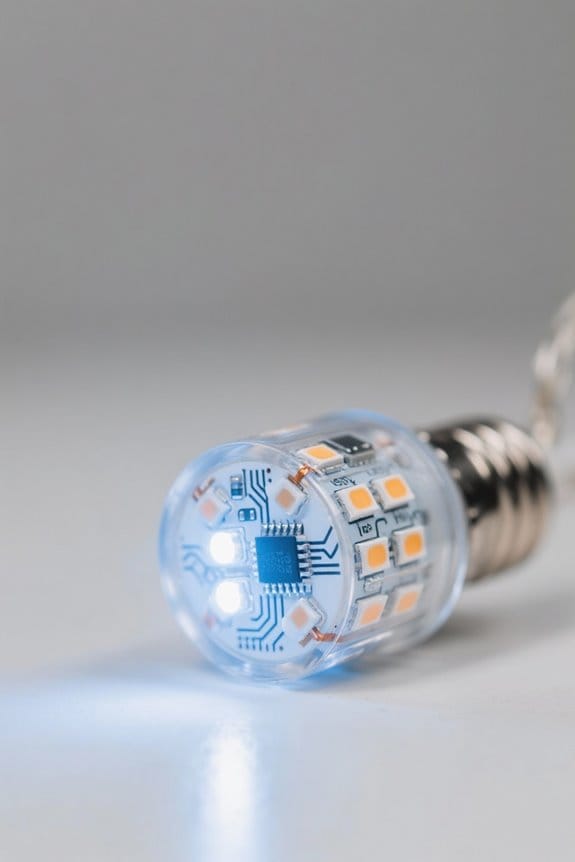
Longevity remains a defining characteristic of LED string lights, as their lifespan can reach up to 50,000 hours, vastly exceeding the typical endurance of incandescent bulbs, which generally range between 1,000 and 3,000 hours; this considerable difference stems from advancements in semiconductor technology and robust component design, which not only extend operational hours but also maintain luminous efficacy with minimal degradation, while standardized life-testing protocols often simulate continuous use to verify consistent brightness retention. The enhanced durability of LED string lights, including resistance to breakage and low heat emission, reduces replacements and safety concerns compared to fragile, heat-generating incandescent bulbs. These long-lasting features contribute to improved energy efficiency and a smaller environmental footprint, demonstrating both practical and safety advantages for consumers and installers alike. Additionally, opting for mercury-free battery options can further reduce hazardous waste and contribute to environmental sustainability.
Environmental Benefits of Using LED Lighting
While traditional incandescent string lights rely on fragile filaments that consume considerably more electrical power, LED string lights operate with advanced semiconductor technology that reduces energy consumption by 80 to 90 percent, thereby greatly lowering electricity bills and easing demand on power grids; this remarkable efficiency, combined with a lifespan extending up to 50,000 hours, dictates not only reduced operational costs but also a substantial decrease in environmental waste generated from frequent bulb replacements, as fewer manufacturing cycles and less disposal translate into a smaller ecological footprint. Additionally, LED string lights contribute to sustainability by producing considerably fewer greenhouse gas emissions, lowering the overall carbon footprint. The use of recyclable materials further enhances environmental impact through responsible disposal practices, promoting long-term energy savings and ecological benefits on a global scale. Moreover, LED string lights are designed with safety mechanisms that protect against overheating, aligning with standards like UL and CE to ensure reliability and minimize risks during extended use.
Cost Implications of Switching to LED String Lights
Given the substantial reduction in energy usage by LED string lights—typically 80 to 90 percent less than incandescent counterparts—the direct impact on consumer electricity costs is both measurable and significant, with typical mini LED setups operating at approximately 5 to 10 watts and incurring monthly expenses around $0.14 to $0.29, whereas similar incandescent configurations generally cost about $1.15 per month under comparable usage conditions. This marked difference, compounded by LED technology’s extended lifespan of 50,000 to 100,000 hours relative to incandescent bulbs’ 1,000 to 3,000 hours, leads to dramatically lower replacement frequency and associated costs, positioning LED string lights as a financially advantageous choice that can result in annual savings reaching into the hundreds of dollars depending on usage patterns and energy rates. Additionally, integrating smart automation can reduce electricity consumption by 40 to 60 percent, further optimizing savings while maintaining superior energy efficiency and minimizing replacement costs. Solar path lights, for instance, also emphasize energy efficiency and sustainability in outdoor lighting while offering a variety of designs and features for different needs.
Practical Uses for LED String Lights in Various Settings
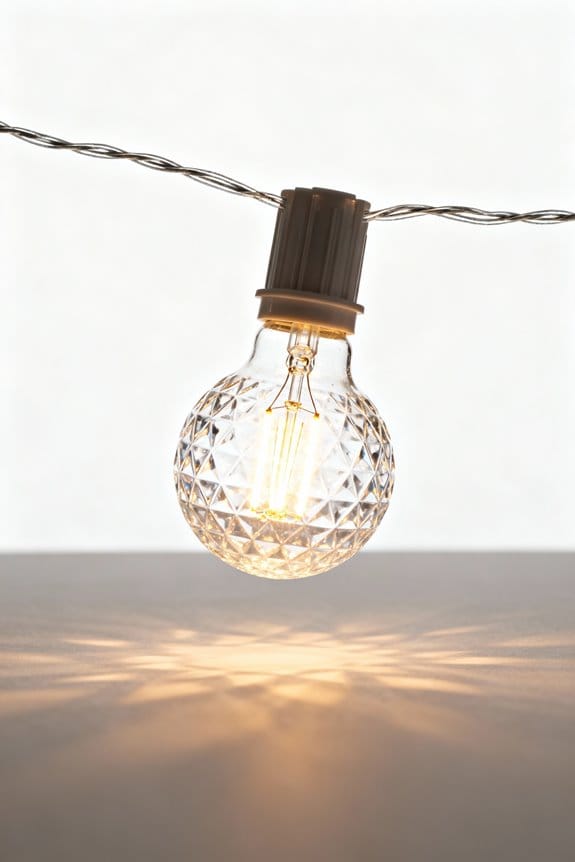
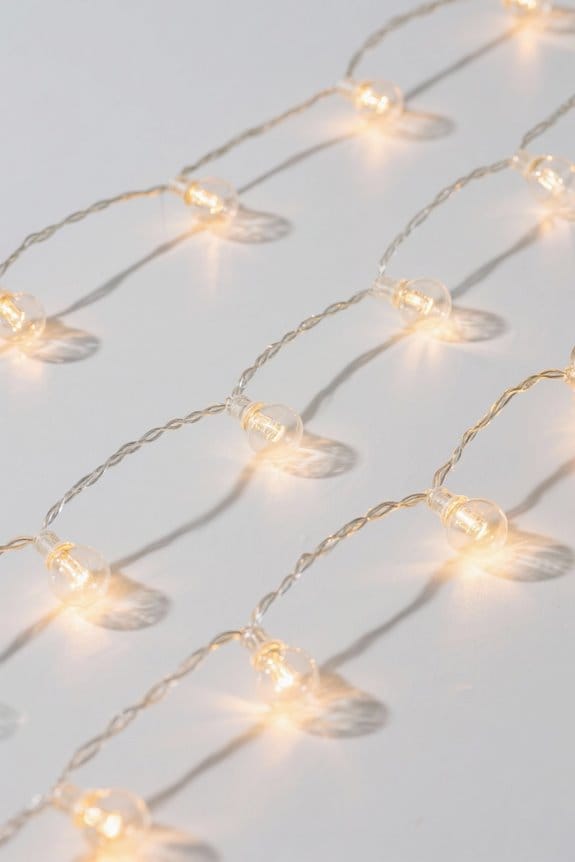
Beyond the clear financial advantages, LED string lights excel in providing versatile illumination solutions across multiple environments, accommodating indoor and outdoor applications with equal efficacy. Their practical uses span from enhancing indoor decor by transforming living rooms and bedrooms into inviting spaces to outdoor installations that benefit from weather-resistant properties, ensuring durability against moisture and UV exposure. Compared to incandescent bulbs, LED string lights achieve up to 80% energy efficiency, considerably reducing energy bills while maintaining a lifespan averaging 50,000 hours, which minimizes replacement frequency and electronic waste. This combination of long-lasting performance and adaptable design makes LED string lights a prime choice for both decorative and functional purposes, meeting diverse lighting needs without compromising sustainability or operational costs. Many LED string lights are rated IP44/IP66 for weather protection, ensuring they can withstand various environmental conditions when used outdoors.
Safety Features and Outdoor Suitability of LED Lights
Engineered with weather-resistant polymers and specialized UV-inhibiting coatings, LED string lights guarantee robust performance and safety for outdoor environments, reliably resisting moisture penetration and solar degradation during extended exposure; this durability, verified through accelerated aging tests simulating up to 5,000 hours of continuous sunlight and water spray, greatly reduces the risk of electrical faults caused by environmental stressors. Featuring low heat emission, these lights minimize fire hazards near flammable materials, a critical safety feature absent in incandescent counterparts. Proper insulation and overheat protection embedded in outdoor-rated LED string lights further guard against electrical fires triggered by environment elements. Energy efficiency complements safety, reducing circuit overload risks. Adherence to manufacturer guidelines and regular wear inspections guarantees sustained reliability and protection, affirming LED string lights as a safest, long-lasting choice for outdoor use. Many LED fixtures feature high lumen output and energy efficiency, contributing to their reduced operating costs and extended lifespans.
Future Trends in LED String Lighting Technology
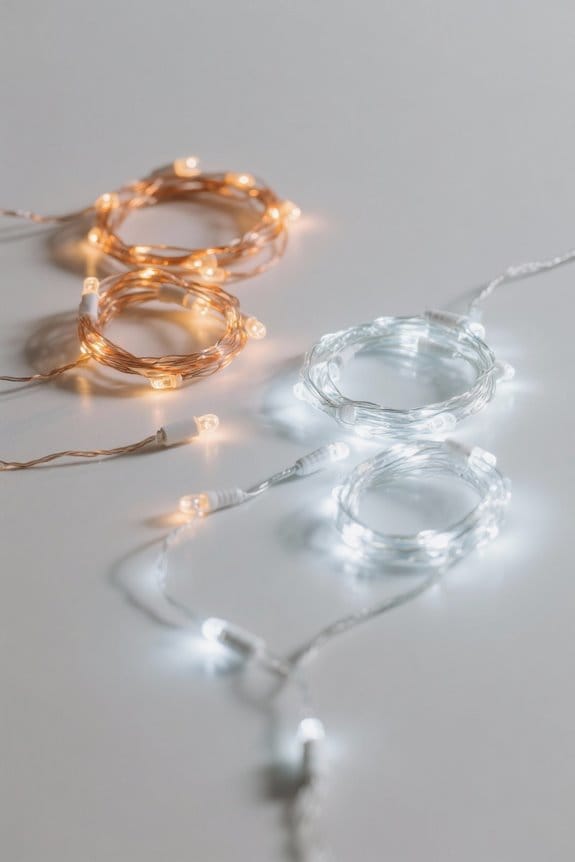
Advancements in LED string lighting technology continue to extend the capabilities and benefits established by current safety and durability enhancements, focusing on integrating smart control systems and automation that can reduce electricity consumption by as much as 40 to 60 percent through adaptive scheduling and dimming functions. Future trends emphasize customizable LED designs featuring color-changing capabilities and programmable effects, enhancing both energy efficiency and user experience. These developments coincide with improved lumens-to-watt ratios that increase brightness while minimizing energy consumption, suited for diverse indoor and outdoor settings. Additionally, the incorporation of recyclable materials in LED string lights manufacturing addresses environmental sustainability, promoting waste reduction. Projections indicate that by 2035, widespread adoption of such energy-efficient technologies could achieve annual energy savings of up to 569 TWh, reaffirming the critical role of LED innovations in reducing overall power demand. Furthermore, battery organizers play a crucial role in the efficient management and storage of power sources used in LED string lights, ensuring that energy is used effectively and safely.
Frequently Asked Questions
Do LED String Lights Use Less Electricity?
LED string lights use less electricity, coincidentally aligning energy efficiency with consumer preferences for brightness levels and color temperature. Their advanced bulb technology provides superior light output, reduced heat generation, longer lifespan comparison, cost savings, and positive environmental impact.
Why Do LED Lights Use Less Electricity?
LED lights use less electricity due to superior energy efficiency, minimal heat generation, and advanced bulb construction. Their extended lifespan, consistent brightness levels, and adaptable color temperature reduce environmental impact and cost savings across varied usage scenarios.
What Is Equivalent to 60W in LED?
What wattage converts 60W incandescent to LED? Typically, 8 to 12 watts matches brightness through careful brightness comparison and color temperature choices. This wattage conversion enhances energy efficiency, extends bulb lifespan, and promotes cost savings in lighting design and holiday decorating.
Do Incandescent Lights Use More Power Than LEDS?
Incandescent bulbs exhibit lower efficiency and higher energy consumption compared to LEDs, with greater wattage and heat production. LEDs provide electricity cost savings, longer lifespan, broader color temperature range, reduced environmental impact, and align better with modern consumer preferences.