As an Amazon Associate, we earn from qualifying purchases. Some links on this site are affiliate links at no extra cost to you. Our recommendations are based on thorough research and editorial judgment.

Understanding Lumens Vs Watts in String Light Brightness

Watts measure the electrical power consumed by string lights, while lumens quantify the actual visible brightness, offering a more accurate comparison of light output. For instance, traditional 60-watt incandescent bulbs produce about 800 lumens, whereas energy-efficient LED bulbs achieve the same brightness using only 8 to 10 watts, greatly reducing power usage and heat generation. Outdoor bulbs typically emit 100 to 500 lumens depending on desired ambiance or visibility, and understanding these values aids in selecting ideal lighting solutions for efficiency and effectiveness. Further insights clarify how these metrics affect performance and cost.
Key Takeaways
- Watts measure energy consumption, while lumens measure the actual brightness of string lights.
- LED string lights use fewer watts but provide the same lumens as higher-watt incandescent bulbs.
- Selecting string lights by lumens ensures appropriate brightness without excessive energy use or electrical overload.
- Outdoor lighting brightness levels vary: 100-200 lumens for ambiance and safety, 300-500 lumens for gatherings.
- Transitioning to lumen-based ratings improves lighting efficiency and helps avoid over-lighting in string light setups.
What Are Watts and Their Role in Lighting
Watts, a unit measuring electrical power consumption rather than actual light output, play an essential role in understanding how lighting devices function regarding energy use and cost implications; for example, a traditional 60-watt incandescent bulb consumes 60 watts of energy to produce approximately 800 lumens, whereas modern LED equivalents can achieve the same luminous output using only 8 to 10 watts, demonstrating the marked efficiency improvements of LED technology. Watts measure energy consumption of a light source, providing vital data for evaluating electricity costs and ensuring systems operate within safe power limits. Although brightness correlates with lumen output, watts better represent energy efficiency, as lower wattage bulbs, particularly LED bulbs, reduce energy consumption remarkably without compromising brightness, underlining the evolving relationship between wattage and luminous performance in lighting. Many 120V outdoor lights are IP65 to IP67 rated, indicating a high level of resistance to dust and water ingress, which ensures durability and performance in various weather conditions.
Why Watts Continue to Matter for String Lights

Energy consumption measurements remain a key factor in evaluating string light performance, especially as the total wattage directly influences electricity usage and cost. Watts quantify the energy required to achieve a given brightness, making them essential for comparing incandescent bulbs and LED options, where a 60-watt incandescent bulb emits similar lumens as a 10-watt LED. This significant wattage difference allows consumers to save energy and reduce bills without sacrificing light output. Additionally, understanding wattage supports the design of a lighting setup that avoids electrical overloads by ensuring transformers and circuits can handle cumulative energy demands. LEDs further contribute by producing less heat, enhancing safety and bulb lifespan. Consequently, watts continue to matter by providing critical data on energy consumption, efficiency, and compatibility in string light installations. Moreover, using smart home integration features in outdoor lighting can further enhance energy efficiency and user convenience.
Understanding Lumens as a Measure of Brightness
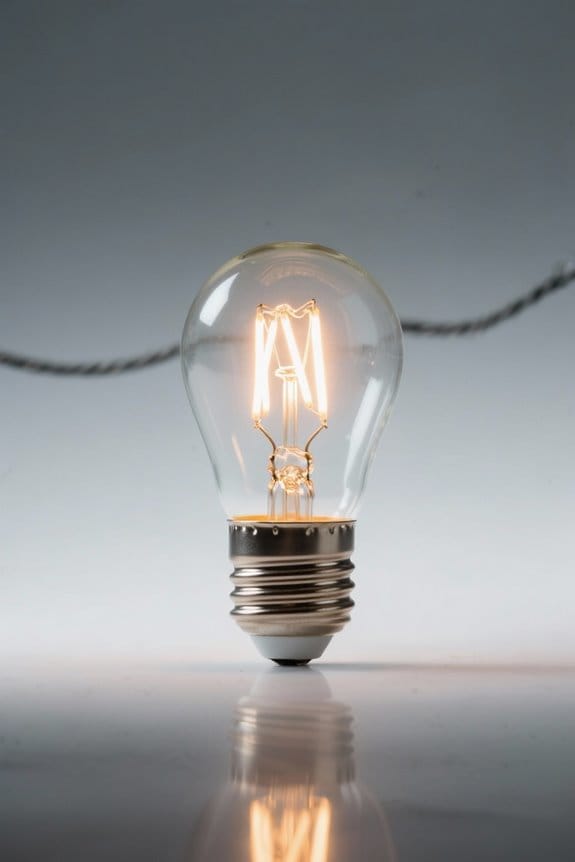
Although wattage indicates how much energy a string light consumes, lumens provide a more accurate measurement of its brightness by quantifying the total visible light emitted, with values typically ranging from 100 to 800 lumens depending on bulb type and design. Lumens measure brightness directly, unlike watts, which only reflect energy consumption; consequently, higher lumens correspond to brighter light bulbs, whether LED technology or incandescent bulbs. Manufacturers list lumen outputs on packaging, enabling consumers to compare brightness across different light bulbs effectively. LED technology often delivers more lumens per watt than incandescent bulbs, making it more efficient for landscape lighting applications. Selecting string lights with appropriate lumens is essential for achieving the desired lighting effect, as a higher lumens measure guarantees sufficient illumination without unnecessary energy consumption. When choosing battery holders for low-current applications, ensure they have features like integrated ON/OFF switches for easier control and installation.
Lumens Requirements for Different Outdoor String Light Settings
String light brightness requirements vary greatly depending on the intended outdoor setting, with lumen output per bulb ranging typically from 100 to 500 lumens to meet different illumination needs. For outdoor string lights designed to provide subtle illumination and foster a cozy atmosphere, a lumen output of 100 to 200 lumens per bulb is considered appropriate, balancing gentle ambient lighting without overwhelming brightness. In contrast, when enhanced visibility and brightness are required for larger gatherings or parties, bulbs emitting 300 to 500 lumens offer superior illumination while maintaining a festive ambiance. Safety considerations along pathways also align with the 100-200 lumens range, providing sufficient illumination for visibility without glare. Accent lighting for trees or structures benefits from bulbs within the 200-300 lumens range, effectively highlighting features while adhering to appropriate lumen requirements. When selecting outdoor string lights, consider options with energy-efficient LED bulbs that offer significant savings over traditional options, ensuring long-lasting and cost-effective lighting solutions.
Transition From Watt-Based to Lumen-Based Lighting Choices
While wattage has traditionally served as the primary reference for evaluating string light brightness, the change toward lumen-based measurements offers significant advantages by directly quantifying light output rather than energy consumption, enabling consumers to compare illumination levels more accurately. Watts measure the energy use of lighting, whereas lumens provide a precise metric of brightness, allowing for informed lighting decisions. For example, a 60-watt incandescent bulb produces approximately 800 lumens, while a modern LED bulb achieves the same brightness using only 8-10 watts, demonstrating a substantial reduction in energy consumption. This conversion to lumen-based evaluations helps prevent over-lighting and optimizes light output for patios or walkways, utilizing the 75-110 lumens per watt efficacy of LEDs compared to incandescents, thereby aligning better with contemporary lighting standards. For outdoor settings, solar lights utilize renewable energy, contributing to energy efficiency and reducing electricity costs.
How to Calculate Equivalent Watts for LED String Lights
When determining the appropriate LED string light wattage to match the brightness of traditional incandescent bulbs, an approximate 7:1 conversion ratio is commonly applied, whereby the wattage of an incandescent bulb is divided by seven to estimate the equivalent LED wattage that produces comparable luminous output; for instance, a 60-watt incandescent bulb, which typically emits around 800 lumens, corresponds to roughly 9 watts in LED string lights. To calculate equivalent watts for LED string lights, consumers should reference lumen output, usually 100-200 lumens per foot, to guarantee comparable brightness for their specific lighting options. Many LED packages provide lumens alongside watts, simplifying brightness comparisons. This approach enables the selection of LED string lights that offer comparable brightness with considerably reduced energy consumption compared to incandescent bulb counterparts, optimizing outdoor and decorative illumination effectively. For enhanced durability, it is important to choose string light kits with UV protection to prevent degradation and ensure longevity in outdoor installations.
Energy Efficiency Benefits of LED Technology in String Lighting
Although providing equivalent brightness, LED string lights distinguish themselves by consuming considerably fewer watts—often reducing electricity use by up to 75% compared to traditional incandescent counterparts—due to their superior luminous efficacy, which ranges between 75 and 110 lumens per watt, far surpassing the roughly 15 lumens per watt typical of incandescent bulbs. For example, a 10-watt LED string light can deliver approximately 800 lumens, matching the illumination of a 60-watt incandescent string light but with markedly lower energy consumption. This increased efficiency not only translates into notable energy savings but also reduces heat output, enhancing safety and lowering cooling costs. Consequently, LED technology in string lights optimizes brightness per watt, providing effective illumination with minimized electricity consumption and greater overall energy efficiency. Many solar path lights utilize monocrystalline silicon panels to achieve a high solar conversion rate, ensuring longer illumination times and improved energy efficiency in outdoor lighting solutions.
Choosing the Right String Lights Using Lumens and Watts
Selecting appropriate string lights requires understanding the relationship between lumens and watts, as lumens quantify actual light output and watts represent energy consumption; prioritizing lumens guarantees accurate assessment of brightness without being misled by power usage. For instance, string lights producing 400-800 lumens create a cozy atmosphere suitable for small outdoor spaces, while 800-1,200 lumens effectively illuminate larger areas. Energy-efficient LED string lights deliver comparable brightness to incandescent models using only about 10 watts versus 60 watts, considerably reducing energy costs. Users must also consider wattage limits on electrical systems, ensuring total consumption remains within safety standards. By focusing on lumens to gauge brightness and opting for LED technology, consumers achieve excellent light output, energy efficiency, and safety when selecting string lights. Additionally, shatterproof and waterproof features are crucial for ensuring the durability and longevity of outdoor string lights.
Frequently Asked Questions
What Determines Brightness, Lumens or Watts?
Brightness measurement depends on lumen output, not wattage. LED lights offer high lumens with low energy consumption, unlike incandescent bulbs. For outdoor lighting and ambient lighting, selecting string light types involves wattage conversion and light fixture efficiency.
Is 800 Lumens the Same as 60 Watts?
When Sarah switched to LED string lights, she noticed 800 lumens didn’t equal 60 watts; LED advantages provide similar brightness perception with lower power consumption. Energy efficiency, light distribution, color temperature, and user preferences shape environment impact and cost comparison.
How Bright Is 1000 Lumens in Watts?
The brightness comparison shows 1000 lumens roughly equals 60-75 watts incandescent. Lumens explained as light output, watts definition as energy use. String light energy efficiency varies; lighting applications depend on lumen scale, wattage impact, fixture types, and light quality.
Is 100 Lumens the Same as 100 Watts?
100 lumens is not the same as 100 watts; lumens explained clarify brightness while wattage myths confuse energy use. LED technology offers superior energy efficiency, affecting brightness perception, light color, and lighting applications in decorative string length and usage scenarios.