As an Amazon Associate, we earn from qualifying purchases. Some links on this site are affiliate links at no extra cost to you. Our recommendations are based on thorough research and editorial judgment.

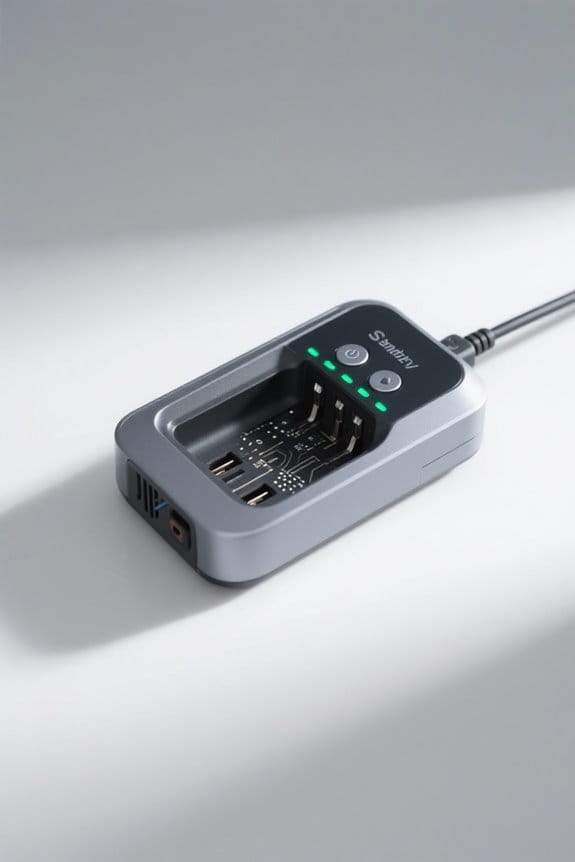
How Smart Battery Chargers Prevent Overcharging

Smart battery chargers prevent overcharging by continuously monitoring voltage and current, dynamically adjusting charging rates between 0.5C and 1C to maintain lithium-ion cells near 4.2 volts, while regulating charge between 20% and 80% to avoid thermal risks and capacity loss. They integrate fault detection, reverse polarity sensing, and temperature control, utilizing algorithms that assess internal resistance and battery health in real time. Advanced systems communicate with Battery Management Systems for precise cell balancing and efficiency gains. Further insights reveal how these mechanisms optimize safety and battery lifespan.
Key Takeaways
- Smart chargers continuously monitor voltage and current to automatically adjust charging rates, preventing voltage from exceeding safe thresholds.
- They regulate charge levels, maintaining the battery state of charge between optimal ranges (usually 20%-80%) to avoid overcharging.
- Algorithms evaluate internal battery conditions like resistance and temperature to modulate charging speed and prevent thermal runaway.
- Integrated safety features include reverse polarity detection, short circuit sensors, and immediate shutoff upon detecting unsafe conditions.
- Communication with Battery Management Systems allows precise charging control, cell balancing, and proactive management to prevent localized overcharge.
Understanding Overcharging and Its Risks
Overcharging frequently leads to significant physical damage within batteries, manifesting as swelling, cracking, and leakage, which directly compromise the structural integrity and safety of the cell. In lithium-ion batteries, overcharging can trigger thermal runaway, a dangerous condition characterized by uncontrollable heat generation that drastically diminishes battery health and increases fire risks. Maintaining charging levels between 20% and 80% is essential to preserve battery longevity, as continuous overcharging beyond this range accelerates capacity loss. Safety features to prevent such damage include controlled voltage thresholds and current regulation, which smart chargers implement effectively. These devices monitor the battery’s state in real time, halting charge input when ideal levels are reached, thereby minimizing risks and enhancing battery performance over extended cycles. Intelligent chargers often incorporate reverse-polarity protection to further safeguard against incorrect battery connections, reducing the risk of potential damage.
Key Features of Smart Battery Chargers
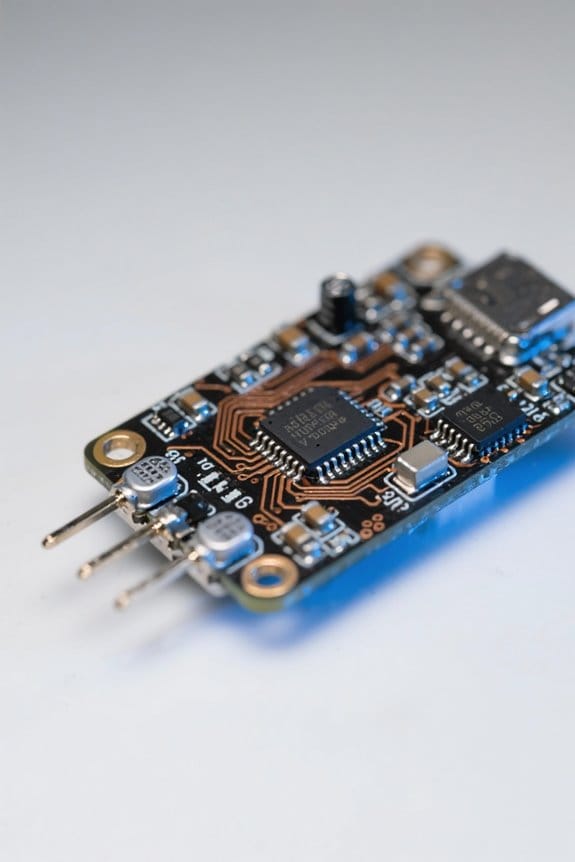
A smart battery charger incorporates multiple advanced features designed to enhance charging efficiency while safeguarding battery health, employing precise voltage and current monitoring algorithms that automatically adjust charging rates between 0.5C and 1C, thereby preventing both overcharging and overheating. These smart chargers include reverse polarity detection to address safety issues associated with incorrect connections, ensuring damage prevention. Maintenance modes intelligently regulate battery charge levels, maintaining them between 40% and 70%, which greatly extends battery life and enhances performance. Integrated battery health assessments provide essential data supporting optimal battery charging by evaluating charge status and degradation without surpassing safe operational limits. Additionally, continuous voltage monitoring enables immediate shutoff upon detection of unsafe conditions, reinforcing protection measures designed to prevent overcharging and associated safety risks during the charging process. Smart chip technology in chargers enhances safety and efficiency by enabling real-time monitoring and adaptive charging, as noted in the 2026 charger recommendations.
Recommended Products

𝐌𝐚𝐱𝐢𝐦𝐢𝐳𝐞 𝐄𝐧𝐞𝐫𝐠𝐲 𝐇𝐚𝐫𝐯𝐞𝐬𝐭- With 99.9% MPPT efficiency, Renogy’s MPPT solar charge controller 𝐦𝐚𝐱𝐢𝐦𝐢𝐳𝐞𝐬 𝐩𝐨𝐰𝐞𝐫 𝐞𝐯𝐞𝐧 𝐢𝐧 𝐬𝐡𝐚𝐝𝐞𝐝 𝐜𝐨𝐧𝐝𝐢𝐭𝐢𝐨𝐧𝐬. Renogy 100 amp solar charge controller performs reliably from -𝟑𝟏°𝐅 𝐭𝐨 𝟏𝟏𝟑°𝐅. Its IP32 waterproof housing and TVS lightning protection make this solar panel charge controller perfect for RVs, marine use, and off-grid systems.
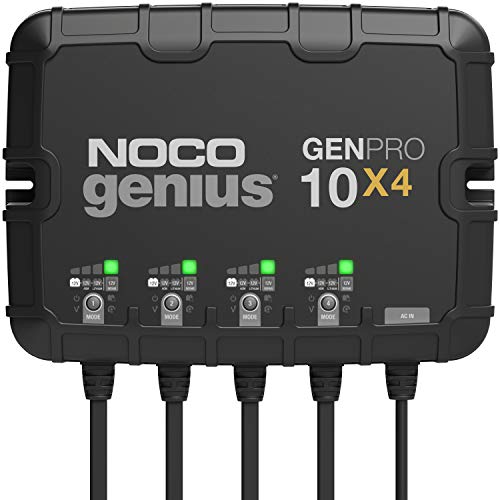
MEET THE GENPRO10X4 — 10% smaller and 33% more powerful than the GEN4. It’s our most compact and advanced onboard charger yet - engineered for peak performance in the harshest marine environments.

COMPATIBLE Aston Martin Models: Vantage 2019+, DB11, DBS 2018+, DB12, DBX. COMPATIBLE 12V BATTERIES: Lithium/LiFePO4, AGM, Lead-Acid, Wet, Gel, EFB, MF & Calcium.
How Smart Chargers Monitor Battery Health
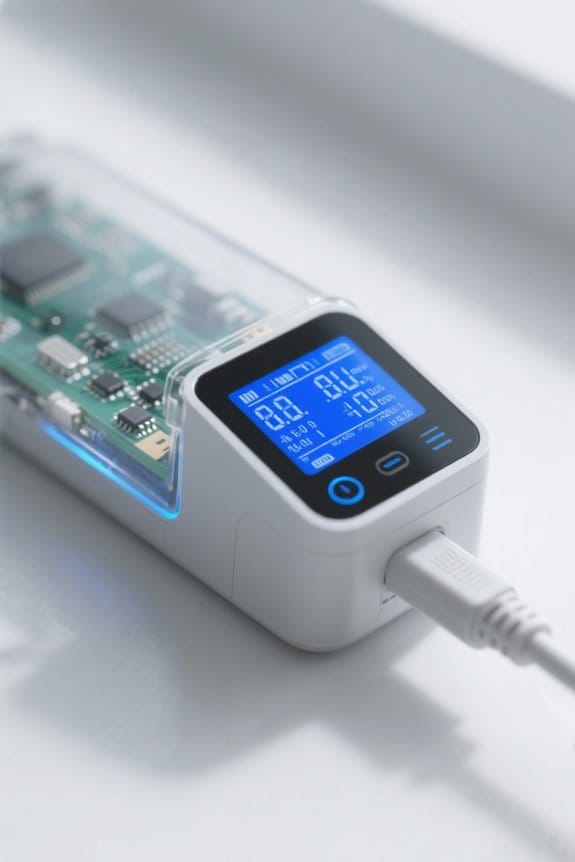
By continuously monitoring critical indicators such as state of charge (SOC) and voltage, smart battery chargers provide real-time data on battery condition and charging capability, utilizing algorithms that evaluate internal resistance and electrochemical characteristics specific to battery chemistry and health status. These chargers monitor battery health by adjusting charging parameters to prevent overcharging, maintaining ideal charge levels between 20% and 80%, which extends battery lifespan. Smart chargers also detect faults and degradation, alerting users when a battery approaches the end of service life. Some models employ pulsing currents to break down sulfation in lead-acid batteries, aiding recovery. Through precise SOC monitoring and voltage analysis, smart battery chargers enhance charging performance while safeguarding against damage caused by overcharging, consequently ensuring reliable and efficient battery management across various applications. Smart technology in battery chargers, such as dynamic thermal sensors, optimizes charging performance by adjusting to ambient conditions and further preventing overcharging.
Recommended Products

【Top-Flight Performance 】The 51.2V 100Ah liFePO4 battery is manufactured by 16Pcs Automotive Grade A grade prismatic cells with higher energy density, more stable performance & greater power. And has a compact 5.12kWh energy, which is equivalent to 4pcs 12V 100Ah LiFePO4 batteries in 4S (or even 8pcs 12V 100Ah AGM batteries in 8S). Fully compliant with the UL1973 safety standard and certified by Intertek ETL for reliable safe operation.

Space-Saving Powerhouse: 1/3 the size of standard 12V 300Ah batteries (32% smaller footprint!) but with 20AH HIGHER capacity. Ideal for RVs, campers, and marine vessels where every inch matters – fits seamlessly into tight battery compartments without sacrificing energy storage.
Ditch the Bulky Battery: Fed up with bulky batteries wasting your space? 12V 320Ah compact battery cuts size by 1/3 smaller than 12V 300Ah, 70% lighter (57.3lbs) than 3 lead-acid 12V 100Ah, boasting 4096Wh energy (256Wh more power) to fit into tight spots and deliver extra power.
Reverse Polarity and Safety Protections
The incorporation of reverse polarity and safety protections in smart battery chargers greatly reduces the potential for user error and equipment damage, as these systems automatically detect incorrect battery connections, such as reversed positive and negative terminals, and interrupt current flow to prevent hazards like short circuits or thermal runaway. This reverse polarity check safeguards both smart battery and charger by halting current instantly, thereby minimizing safety hazards related to improper connection. Additionally, integrated safety protocols, including short circuit sensors and voltage monitoring, guarantee the charging process remains stable, effectively preventing overcharging and promoting ideal battery health. With active cooling and precise parameter adjustments based on battery type, these chargers maintain safe operation, reducing risks such as overheating or battery degradation and enhancing overall durability and reliability. For added safety and convenience, sparkproof terminals are a common feature in these chargers, ensuring safer connections and reducing the likelihood of accidental sparks during setup.
Charging Speed Control Mechanisms
Although rapid charging is often desired for convenience, smart battery chargers implement charging speed control mechanisms that dynamically adjust current output to enhance both safety and battery longevity, reducing heat generation and preventing damage during the charging cycle. Typically, smart battery chargers supply a high initial current during the bulk charge stage, then decrease amperage as the battery nears 80% capacity, entering the absorption charge stage with steady voltage and declining current. These charging speed control mechanisms continuously monitor battery temperature and voltage, preventing overcharging by minimizing strain and heat buildup. By tailoring the charging process to specific battery chemistry and conditions, smart battery chargers adhere to ideal charging practices, thereby greatly extending battery lifespan and ensuring effective preventing damage throughout each cycle. Among the top-rated devices, the LiTime 80-Amp Lithium Battery Charger stands out for its ultra-fast charging capabilities and built-in safety measures that prevent common electrical issues.
Recommended Products

One-man testing for electrical, ABS and air brake systems

Max. lifting height 138", Adjustable straddle leg width 45.9" - 61.6". Minimum turning radius of 53". Aisle width 87.8". Small and compact, can operate in narrow working conditions. Please note: the item is designed for flat surfaces, do not use it on uneven grounds with potholes or steep slopes

Super light full electric stacker with load capacity 3300lbs. Partial assembly, forks and straddle legs require self-installation
Maintenance Mode and Continuous Connection
Within the domain of battery upkeep, maintenance mode in smart battery chargers operates by continually monitoring charge levels, dynamically adjusting voltage and current to sustain lithium-ion batteries roughly between 40% and 70% capacity, a range scientifically corroborated to maximize cycle life and efficiency. This precise regulation prevents overcharging, as smart chargers automatically reduce input upon reaching ideal state of charge, minimizing heat generation and mitigating risks like thermal runaway. Continuous connection enables the battery to remain safely connected without degradation, as low voltage protections maintain consistent charge levels without necessitating frequent disconnections. By employing gradual charging techniques within maintenance mode, smart chargers substantially extend battery lifespan, preserving performance by balancing energy input and usage, thereby exemplifying the critical role of intelligently managed charge level control and continuous connection in battery health optimization. Smart technology for optimizing charging efficiency is a key feature that enhances the performance and safety of smart battery chargers.
Battery Type Detection and Adaptive Charging
Battery type detection represents a critical function in smart battery chargers, enabling precise identification of various chemistries such as lithium-ion, nickel-cadmium (NiCd), nickel-metal hydride (NiMH), and lead-acid, through analysis of voltage and current characteristics during initial charging phases; this differentiation permits adaptation of charge voltage to specific ranges—for example, lithium-ion cells typically require charging voltages around 4.2 volts per cell, whereas lead-acid batteries operate near 2.3 volts per cell—to optimize efficiency and prevent damage. Smart chargers utilize adaptive charging by modifying charging parameters in real-time, gradually reducing charge rates as batteries near full capacity, which helps prevent overcharging by respecting voltage limits and avoiding overheating. This approach also monitors battery health to adjust charging behavior, thereby extending battery lifespan while maintaining safe operation across diverse chemistries. Many smart chargers, like the NOCO GENIUS5 Smart Battery Charger, include integrated thermal sensors to further adjust the charge rate based on ambient conditions, ensuring optimal charging efficiency in a variety of environments.
Recommended Products
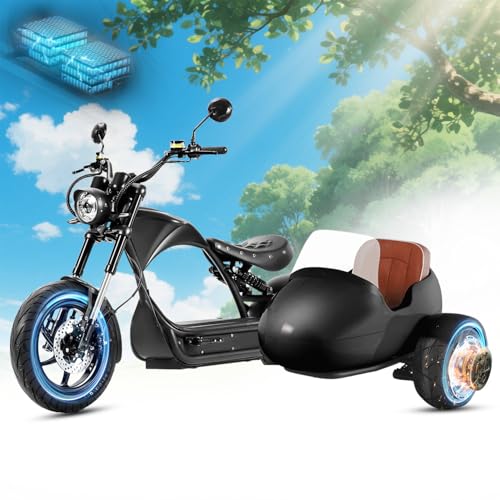
[Eahora M1P Pro: Expand Your Ride with a Sidecar!]Transform your Eahora M1P Pro electric motorcycle into a versatile powerhouse! Designed for adults, this model supports custom sidecar attachment—perfect for cargo hauling, pet rides, or adventurous outings. Enjoy enhanced utility without sacrificing performance, blending rugged power with flexible functionality. Whether commuting or exploring, the M1P Pro adapts to your lifestyle.

✔️[12 Years Lifetime and 6000+ Deep Cycles]: VPauexii 72 volt lithium golf cart battery conversion kit is made of new grade EV LF78 A+ cells. 12 years lifetime and 6000+ deep cycles is not just a slogan under instructions on the product manual,is the result of our relentless pursuit of product quality.Full 5-Year Battery Warranty – No Hidden Costs.Now, experience this premium performance and advanced safety features at a significantly more accessible price point, representing the smartest value in the market today.

【Expansive 17.3” Full HD Screen】Work smarter and enjoy more with a wide 17.3” FHD display. Perfect for spreadsheets, online classes, or streaming, the extra screen space means sharper details, less scrolling, and an immersive viewing experience that smaller laptops simply can’t deliver.
Integration With Battery Management Systems (BMS)
Following the implementation of adaptive charging techniques tailored by accurate battery type detection, integration with Battery Management Systems (BMS) further enhances charging efficiency and safety by constantly monitoring parameters such as cell voltage, temperature gradients, and state of health indicators. Smart chargers communicate with battery management systems to receive real-time data, enabling precise adjustments to charging current and voltage, which prevent overcharging by maintaining battery voltage within a favorable charge range, commonly between 20% and 80%. Additionally, cell balancing functions distribute charge evenly across all cells, minimizing the risk of localized overcharging while improving overall battery performance. These systems also detect faulty cells or signs of battery degradation early, allowing for proactive intervention that mitigates overheating risks and extends battery lifespan, thereby ensuring reliable and efficient operation. Moreover, real-time monitoring capabilities provided by Bluetooth battery monitors offer users timely alerts on battery health, allowing for immediate action to prevent potential issues.
Recommended Products

Whole-Home Off-Grid Power: Still worried about power outages or unstable electricity? This system includes six 51.2V 100Ah LiFePO4 batteries and one 10000W MPPT hybrid inverter. It can support high-power appliances such as refrigerators and air conditioners, enabling stable whole-home power supply. It meets the needs of off-grid living and backup power, providing a reliable solution for energy independence.

【Long Lifespan & Cost Efficiency】With 6,000 deep cycles at 80% depth of discharge—equivalent to 10+ years of reliable service, this 12v 640Ah 4 PACK lifepo4 battery far outperforms lead-acid alternatives while significantly reducing long-term costs. Its massive 640Ah capacity delivers 8,192Wh of energy storage with over twice the energy density of comparable lead-acid batteries, all backed by a 5-year warranty and 24/7 customer support.

[All-Scenario Power] - Apex 300 (2764.8Wh, 3840W) keeps homes lit, RVs rolling & off-grid sites running. Parallel 2-3 units (5.5-8.3kWh), expand to 58kWh with B300K. Never powerless.
Environmental and Energy Efficiency Benefits
Although the primary function of smart battery chargers is efficient energy replenishment, their advanced algorithms greatly reduce excess energy consumption by precisely controlling charging currents and voltages, resulting in up to a 15% decrease in power usage compared to conventional chargers tested under standardized conditions; this optimized process not only diminishes heat generation—thereby lowering the risk of thermal runaway and fire hazards—but also supports longer battery lifespans by maintaining charge cycles within safe voltage thresholds, effectively reducing battery replacements and hazardous waste contributions. By integrating with renewable energy sources such as solar and wind power, smart chargers promote eco-friendly charging that lowers the environmental impact and reliance on fossil fuels. Additionally, their energy efficiency enables reduced emissions and operational costs, making smart chargers a pivotal technology in sustainable battery management and overall environmental responsibility. Furthermore, dynamic charging capabilities allow for flexibility in charging various battery types, enhancing the overall efficiency and adaptability of smart chargers.
Frequently Asked Questions
Will a Smart Charger Overcharge a Battery?
Smart chargers do not overcharge batteries due to voltage regulation and safety features tailored for various battery types. By optimizing charging cycles, they enhance battery lifespan and energy efficiency, ensuring safe, controlled power delivery throughout the process.
How Do Devices Prevent Overcharging?
A smart charger in EVs utilizes battery management and voltage regulation, employing charge termination once full, combined with thermal protection and current limiting. Safety features and continuous battery monitoring guarantee overcharging is prevented efficiently and reliably.
Should I Turn on Smart Charging or Charging Limit?
Smart charging offers advantages in battery longevity and energy efficiency by adapting charging speeds using smart technology. Charging limits cater to user preferences and device compatibility, making the choice dependent on specific needs and prioritization of performance versus protection.
What Are the Downsides of Smart Charging?
Smart charging may reduce battery lifespan due to incompatible chemistries and slower charging speed. Despite improved energy efficiency, higher cost comparison and compatibility issues impact user convenience. Safety concerns and reliance on updates also complicate use.