As an Amazon Associate, we earn from qualifying purchases. Some links on this site are affiliate links at no extra cost to you. Our recommendations are based on thorough research and editorial judgment.

Which Battery Type Works Best in Extreme Weather Conditions

LiFePO4 batteries outperform AGM and lead-acid types in extreme weather, retaining approximately 80% capacity at -20°C with stable voltage and safe low-temperature charging, while AGM batteries lose 40-60% capacity and lead-acid batteries drop 20-50% in freezing conditions. Maintenance demands rise for lead-acid batteries due to electrolyte freezing and frequent charging needs, whereas LiFePO4’s thermal stability and extended cycle life of up to 5,000 partial cycles enhance reliability. Further details clarify these performance contrasts.
Key Takeaways
- LiFePO4 batteries maintain 80-98% capacity in extreme cold, outperforming AGM and lead-acid batteries.
- AGM batteries lose 40-60% capacity in freezing temperatures but benefit from higher CCA ratings for reliable starts.
- Lead-acid batteries lose 20-50% capacity in cold, suffer electrolyte freezing below -18°C, and require frequent charging.
- Lithium-based batteries, like LiFePO4, offer thermal stability, safe low-temperature charging, and extended cycle life.
- Battery maintenance and proper charging before storage significantly improve winter performance across all battery types.
Overview of AGM, Lead-Acid, and LiFePO4 Batteries
Although numerous battery chemistries exist, AGM, lead-acid, and LiFePO4 batteries are among the most frequently chosen for extreme weather applications due to their distinct characteristics and operational efficiencies; AGM batteries, notable for their spill-proof design and low self-discharge rates, typically maintain reliable function in subfreezing temperatures, thereby earning preference in RVs and off-grid setups. Lead-acid batteries, while cost-effective, suffer a 20-50% capacity loss during cold weather and require increased maintenance, reducing their suitability for harsh climates. LiFePO4 batteries, possessing superior thermal stability, retain 95-98% of rated capacity in cold conditions and exhibit minimal maintenance alongside extended lifespans. Cold Cranking Amps (CCA) ratings critically affect cold weather performance for AGM and lead-acid types, whereas LiFePO4 batteries maintain stable voltage under load, ensuring consistent, reliable power in extreme conditions across battery technology options. For users with multiple battery-powered devices, bulk purchasing can lead to savings and ensure an adequate supply even in extreme conditions.
Winter Performance of AGM Batteries
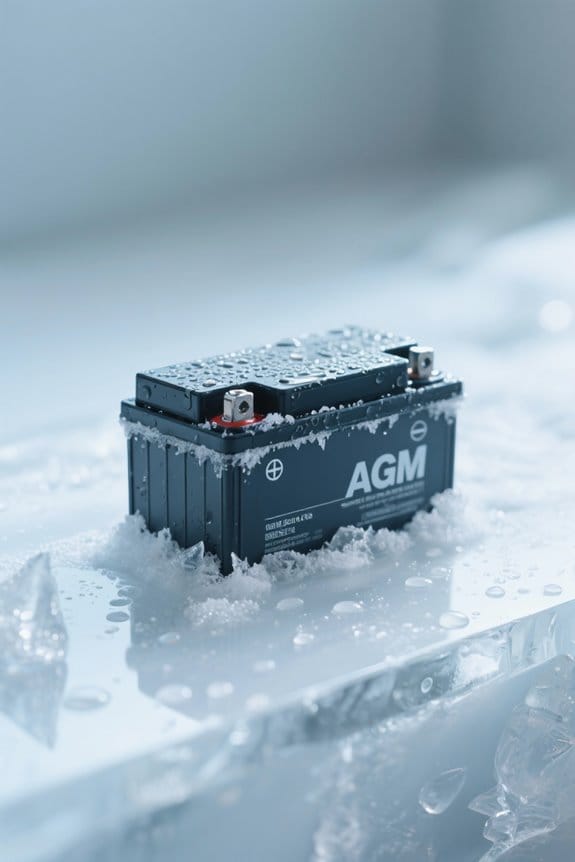
When temperatures fall below freezing, AGM batteries demonstrate notable resilience compared to traditional lead-acid types, yet they may still experience a capacity reduction ranging from 40% to 60%, which can greatly impact device operation and start-up power in cold climates; this decline occurs despite the batteries’ inherently low self-discharge rate, which supports extended storage without substantial power loss. As a battery for cold weather, the AGM battery’s cold-weather performance is often enhanced by a higher Cold Cranking Amps (CCA) rating, which directly increases starting power and guarantees reliable operation under freezing temperatures. However, performance degradation remains a concern in harsh cold conditions, necessitating proper maintenance, including maintaining a full charge before storage, to mitigate capacity loss and optimize overall reliability during winter months. It is crucial to conduct weekly visual inspections and ensure proper handling procedures to maintain the integrity of AGM batteries during extreme weather conditions.
Lead-Acid Battery Efficiency in Cold Weather
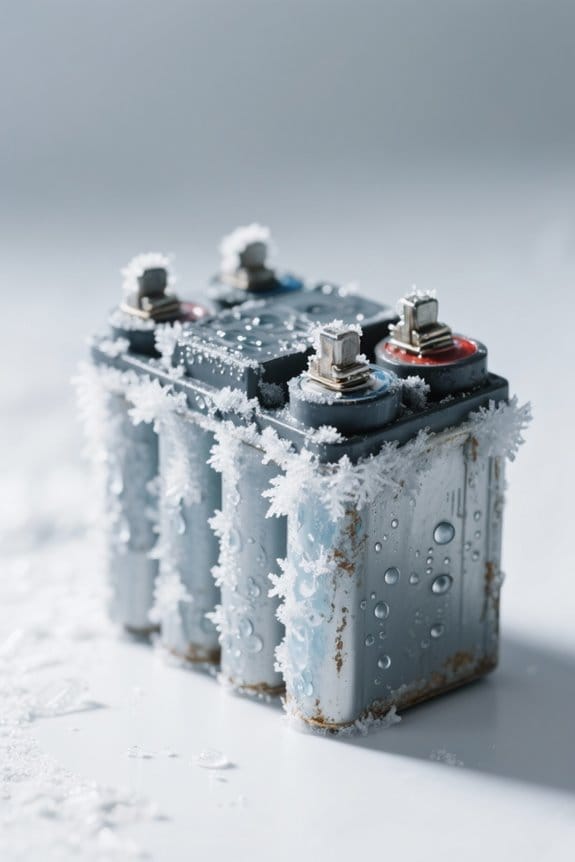
Because lead-acid batteries exhibit a capacity loss ranging from 20% to 50% in subfreezing conditions, their cold-weather efficiency is remarkably constrained, with performance deterioration becoming particularly severe below -18°C; at these temperatures, the electrolyte’s tendency to freeze not only diminishes efficiency but can also cause permanent damage to the battery cells. The operational temperature range for lead-acid batteries is limited compared to other chemistries, as freezing adversely affects internal chemical reactions, leading to capacity drops and reduced power output. Even a fully charged lead-acid battery in cold weather may struggle with starting vehicles, necessitating frequent charging to maintain adequate performance. Additionally, cold exposure often results in a shorter lifespan, increasing the frequency of replacements and overall maintenance costs, highlighting significant challenges for sustained use in harsh winters. Alkaline batteries have been tested for performance under extreme cold or hot conditions, and their efficiency is influenced by environmental factors, making them a more suitable option in certain weather conditions compared to lead-acid batteries.
Advantages of LiFePO4 Batteries in Extreme Temperatures
While many battery chemistries experience significant capacity loss in subfreezing temperatures, LiFePO4 batteries maintain approximately 80% of their rated capacity at -20°C, enabling consistent performance in extreme cold environments. These cold-weather batteries exhibit reliable performance due to their high capacity retention and stable voltage output under load, preventing fluctuations that impair functionality. Their inherent thermal stability reduces the risk of thermal runaway, enhancing safety during harsh conditions. LiFePO4 batteries support safe charging at temperatures as low as -20°C and can be discharged down to -40°C, broadening operational versatility in extreme temperatures. Furthermore, their extended cycle life, ranging between 3,000 and 5,000 partial cycles, translates to over a decade of usable life, far surpassing conventional lead-acid alternatives and ensuring consistent performance in demanding climates. Additionally, weatherproof features in LiFePO4 battery construction contribute to their durability and reliability when used in outdoor applications, much like the considerations required for outdoor digital timers.
Expert Battery Recommendations for Harsh Climate Use
Industry experts consistently advise selecting lithium-based batteries, such as Lithium Iron Phosphate (LiFePO4) models, for applications in harsh climates due to their superior capacity retention and extended cycle life, often exceeding 3,000 partial cycles, compared to traditional alternatives. LiFePO4 batteries maintain approximately 80% capacity at -20°C, outperforming AGM batteries, which can lose up to 60% capacity in extreme cold despite low self-discharge rates. Lead-acid batteries fare worse, with 20-50% capacity reductions and increased maintenance demands in cold weather. For reliable performance in subzero conditions, lithium options like the Elios Litio2-56H-BT 12.8V 200Ah heated battery are preferred, as their built-in heating systems help preserve capacity. Brands such as Battle Born and Victron Energy exemplify this balance of longevity, minimal maintenance, and ideal function across extreme temperatures.
Frequently Asked Questions
What Is the Best Battery for Extreme Cold Weather?
The best battery for cold weather is LiFePO4 due to superior battery chemistry, thermal management, low discharge rates, high power capacity, and charging efficiency, ensuring ideal battery performance, deep cycle longevity, reduced battery maintenance, and reliability in winter applications.
Is AGM or Lithium Better in Cold Weather?
Lithium batteries outperform AGM in cold weather due to superior cold discharge, lower internal resistance, and higher charging efficiency. Lithium longevity and better depth of discharge enhance cost effectiveness. AGM performance suffers from temperature impact and higher maintenance requirements.
Is Extreme Cold Bad for Lithium Batteries?
Extreme cold has minimal impact on lithium performance, with freeze resistance maintaining battery capacity and charging efficiency. However, temperature effects can pose longevity challenges, making thermal management, proper usage tips, and suitable storage conditions essential for ideal results.
Are Alkaline or Lithium Batteries Better in Cold Weather?
In the thrilling battle of alkaline vs lithium, lithium battery efficiency triumphs as alkaline battery performance freezes mid-show. Winter battery selection clearly favors lithium, boasting superior cold weather usage and minimal performance degradation under harsh battery temperature effects.