As an Amazon Associate, we earn from qualifying purchases. Some links on this site are affiliate links at no extra cost to you. Our recommendations are based on thorough research and editorial judgment.

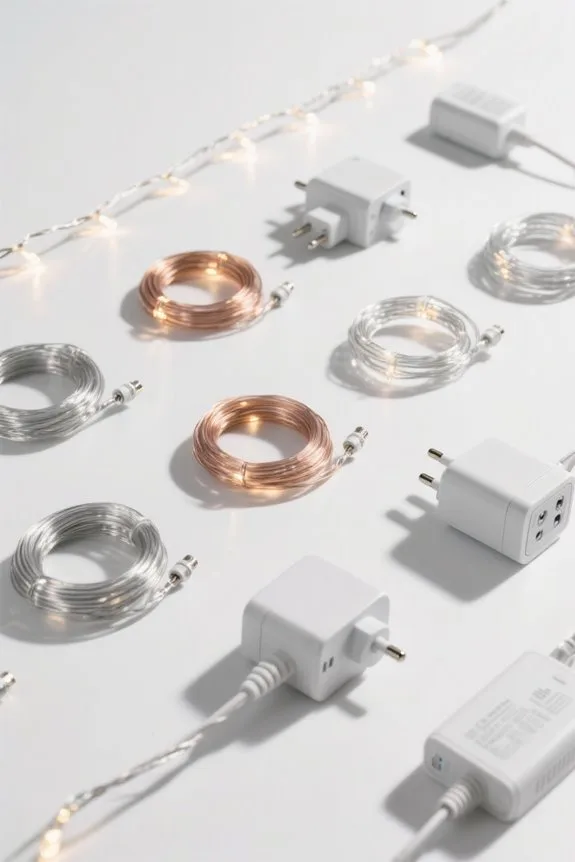
Understanding Power Requirements for Different String Light Configurations

String light power requirements depend largely on bulb type, quantity, and circuit capacity, with incandescent strands consuming about 1,925 watts over 265 feet and LED counterparts requiring roughly 38 watts for the same length; residential circuits generally support up to 1,440 watts but should operate below 80% to prevent overloads. Accurate wattage calculations, including bulb wattage multiplied by number of bulbs, guarantee safe connections. Incorporating proper voltage, amperage limits, and safety checks enables ideal setup performance. Further insights clarify design and efficiency concerns.
Key Takeaways
- Incandescent string lights consume about 1,925 watts per 265 feet, while LEDs use approximately 38 watts for the same length.
- Residential circuits support a maximum load near 1,440 watts, with a safe usage limit at 80% capacity.
- LEDs allow 10-20 strands per circuit due to low wattage, whereas incandescent lights support only 3-4 connected strands safely.
- Total wattage equals bulb wattage multiplied by the number of bulbs, crucial for preventing circuit overloads.
- Proper distribution across multiple circuits and using outdoor-rated components ensure safety and compliance with electrical codes.
Basics of Wattage in String Lighting
Because wattage measures the electrical power consumption of string lights, understanding its variations between types is essential for safe and efficient use; for example, incandescent string lights typically consume about 1,925 watts over a 265-foot length, whereas LED equivalents require only approximately 38 watts for the same distance, reflecting a significant difference in power demand. This vast disparity in wattage impacts outdoor lighting installation, as incandescent strings impose higher power consumption that limits the number of safe electrical connections per circuit. Residential circuits usually support a maximum load near 1,440 watts, necessitating strict wattage calculations to avoid overload. LEDs’ superior energy efficiency allows for linking 10 to 20 strands safely, whereas incandescent strands are restricted to 3 or 4 sets, emphasizing wattage’s critical role in ensuring safety and effective circuit management during installation. It’s important to choose energy-efficient LEDs with high lm/W ratings to maximize savings and minimize environmental impact.
Differences Between LED and Incandescent String Lights
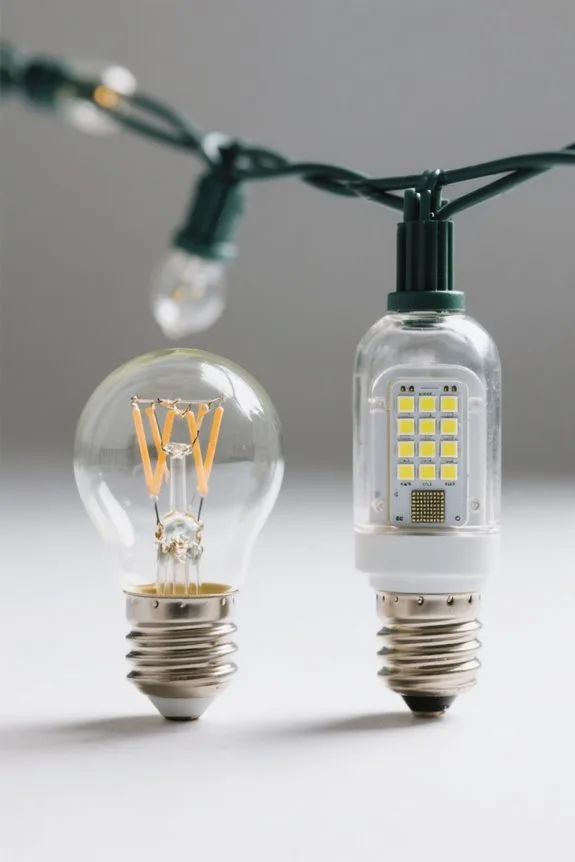
Distinct differences in power consumption, lifespan, and operational characteristics distinguish LED string lights from their incandescent counterparts, making the choice between them critical for both performance and safety. LED bulbs consume approximately 38 watts over 265 feet, enabling connection of more than 80 sets with minimal risk of overload, unlike incandescent strings that draw about 1,925 watts for the same length, limiting connections to roughly four sets. LED lights boast a lifespan exceeding 50,000 hours compared to roughly 3,000 hours for incandescent bulbs and operate at much cooler temperatures, reducing potential electrical hazards and fire risks. These factors make LED lighting solutions a cost-effective choice for multiple different types of lights, especially in outdoor lighting applications requiring safe operating wattage and minimal maintenance. LED bulbs are known for their energy efficiency and durability, offering significant savings and robust performance in various environments.
Recommended Products

FESTIVE LIGHTING: Commercial outdoor Christmas decorations take a festive leap with this 250-foot C9 Christmas stringer bulk reel, sized to immerse your entire home in the holiday spirit.

FESTIVE LIGHTING: Commercial outdoor Christmas decorations take a festive leap with this 1,000-foot C9 Christmas stringer bulk reel, sized to immerse your entire home in the holiday spirit.

HOLIDAY MAGIC: Experience the holiday magic with our 250-foot C9 magnetic Christmas light spool, ideal for indoor and outdoor festive decorations.
Calculating Total Wattage for String Light Configurations
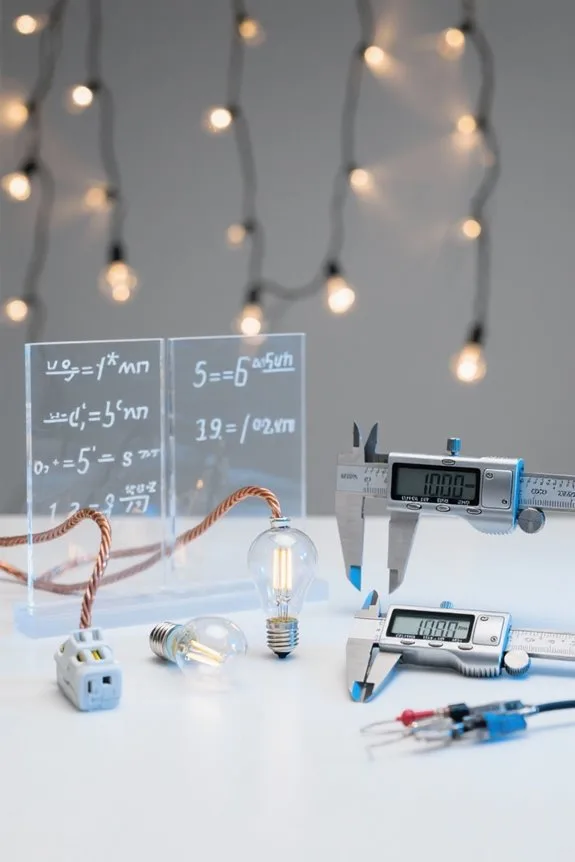
Accurately determining the total wattage required for string light configurations involves multiplying the wattage of each individual bulb by the total number of bulbs in use, a calculation that directly influences both safety and performance. For example, using 10 LED bulbs rated at 1 watt each results in a total wattage of 10 watts, which represents the baseline for further calculations. When calculating total wattage, adherence to electrical codes and safety standards is essential to avoid circuit overloads, especially on residential circuits typically rated for 15-20 amps. Given that a 15-amp circuit supports up to 1,440 watts, it is advisable to limit use to about 80% capacity—approximately 1,152 watts—to maintain reliable ambient lighting. Additionally, extension cords may add to total wattage and should be factored into any setup to guarantee compliance and safety. Many outdoor string lights, such as the Govee S14 Outdoor String Lights, feature energy-efficient LED bulbs lasting up to 25,000 hours, which helps reduce total power consumption while providing long-lasting illumination.
Recommended Products

🌞💡【120 / 240 Split Phase AC Output】12KW watts low frequency power inverter with transformer, 36kW watts Peak ,48 volts DC input. The inverter is split-phase and will output 110/120 Vac, and it can set via the LCD screen 50 or 60Hz Output. Support to run different batteries including Lead-Acid, GEL /Lithium battery,Compatible to mains voltage or generator which charge the battery or power the load. With lithium battery communication function.(Our products do not come with batteries)
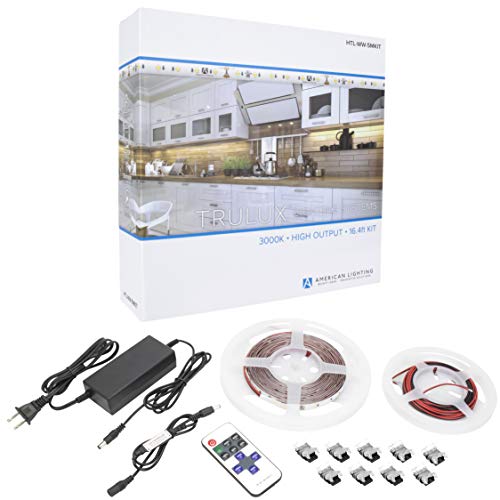
SUPERIOR-COLOR RENDERING: 3000K Warm White CCT LED tape provides best-in-class color rendering (96+ CRI), creating a natural light that displays colors accurately

Capable of Recharging 99% of Your Devices: Our power station has a huge capacity 1843.2Wh and a 2400W AC inverter (4800W Surge). It can power most of the high-power household appliances and electronic equipment without stress for a long time, such as an electric car, fridge, window air conditioner, hairdryers, microwave oven, coffee maker (Max 2400W), heater, electric grill, drill, etc. It gives you confidence in any emergency or unexpected power outages and meets your various power needs.
Voltage Considerations for String Light Setups
How do voltage levels influence the design and safety of string light setups? String lights typically operate on either 120V systems, common in standard U.S. outlets, or low-voltage configurations such as 12V systems, which offer safer operation and ease for DIY installations. The voltage considerably impacts wattage ratings and the risk of circuit overload; for instance, incandescent string lights connected to a 120V system should be limited to 3-4 strands per circuit, while LED lights permit 10-20 strands due to lower power consumption. Extension cords, often used to increase reach, add to total wattage and must be included in electrical safety calculations. Understanding these voltage-based distinctions guarantees proper load distribution, reduces overload risks, and maintains compliance with electrical safety standards for various string light configurations.
Understanding Amperage and Circuit Capacity
Voltage considerations set the stage for examining amperage and circuit capacity, factors that determine the actual current flow and safe electrical load distribution in string light installations. Amperage, measuring electric current in household circuits typically rated for 15 or 20 amps, directly influences the maximum wattage—1,440 watts for a 15 amp circuit and 1,920 watts for a 20 amp circuit—recommended to remain at 80% capacity to guarantee safety. Calculating total wattage by dividing amperage by standard voltage (120 volts) helps define power sources’ limits for string lights. During the installation process, selecting appropriate wire gauge is critical; for example, 22 Gauge supports up to 210 watts, whereas 20 Gauge handles 420 watts, aiding circuit capacity management. Proper electrical work includes distributing wattage across circuits to prevent breaker trips and maintain safety. Ensuring comprehensive safety features for lighting installations is vital, similar to those found in universal charging stations, to enhance user confidence and prevent electrical hazards.
Maximum Number of Strings per Outlet
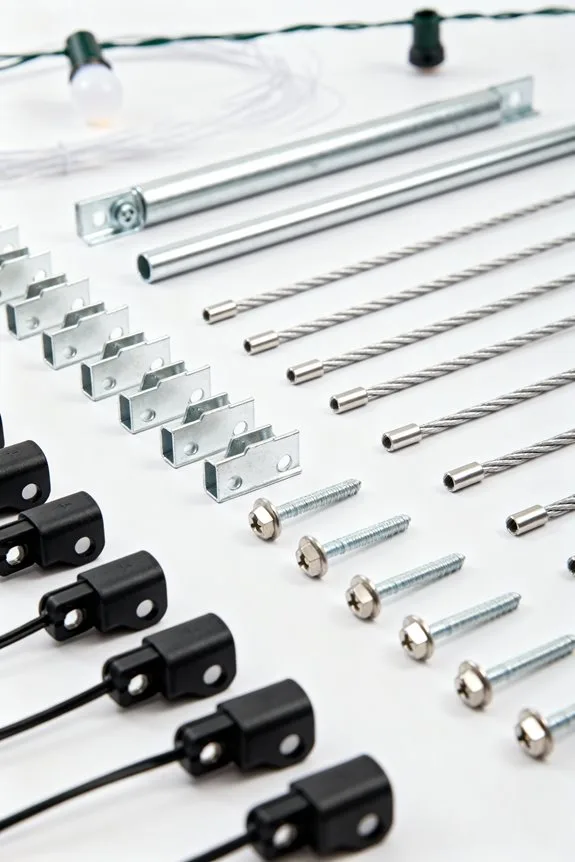
A typical residential outlet, operating at 120 volts and supplying up to 15 amps, can safely support a limited number of string light sets depending on their type and wattage consumption, with traditional incandescent strings generally accommodating three to four sets before exceeding recommended load limits, while energy-efficient LED strings permit a considerably higher connection count of ten to twenty strands per outlet due to their lower power draw. The total wattage of connected string lights must not surpass the outlet’s maximum load capacity to prevent circuit overload, especially in outdoor use scenarios where safety and efficiency are paramount. Utilizing multiple outlets across different circuits helps distribute the electrical load effectively, allowing larger displays without exceeding the rating of standard residential outlets or risking damage to circuit components. Choosing 304 stainless steel guide wires with nylon or vinyl coating for installations can ensure strength and corrosion resistance, enhancing the durability and safety of outdoor lighting setups.
Recommended Products

MAGICAL LIGHTING: Replacement bulbs for outdoor string lights have never been more magical than with these Novelty Lights C9 LED bulbs. As outdoor string light replacement bulbs, they're not just for Christmas but perfect for creating a warm, inviting atmosphere at weddings, parties, or any outdoor event.

Upgraded Festive Lighting: The new anti-glare lens design reveals a better triangular lighting effect. Choose from 75 scene modes and 16 million colors to light up your home with RGBWWIC patio lights outdoor for every occasion
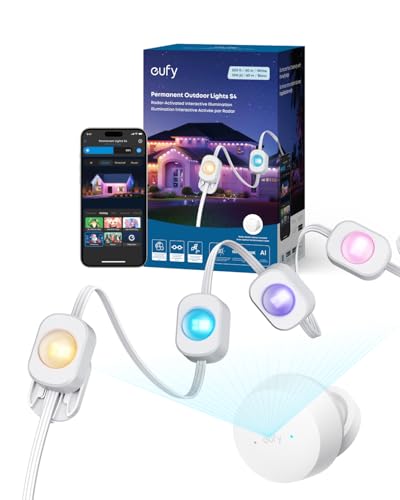
3-in-1 Lighting for Daily, Holiday, and Security: With 120°, 12 m radar coverage, this smart light strip offers precise motion detection for automatic lighting effects that follow your movement. Set customizable security alerts with flashing warnings to deter intruders.
Effects of String Length and Bulb Spacing on Power Use
Although the power consumption of string lights primarily depends on bulb type and wattage, string length and bulb spacing exert significant influence on overall electrical load by altering the number of bulbs and required wattage per installation. For instance, a 100-foot string with traditional bulbs spaced 18 to 24 inches apart will house more bulbs and consequently exhibit higher wattage compared to one with wider 36-inch spacing, which favors subtle accent lighting in outdoor spaces. Closer spacing, such as 12 inches, enhances brightness for task-oriented lighting systems but increases power consumption proportionally. Electrical planning must account for total wattage to avoid exceeding circuit capacity, which typically maxes out at 1,440 watts for a 15-amp circuit. Adjusting string length to compensate for sag also marginally affects bulb count and load, emphasizing precise calculations for safe, efficient installation. Additionally, when planning outdoor installations, considering the IP67 waterproof rating of LED drivers is crucial to ensure durability and protection against environmental elements.
Safety Precautions for Outdoor String Light Installation
When installing outdoor string lights, guaranteeing the total wattage does not exceed the circuit’s capacity—typically 15 to 20 amps for standard residential wiring—is paramount to prevent electrical hazards. It is essential to calculate total wattage beforehand, recognizing that incandescent lights usually support only 3 to 4 connected strands, while LED lights can handle between 10 and 20 due to lower power consumption. Safety precautions include using a circuit tester to verify circuit loads and deploying outdoor-rated extension cords suited for the electrical load and environmental exposure. Inspect outdoor string lights regularly for signs of wear such as frayed wires or damaged bulbs, which can increase overloading risks. Such measures help guarantee safety by preventing overheating, electrical faults, and potential fire hazards during installation and operation. For optimal safety, consider using a battery reconditioner charger to ensure that any backup power sources, like rechargeable batteries for outdoor lighting, are maintained and free from issues like sulfation.
Incorporating Smart Controls for Energy Efficiency
Incorporating smart controls into outdoor string light systems greatly enhances energy efficiency by enabling programmable schedules, which guarantee lights operate strictly during designated hours—typically reducing energy consumption by 20 to 40 percent compared to conventional manually controlled systems. Smart controls also incorporate motion sensors that activate lighting only when movement is detected, further reducing energy consumption during inactivity periods. Users can adjust brightness levels through integrated dimmers, optimizing energy usage according to environmental conditions or event requirements. Many systems support home automation platforms, allowing remote control via smartphone apps or voice commands, which reduces the likelihood of lights remaining on unnecessarily. Additionally, energy monitoring features enable homeowners to track usage patterns and modify behaviors, ultimately yielding cost savings by minimizing wasted electricity and maximizing overall operational efficiency. For optimal stability in outdoor lighting setups, it is advisable to use corrosion-resistant metal stakes, which provide robust support in various terrains and weather conditions.
Recommended Products

【Enhanced RGBCW Outdoor Lighting】Elevate your outdoor ambiance with ASAHOM permanent outdoor lights. Powered by ASAHOM app with AIGC intelligence and WLED integration for endless DIY creativity. 144 upgraded RGBCW LEDs deliver 50lm per light, 2700K-6500K tunable white, and 30,000+ lighting combination. Dual output extends up to 800ft. Smart schedule. 92 preset scenes for Halloween, Christmas decor and accent lighting. Perfect for roof, backyard, patio, gazebo, garage, porch, fence, etc.

YEAR-ROUND USE: Once you've installed your permanent outdoor string lights, leave them up and use them whenever you like -not just for special occasions; light your home every day of the year.

[Permanent LED Lights with RGB+IC Technology & Independent Control] – Bring your home’s eaves, soffits, or roofline to life with fully addressable, color-changing LEDs. Through the Lepro app, you can customize every detail—assign colors, create DIY scenes, or turn off specific lights for comfort, like keeping areas near bedroom windows dark for better sleep. The app is continuously updated with new features.
Common Electrical Issues and How to Prevent Them
How can homeowners guarantee safety and ideal performance when installing string lights on outdoor circuits? Calculating the total wattage before installation is essential, ensuring it does not exceed 80% of the circuit capacity—such as 1,152 watts for a 15-amp circuit or 1,536 watts for a 20-amp circuit—to prevent tripped breakers and fire risks. Employing a circuit tester regularly helps detect overloads early, while distributing loads across multiple circuits reduces installation complexity and prevents overheating. Inspection of string lights for frayed wires or damaged bulbs is critical, as these can cause short circuits or electrical shock hazards. Using appropriate wiring gauges—for instance, 22 Gauge supporting up to 210 watts and 20 Gauge up to 420 watts—adds an extra layer of protection, ensuring safety by mitigating electrical faults and advancing reliable, long-term operation. To enhance durability, consider using shatterproof and weather-resistant bulbs that are specifically designed for outdoor environments.
Recommended Products

MEMORABLE GLOW: Commercial grade LED Christmas lights radiate a beautiful, pure white hue, immersing you in the holiday spirit with our 50 Light LED Christmas Mini Light Set.
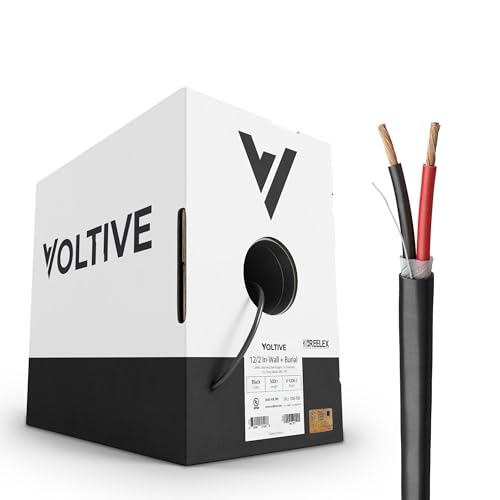
12AWG, 2 CONDUCTORS, BLACK JACKET, 500FT BOX. Premium 12 gauge speaker cable, featuring 65 strand Oxygen-Free Copper conductors and a super-luxe outer jacket. Built to exacting standards with zero compromises.

PRO PATHWAY HOLIDAY LIGHTING KIT WITH CUT-TO-LENGTH DESIGN – Elevate your Christmas and holiday lighting to the next level with a professional grade C9 LED Christmas lights installation kit. Light like the pros by using the same type of commercial grade light cord, bulbs, and vampire plugs that professional Christmas installers use. Create tidy borders along walkways, driveways, and garden beds with included 7.5" Canny Systems stakes that keep sockets upright and spacing consistent.
Frequently Asked Questions
Which Is Better, 40 Watt or 60 Watt for a Lamp?
Choosing between 40-watt and 60-watt bulbs for a lamp hinges on lamp brightness comparison and energy efficiency analysis; 60-watt offers higher light output measurement, while 40-watt excels in usage cost evaluation, environmental impact assessment, and decorative applications benefits.
How Many Watts to Power String Lights?
String light wattage varies; LED string lights typically consume less power, enhancing energy efficiency lighting. Proper power consumption calculations and circuit load management guarantee outdoor safety. Refer to a wattage comparison chart for seasonal lighting tips and decorative lighting setups.
How Many LED Lights Can You Run on a 15-Amp Circuit?
A 15-amp circuit supports roughly 1,200 watts; with LED wattage averaging 0.5-1 watt per bulb, approximately 1,200-2,400 LEDs fit. Effective load balancing, power management, and adherence to safety standards guarantee ideal outdoor decorative lighting layouts.
How Many LED Lights Can Be on a 20 Amp Circuit?
A 20 amp circuit can safely power approximately 1,920 to 3,840 LED lights, considering LED efficiency, amperage limits, and voltage considerations. Proper power calculations and installation tips guarantee circuit safety and ideal festive lighting design.