As an Amazon Associate, we earn from qualifying purchases. Some links on this site are affiliate links at no extra cost to you. Our recommendations are based on thorough research and editorial judgment.

Understanding Power Requirements for Different String Light Configurations

Power requirements for string light configurations depend primarily on bulb type, with LED bulbs consuming 0.5–1 watt each compared to incandescent bulbs’ 0.5–1.5 watts, influencing total wattage calculated by multiplying bulb count with individual wattage. A standard 15-amp circuit supports about 1,440 watts, permitting numerous LED strings but limiting incandescent sets to around four. Proper connections, wattage verification, and distributing loads across circuits prevent overloads. Voltage choice, between 120V and safer 12V, further affects installation complexity and energy efficiency. Additional guidance explores these considerations in detail.
Key Takeaways
- LED string lights use significantly less power, allowing connection of over 80 sets without circuit overload compared to incandescent bulbs.
- Calculate total wattage by multiplying the number of bulbs by individual wattage to avoid exceeding circuit capacities.
- A standard 15-amp circuit supports up to approximately 1,440 watts, limiting the number of incandescent string lights connected safely.
- Distribute string light sets across multiple circuits and verify wattage ratings to prevent electrical overload and hazards.
- Low-voltage 12-volt LED systems enhance safety and flexibility, reducing shock risk and simplifying installation compared to 120-volt setups.
Factors Influencing String Light Power Consumption
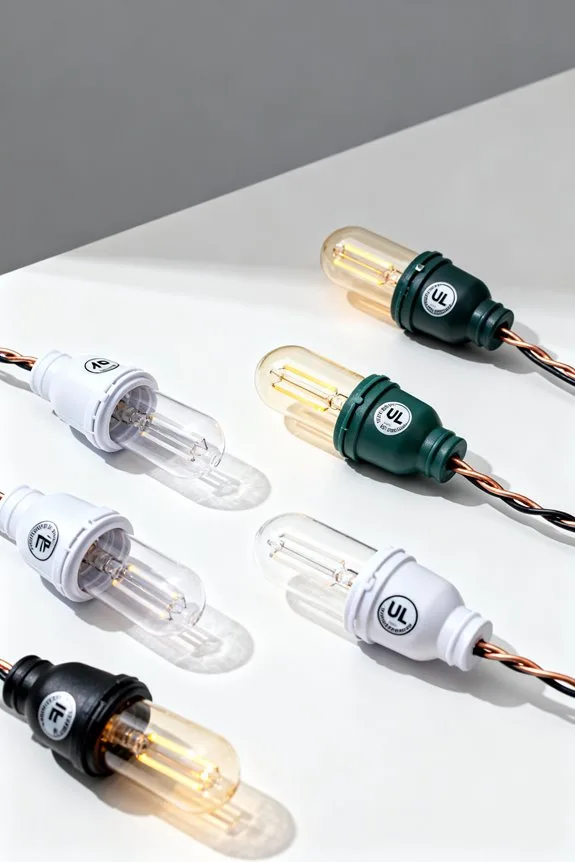
Although the type of bulbs used is a primary determinant of string light power consumption, several additional factors considerably influence the overall energy requirements; LED bulbs typically consume between 0.5 and 1 watt per bulb, whereas incandescent bulbs range from 0.5 to 1.5 watts each, a variation that must be considered during installation planning. The installation complexity increases with string length and bulb spacing, as denser configurations demand more wattage to maintain uniform ambient lighting. To guarantee safety standards, installers must calculate total wattage by multiplying bulb count with individual wattage, making sure the load does not exceed 80% of the circuit’s capacity. Proper electrical connections also help minimize energy consumption and provide peace of mind by preventing overloads and ensuring compliance with power supply limits. Additionally, choosing Energy Star certifications for outdoor string lights ensures efficient energy use and reliable safety features.
Recommended Products

COMMERCIAL-GRADE CONSTRUCTION: 14AWG SJTW 2-wire light string in 330-foot bulk reel ready for large-scale projects

Upgraded Festive Lighting: The new anti-glare lens design reveals a better triangular lighting effect. Choose from 75 scene modes and 16 million colors to light up your home with RGBWWIC patio lights outdoor for every occasion

FESTIVE LIGHTING: Commercial outdoor Christmas decorations take a festive leap with this 250-foot C9 Christmas stringer bulk reel, sized to immerse your entire home in the holiday spirit.
Comparing LED and Incandescent String Light Wattage

Energy efficiency and longevity serve as critical metrics when comparing LED and incandescent string light wattage, with LED bulbs typically consuming between 0.5 and 1 watt per bulb, enabling the connection of over 80 sets without risking circuit overload; incandescent string lights, however, can draw approximately 1,925 watts on a 265-foot string, restricting safe connections to around four sets on a standard 15-amp, 1,440-watt circuit. The dramatically lower power consumption of LED lights makes them preferable for outdoor lighting installations requiring extensive string lights, due to their minimal impact on circuit capacity. Additionally, the significant difference in wattage directly affects the electrical load during installation, making LED string lights not only more energy efficient but also advantageous for maintaining manageable power consumption across varied electrical setups. Using timers with ETL safety certifications can further enhance safety when managing high wattage string light configurations.
Recommended Products

Powerful RV and Home Generator with Electric Start: Ideal for home backup power, RVs, outdoor events, and more, this easy-to-use house generator features advanced inverter technology to supply power reliable enough for computers

Powerful RV and Home Generator with LED Display: Ideal for furnaces, fridges, most 13,500 BTU RV AC units, and more, this easy-to-use house generator features advanced inverter technology to supply power reliable enough for computers
Protected by Oil Alert - Protects the generator by shutting the engine off when low oil is detected
Calculating Total Load and Circuit Capacity

When calculating the total electrical load for string lighting, users must sum the wattage of each connected light string and compare this figure to the circuit’s capacity, which for a standard 15-amp household circuit is approximately 1,440 watts when adhering to the recommended 80% safety margin; for instance, connecting ten LED light strings at 5 watts each results in a total load of 50 watts—well within this limit—while care must also be taken to include the wattage of extension cords and any supplementary devices to avoid exceeding safe operational thresholds and risking circuit overload or failure. Calculating total load requires consulting electrical codes, verifying power sources, and confirming total wattage to guarantee lighting systems operate reliably without compromising safety or damaging equipment. Additionally, using weatherproof outlet covers rated for NEMA 3R protection ensures that outdoor electrical connections remain safe under varying weather conditions.
Recommended Products

FESTIVE LIGHTING: Commercial outdoor Christmas decorations take a festive leap with this 1,000-foot C9 Christmas stringer bulk reel, sized to immerse your entire home in the holiday spirit.

HOLIDAY MAGIC: Experience the holiday magic with our 250-foot C9 magnetic Christmas light spool, ideal for indoor and outdoor festive decorations.

MAGICAL LIGHTING: Replacement bulbs for outdoor string lights have never been more magical than with these Novelty Lights C9 LED bulbs. As outdoor string light replacement bulbs, they're not just for Christmas but perfect for creating a warm, inviting atmosphere at weddings, parties, or any outdoor event.
Safe Practices for Connecting Multiple String Light Sets
Connecting multiple string light sets requires careful adherence to established guidelines that limit the number of consecutive sets to mitigate circuit overload risks; typically, a maximum of 3 to 4 traditional incandescent strings or between 10 to 20 LED strings is recommended, reflecting the significant difference in wattage consumption between light types. Safe practices include verifying the wattage rating on each string light set to avoid exceeding the circuit’s capacity, as a 40-watt incandescent string should not surpass 240 watts on a standard 120-volt circuit. Users should consider voltage limitations and avoid overloading outlets or extension cords, especially in outdoor lighting scenarios. Distributing string light sets across multiple circuits further reduces circuit overload risks, promoting safer operation of both incandescent lights and LED lights during installation. Additionally, employing devices with overcurrent protection helps safeguard circuits from potential damage caused by electrical overloads.
Recommended Products

HIGH-QUALITY CORD - The extension cord is made with thicker 16 AWG wire diameters which can handle more amperage, Get more from your heavy-duty 3-Prong extension cord with a high capacity of 1625 Watt rating (13 Amps, 125V). Link additional extension cords, power strips, surge protectors, plug adders, and devices up to a max of 1625W.

Robotically welded reinforced steel base offers maximum strength and consistent quality

Long-Lasting Portable Power Station With a 10-Year Lifespan: With our proprietary long-lasting technology InfiniPower, combined with LiFePO4 batteries, ultra-durable electronic components, a smart temperature control system that monitors temperature up to 100 times per second, and impact-resistant structural design,Anker SOLIX F2000 is built to last over a decade, even with everyday use.
Voltage Considerations for Different String Light Systems
Although both 120-volt and low-voltage 12-volt string light systems are commonly used in residential and commercial settings, their differing electrical requirements necessitate careful consideration of installation and power consumption factors; importantly, 120-volt systems demand professional handling due to higher power levels and associated safety risks, while low-voltage configurations, often incorporating LED bulbs rated between 0.5 and 1 watt per bulb, allow safer DIY installation and enable connection of up to 10 to 20 strands without surpassing wattage limits. The 120V systems, constrained by circuit amperage—usually 15 amps—must adhere to a maximum load of approximately 1,440 watts to avoid overload. In contrast, low-voltage LED string lights greatly reduce electric shock risk and permit installation flexibility, provided voltage ratings and load limits are strictly observed to prevent circuit overload or fire hazards. For optimal performance and longevity, energy-efficient LED fixtures with high lumens per watt are recommended in low-voltage string light applications.
Recommended Products

Upgrade Yarn-dyed Curtain: Made with advanced techniques, our upgraded fabric offers strong fade resistance for at least 2 years and stays intact even after a month in extreme conditions.
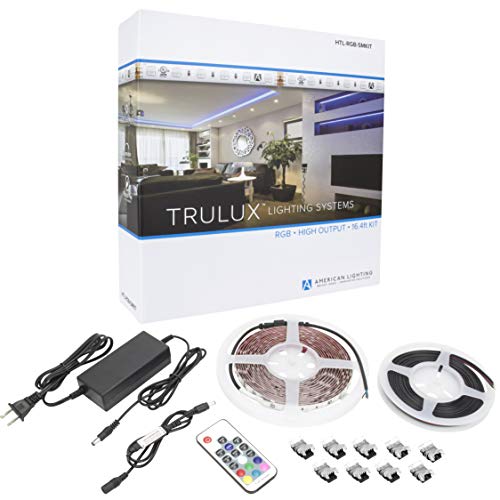
ADJUSTABLE 3-in-1 RGB COLOR-TEMPERATURES: Tunable RGB Lighting for the ultimate custom-lighting control to create linear lighting effects in home or commercial properties. Linking accessories, controllers, receivers, power supplies, and extrusions are available for Trulux tape light (sold separately)

Massive 33FT Flagpole Light Tree – Stunning Holiday Centerpiece:Transform your existing flagpole into a breathtaking 33-foot Christmas tree. With 8,400 ultra-bright LEDs, this mega display instantly becomes the highlight of your home, business, or community.
Frequently Asked Questions
Which Is Better, 40 Watt or 60 Watt for a Lamp?
Choosing 60 watts for lamp brightness comparison ironically risks a sauna, despite wattage impact assessment favoring illumination. Yet, 40 watts wins in energy efficiency analysis, heat generation factors, cost effectiveness evaluation, and bulb lifespan differences, suiting user preference insights.
How Many Watts to Power String Lights?
The watts needed to power string lights vary with light bulb wattage and string light types. Energy efficiency and light brightness affect energy consumption, vital for outdoor lighting and decorative lighting. Proper power source use prevents circuit overload and guarantees electrical safety.
How Many LED Lights Can You Run on a 15-Amp Circuit?
A 15-amp circuit can safely power about 1,152 LED lights, considering LED efficiency and total wattage. Proper power calculation and adherence to circuit safety prevent overloading the circuit breaker when using various string light types and power strips.
How Many LED Lights Can Be on a 20 Amp Circuit?
A 20 amp circuit supports roughly 1,536 watts under safety standards, allowing approximately 1,500 to 3,000 LED bulbs depending on wattage. Load calculations must consider LED bulb efficiency, voltage drop, string light length, and wattage limits to avoid tripping circuit breakers.