As an Amazon Associate, we earn from qualifying purchases. Some links on this site are affiliate links at no extra cost to you. Our recommendations are based on thorough research and editorial judgment.

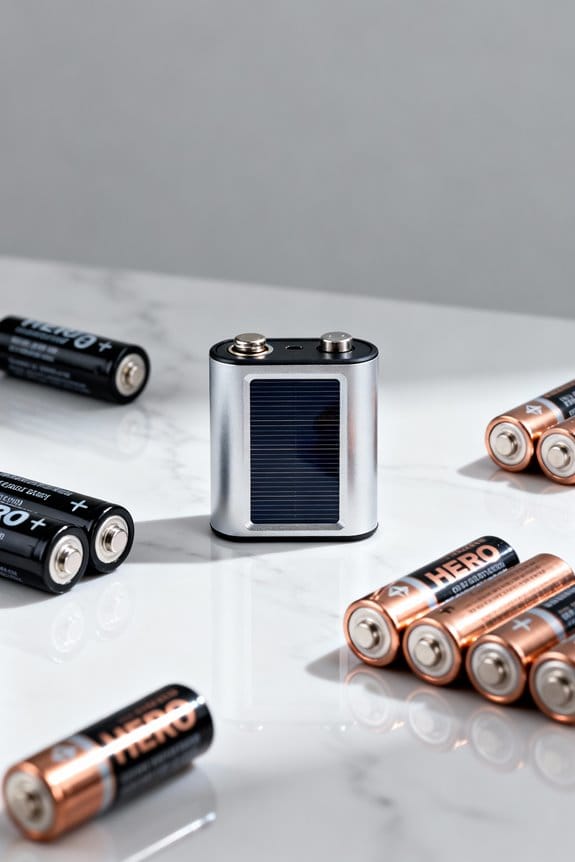
How to Power Solar Garden Lights With the Right Rechargeable Batteries

Solar garden lights require 1.2V rechargeable NiMH batteries with capacities of 1500 mAh or higher, offering 600 to 1,000 recharge cycles for stable illumination and extended lifespan. These batteries withstand temperature fluctuations and feature low self-discharge, ensuring consistent performance across seasons. Proper installation involves matching battery size, polarity, and maintaining waterproof seals for electronic protection. Selecting brands with short-circuit and overcharge protection further enhances safety and durability. Explore more about optimizing battery selection and replacement tactics for reliable solar lighting projects.
Key Takeaways
- Use NiMH rechargeable batteries for stable brightness and 600-1,000 charge cycles in solar garden lights.
- Choose batteries with high capacity (mAh) and low self-discharge for longer runtime and reliable outdoor use.
- Replace batteries when runtime drops, performance becomes inconsistent, or physical deterioration appears.
- Install batteries correctly with proper polarity and maintain waterproof seals to protect electronics.
- Charge new batteries fully in direct sunlight for 6-8 hours before use for optimal performance.
Why Rechargeable Batteries Are Essential for Solar Garden Lights
Although solar garden lights rely primarily on photovoltaic panels to capture sunlight during the day, rechargeable batteries are indispensable components that store this harvested energy, enabling illumination throughout nighttime hours without dependence on external electrical grids. Rechargeable batteries, such as NiMH, provide consistent power output critical to maintaining steady light brightness and operational reliability. The battery lifespan typically ranges from one to two years, after which replacement batteries become necessary to prevent performance issues like diminished runtime and physical deterioration, including corrosion or swelling. Effective energy storage within these batteries addresses environmental concerns by reducing waste and improving sustainability. Proper maintenance and timely replacement of rechargeable batteries optimize solar garden lights’ efficiency by complementing solar panels, ensuring continuous functionality while mitigating the risks associated with battery degradation and inconsistent power delivery. Choosing batteries with a higher cycle life and retention rate can extend the effective lifespan and reliability of solar lighting systems.
Different Types of Rechargeable Batteries Used in Solar Lights
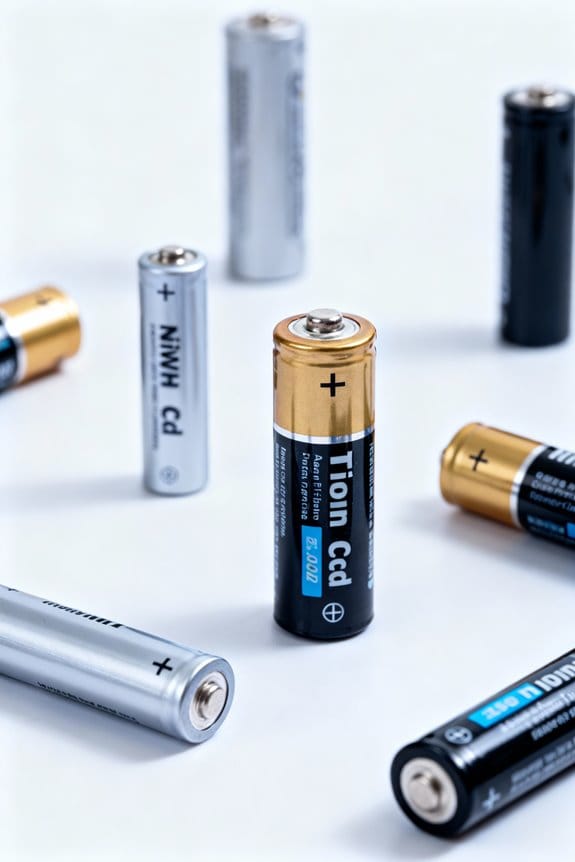
When selecting batteries for solar garden lights, performance characteristics such as energy density, cycle life, and thermal stability vary markedly among Nickel-Metal Hydride (NiMH), Nickel-Cadmium (NiCd), Lithium-Ion (Li-ion), and Lithium Iron Phosphate (LiFePO4) chemistries, influencing their suitability for different applications; for instance, NiMH batteries typically provide 600 to 1,000 charge-discharge cycles with a nominal voltage of 1.2 volts per cell and exhibit low environmental toxicity, while NiCd units, offering robust temperature tolerance from -20°C to 60°C and up to 1,200 cycles, suffer from memory effect and contain harmful cadmium, which restricts their use; meanwhile, Li-ion cells deliver higher energy density—ranging from 150 to 250 Wh/kg—and maintain a stable voltage output of approximately 3.6 volts, extending operational runtime though requiring precise charging control to prevent safety risks; in contrast, LiFePO4 batteries, although initially costlier by 20-30% compared to Li-ion counterparts, present exceptional thermal and chemical stability, capable of over 2,000 full cycles and safe operation across -30°C to 60°C, making them a preferred option for durable, high-performance solar lighting systems intended to withstand extreme environmental conditions. Additionally, using high-capacity NiMH batteries with improved low self-discharge properties can significantly enhance performance in energy-demanding solar lights.
Signs Your Solar Light Batteries Need Replacement
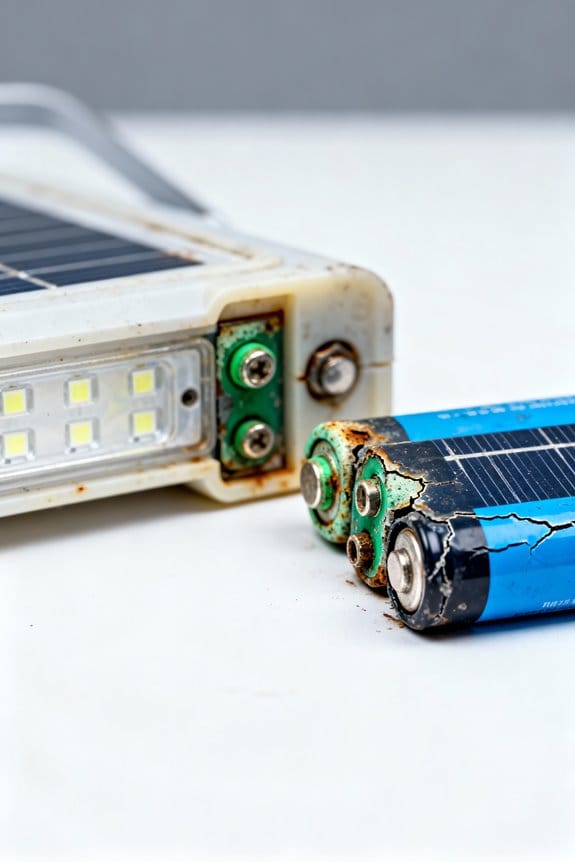
Selecting the appropriate rechargeable battery chemistry, such as Nickel-Metal Hydride (NiMH) or Lithium Iron Phosphate (LiFePO4), plays a significant role in solar garden light performance and longevity; however, even high-quality batteries with a nominal voltage of 1.2 to 3.6 volts and cycle counts exceeding 600 will eventually exhibit signs of wear. Common signs of battery failure in solar lights include diminished runtime, where illumination ceases prematurely due to reduced battery capacity, and inconsistent performance, such as failure to activate after adequate sunlight exposure. Physical deterioration—marked by corrosion, swelling, or white residue—indicates urgent need for battery replacement. Additionally, seasonal performance loss, characterized by adequate summer output but diminished winter function, reveals insufficient energy storage capacity. Recognizing these indicators guarantees timely intervention, preventing unexpected outages and maintaining reliable outdoor lighting. Emerging battery technologies like solid-state batteries promise longer cycle life and enhanced durability, potentially extending the lifespan of solar light power sources in the near future.
Step-by-Step Guide to Replacing Batteries in Solar Lights
Replacing batteries in solar garden lights requires a systematic approach to guarantee peak functionality and longevity of the lighting system. First, users must power down the solar lights safely to prevent electrical issues before opening the battery compartment. Next, the old batteries should be removed carefully, noting orientation and size to select compatible replacements. For most solar lights, battery replacement involves installing NiMH 1.2V rechargeable batteries, confirming correct polarity alignment within the compartment. Maintaining waterproof seals throughout the process is essential to avoid moisture damage to electronic components. After installation, placing the solar lights in direct sunlight for 6-8 hours allows the new rechargeable batteries to charge fully before use. This methodical procedure guarantees maximum performance and durability of solar garden lights during their operational lifespan. Choosing batteries with low self-discharge technology ensures longer readiness and less frequent charging cycles in solar garden lights.
Selecting the Best Rechargeable Batteries for Winter Performance
How can solar garden lights maintain peak operation despite reduced sunlight during winter months when daylight duration shrinks to an average of 8-10 hours daily? Selecting rechargeable batteries with a high capacity is essential for winter performance, as shorter days limit solar lights’ energy capture. Lithium Iron Phosphate (LiFePO4) batteries are preferred owing to their long cycle life and resilience in extreme temperatures, sustaining output even when conditions drop below freezing. NiMH batteries remain viable but often exhibit diminished efficiency under cold conditions, making battery selection dependent on local climate. Ensuring uninterrupted sunlight exposure by keeping solar panels free from snow or debris further optimizes charging. Consequently, pairing high-capacity, temperature-stable batteries like LiFePO4 with efficient solar lights better compensates for limited winter sunlight and extends nighttime illumination consistently. Additionally, incorporating energy-efficient LED technology in your solar lights enhances overall performance and longevity during low-light conditions.
Enhancing Solar Light Durability With Advanced Battery Technology
Numerous advancements in battery technology have greatly improved the durability and efficiency of solar garden lights, particularly through the adoption of Lithium Iron Phosphate (LiFePO4) and lithium-ion chemistries, which offer cycle lives three to five times longer than conventional NiMH batteries, maintaining stable voltage outputs between 3.2V and 3.7V under diverse temperature ranges from -20°C to 60°C. These rechargeable batteries exhibit higher energy density and enhanced performance, ensuring consistent illumination even during notable temperature fluctuations. Incorporating advanced battery technologies with anti-overcharge and anti-overdischarge protection further extends lifespan, essential for solar lights exposed to outdoor elements. Additionally, high-capacity batteries with superior thermal management optimize energy retention and operational stability, minimizing frequent replacements. Together, these innovations in rechargeable battery design greatly bolster solar lights’ durability, reliability, and efficiency in varied environmental conditions. It is also important to prioritize batteries with short-circuit protection to enhance safety and longevity when used in outdoor applications.
Frequently Asked Questions
Can I Use Any Rechargeable Battery in My Solar Lights?
Not all rechargeable options guarantee maximum battery compatibility; selecting correct types enhances solar efficiency, light output, and battery lifespan. Considering cost comparison, charging techniques, and maintenance tips aids performance enhancement while minimizing environmental impact in solar garden lights.
How Do You Charge Rechargeable Batteries for Solar Lights?
Rechargeable batteries for solar lights charge through solar charging techniques relying on adequate sunlight exposure. Battery types comparison shows voltage compatibility issues affect efficiency, while maintenance tips promote longevity. These factors enhance solar light functionality, cost effectiveness, and environmental benefits.
Is There a Difference Between a Solar Rechargeable Battery and a Regular Rechargeable Battery?
Solar battery types differ from regular batteries, offering enhanced solar light efficiency, optimized energy storage solutions, and improved battery lifespan. Their compatibility with solar panels supports performance optimization, cost-effective DIY battery replacement, better maintenance, and reduced environmental impact.
Can I Use a Higher Mah Battery in Solar Lights?
Using a higher mAh battery can increase light duration by up to 30%, but battery compatibility and voltage requirements must be met to maintain solar efficiency. Proper battery replacements, maintenance tips, and awareness of temperature effects optimize charging cycles and energy storage.