As an Amazon Associate, we earn from qualifying purchases. Some links on this site are affiliate links at no extra cost to you. Our recommendations are based on thorough research and editorial judgment.

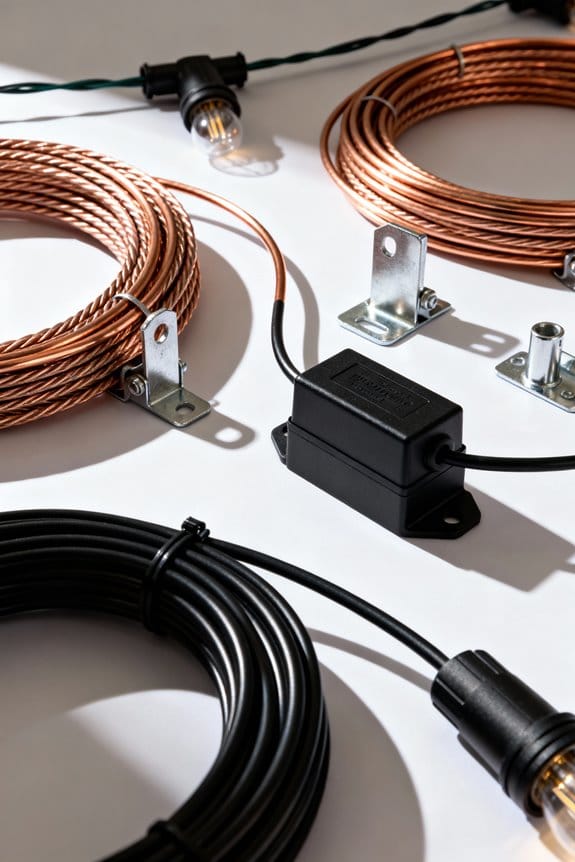
How to Safely Hang Outdoor String Lights Permanently

Safely hanging outdoor string lights permanently necessitates strategic planning by measuring the area and spacing bulbs 24 to 36 inches apart at an ideal height of 8 to 10 feet, ensuring even illumination and clearance. Employ weather-resistant materials rated IP65 or higher, with UV-resistant wiring and stainless steel hooks anchored securely via 3-4 millimeter pre-drilled holes in durable points like poles or building edges. Integrate GFCI-protected power sources with waterproof connectors and maintain proper tension, slope, and regular inspections to withstand environmental stressors. Thorough guidance covers these essential technical details.
Key Takeaways
- Select weather-resistant materials with IP65 rating and UV-resistant wiring to ensure durability and safety in outdoor conditions.
- Identify strong, stable anchor points and securely fasten stainless steel screw hooks or eye hooks for reliable light suspension.
- Maintain proper spacing (24-36 inches) and height (8-10 feet) for balanced illumination and clearance.
- Use outdoor-rated extension cords with GFCI outlets and waterproof caps to protect electrical connections and prevent hazards.
- Regularly inspect wiring, bulbs, and anchor points, adjusting tension and replacing damaged parts to ensure long-term safety and performance.
Planning Your Outdoor String Light Installation
When initiating an outdoor string light installation, how does one confirm both durability and aesthetic appeal in varying weather conditions? A precise plan to use string lighting begins with measuring the area and carefully selecting stable anchor points, such as trees, poles, or building edges, capable of supporting the fixture’s weight without sagging. The layout must consider even spacing and suitable hook placement to distribute tension uniformly, enhancing visual symmetry and preventing mechanical stress. Prioritizing outdoor use materials is essential; all components should comply with safety standards and local electrical codes. Strategic positioning near power sources ensures efficient energy delivery. This methodical approach to planning incorporates structural soundness and functional design, addressing environmental exposure while optimizing illumination quality and longevity without prematurely discussing material characteristics reserved for subsequent evaluation. Selecting materials with IP65 waterproof ratings helps ensure the installation withstands various weather conditions.
Choosing Durable and Weather-Resistant Materials
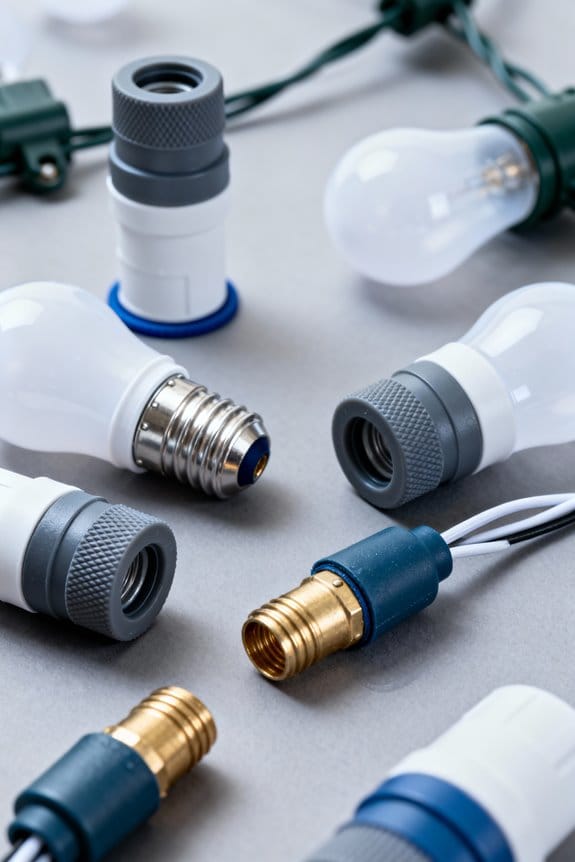
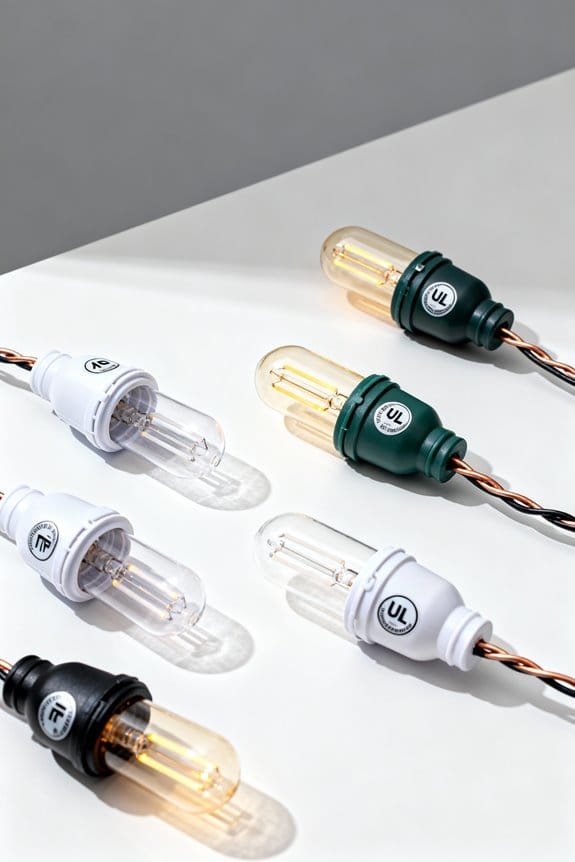
Ideal long-term performance of outdoor string lights depends greatly on the selection of materials engineered to withstand environmental stressors such as UV radiation, moisture ingress, and temperature fluctuations ranging from -20°C to 40°C. Durable outdoor lights constructed with heavy-duty plastic or glass resist breakage and maintain structural integrity. Weather-resistant features include an IP65 rating or higher, ensuring protection against dust and water splashes, which prolongs lifespan in varied climates. UV-resistant wiring and bulb casings prevent fading and material degradation, critical for sustaining vibrant outdoor decor. Stainless steel or coated metal fixtures offer superior rust resistance compared to standard metals, fortifying installation stability. Finally, bulbs rated specifically for outdoor use guarantee operational safety and consistent illumination under diverse environmental conditions, supporting an efficient, long-lasting display. Selecting components with corrosion-resistant materials similar to those used in battery post cleaners can significantly enhance durability and maintenance ease in outdoor setups.
Recommended Products

Size: 12' x 24' gazebo with 36 bulbs outdoor hanging lights for 72 ft. With 12x14 gazebo( 155.51"L x 131.89"W x 120.8"H) and 12x10 Gazebo( 113.39"L x 131.89"W x 120.8"H ).

The Tallest of the PURPLE LEAF Pergolas: This creates a grand, open atmosphere with ample space for gatherings. It is perfect as a standalone piece or an extension for dining, outdoor furniture, hot tubs, or kitchens/bars.

Upgrade Yarn-dyed Curtain: Made with advanced techniques, our upgraded fabric offers strong fade resistance for at least 2 years and stays intact even after a month in extreme conditions.
Identifying Secure Anchor Points for Hanging Lights
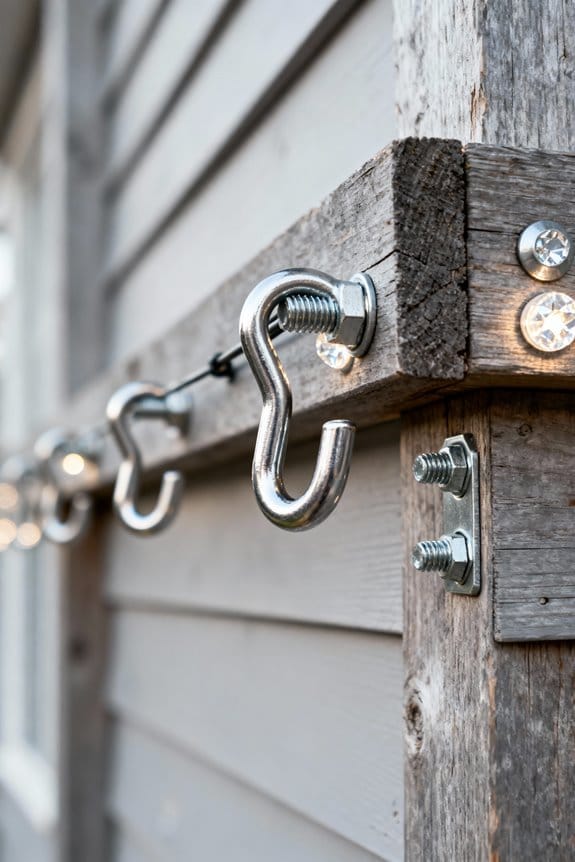
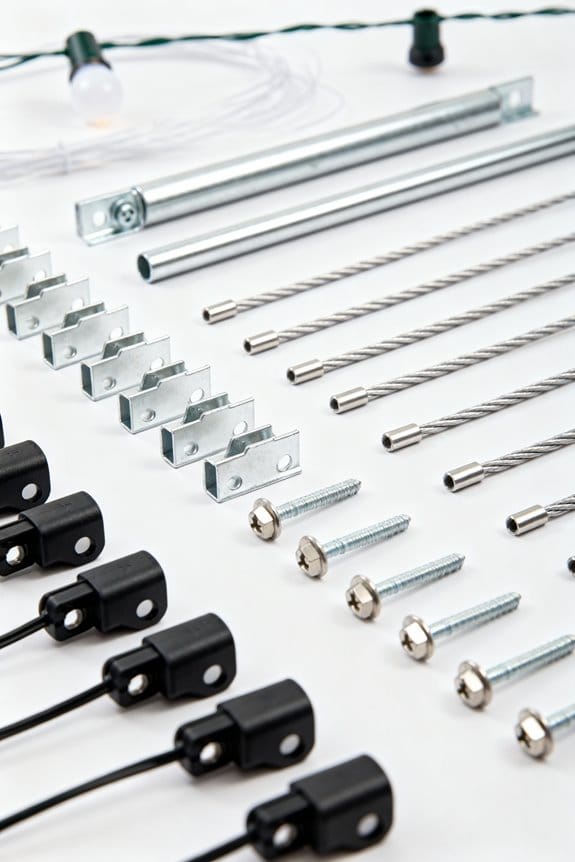
Although selecting appropriate outdoor lighting is essential, identifying secure anchor points represents a foundational step in ensuring the longevity and stability of string lights, particularly when considering factors such as structural support, material resilience, and local regulatory compliance; viable anchor points often include building walls, fences, trees, or poles capable of supporting distributed loads without bending, while the employment of stainless steel screw hooks, eye hooks, or cup hooks provides reliable cradling for wires and prevents abrasion, with installations generally recommended to maintain a height of 8 to 10 feet above ground level for ideal illumination and pedestrian clearance. Ensuring weather resistance of anchor points safeguards against environmental damage, while compliance with local codes prevents regulatory issues. Additionally, planning for proper outdoor extension cord placement enhances safety and functionality in the overall lighting setup. Using a stainless steel suspension rope like those found in dedicated hanging kits can further improve durability and ease of configuration for your installation.
Installing Hooks and Screw Eyes for Strong Support
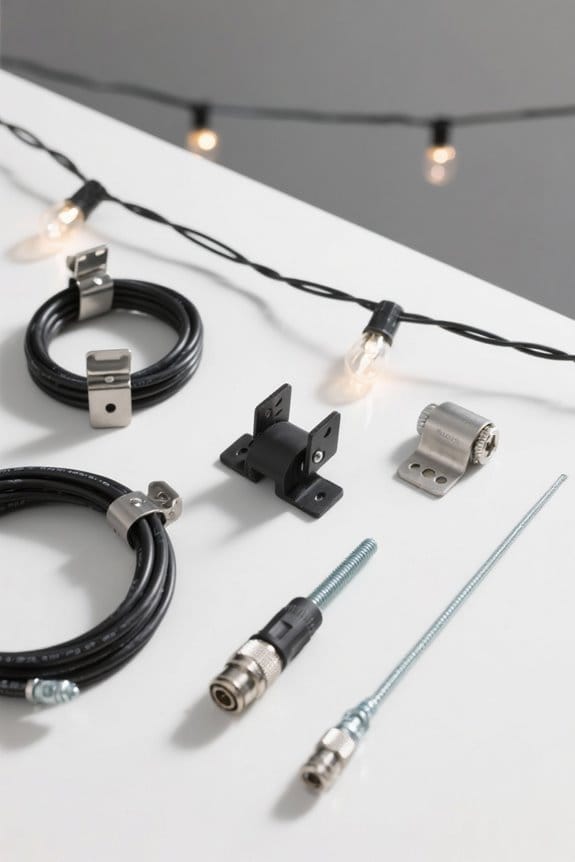
Given that the durability and stability of outdoor string lights are directly influenced by the strength of their anchoring system, installing stainless steel screw hooks or cup hooks becomes a critical procedure, particularly when dealing with wooden surfaces; pre-drilling holes approximately 3 to 4 millimeters in diameter guarantees ideal thread engagement and reduces wood splitting risks, while positioning screw eyes at intervals corresponding to either each light bulb for a taut setup or every second or third bulb for a relaxed drape, depending on desired aesthetic and tension requirements, enhances load distribution and prevents sagging during wind or rain exposure. Secure installation requires tightly fastening screw eyes to withstand outdoor lighting conditions reliably. This method effectively supports the wires, allowing homeowners to hang outdoor string lights with confidence, maintaining both functionality and aesthetic appeal. For optimal performance and longevity, it is advisable to use weather-resistant materials to ensure that supports withstand temperature fluctuations, moisture, and UV exposure over time.
Recommended Products

Size: 14' X 28' gazebo with 36 bulbs outdoor hanging lights. You can improve the atmosphere of outdoor activities through 8 lighting remote control at night.

Powder-coated Aluminum Frame: A sturdy powder-coated aluminum frame for rust resistance. It also comes with a pre-drilled base designed for firm installation.

【Innovative Double Roof System】 - 14x24 Gazebo features a durable 16mm thick resin lower roof and a galvanized steel upper metal roof—the first of its kind in the market. This design significantly enhances snow load capacity (up to 35lbs/sq.ft vs. standard 22lbs/sq.ft), reduces rain noise, improves heat insulation in winter (better for hot tubs), and prevents deformation during shipping for this hard top gazebo.
Attaching String Lights Safely With Hardware
When attaching outdoor string lights, selecting hardware that combines corrosion resistance with sufficient tensile strength is crucial to guarantee longevity and safety under varying weather conditions; stainless steel screw hooks and cup hooks, rated to withstand loads exceeding 20 kilograms per anchor point, offer reliable support while keeping wiring elevated from surfaces to prevent abrasion, and when paired with pre-drilled holes measuring 3 to 4 millimeters in diameter, they optimize thread engagement and minimize material damage. To attach the lights securely, durable fastening hardware that is easy to install is important, with mini metal carabiners providing additional convenience for adjustments and removal without harming the fixtures. Using fastening hardware rated for outdoor exposure assures corrosion resistance, while tensioning systems help maintain constant wire tension, reducing stress and preventing sagging during adverse weather, thereby enhancing the string lights’ functional lifespan. Additionally, choosing hardware made from high-quality ABS plastic can provide excellent durability and resilience for secure, long-lasting installations.
Recommended Products

Size: 14' X 24' gazebo with 36 bulbs outdoor hanging lights. You can improve the atmosphere of outdoor activities through 8 lighting remote control at night.

𝗖𝗢𝗟𝗢𝗥 & 𝗦𝗜𝗭𝗘: Luxury Series Features a White Frame, Fabric Color: Sunny Yellow with Silver Gray and Blue Stripes, Size: 14' Wide x 10' Projection Full Extension. Advaning Awnings are 100% Fully Pre-Assembled and Ready for Installation.

Premium Material: Our sun shade sail is made of 260 GSM high density polyethylene fabric. The fabric design effectively blocks direct sunlight and UV rays, while its breathable properties promote air circulation, enhancing comfort in outdoor environments.
Connecting Power Sources With Safety in Mind
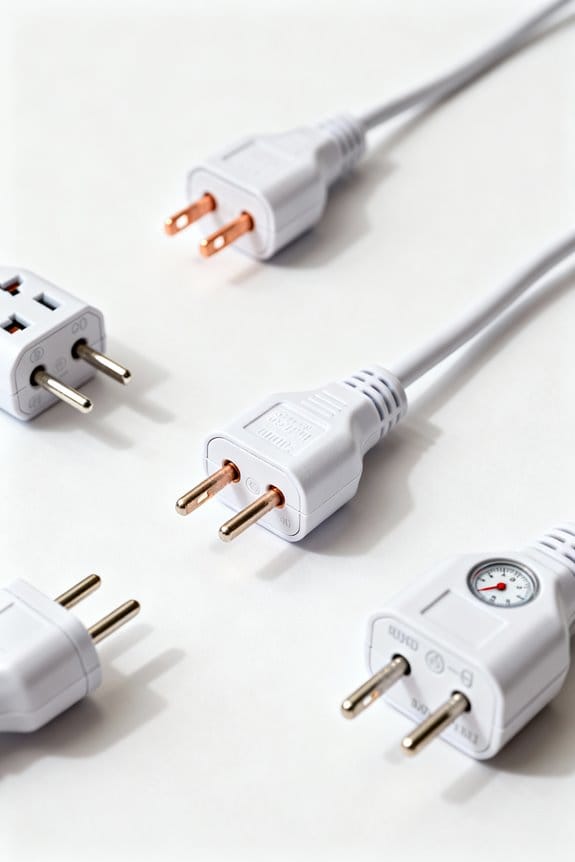
Securing power connections for outdoor string lights requires the use of outdoor-rated extension cords specifically designed for wet environments, which are tested to withstand continuous exposure to moisture and maintain insulation integrity under temperatures ranging from -20°C to 40°C; integrating a Ground Fault Circuit Interrupter (GFCI) outlet considerably enhances electrical safety by detecting leakage currents exceeding 5 milliamperes within 1/40th of a second, thereby reducing the risk of shock hazards. Additionally, all connection points should be weatherproof, employing waterproof caps or covers to prevent moisture ingress that could lead to electrical hazards. Utilizing an outdoor smart plug with programmable functions further optimizes operational convenience while maintaining compliance with safety standards. Confirming exposed wiring with cord clips ensures a tidy installation, minimizing tripping risks and safeguarding the power source’s integrity under varying outdoor conditions. It is also important to select a smart plug with an appropriate IP rating to ensure reliable weather protection and long-lasting outdoor use.
Recommended Products
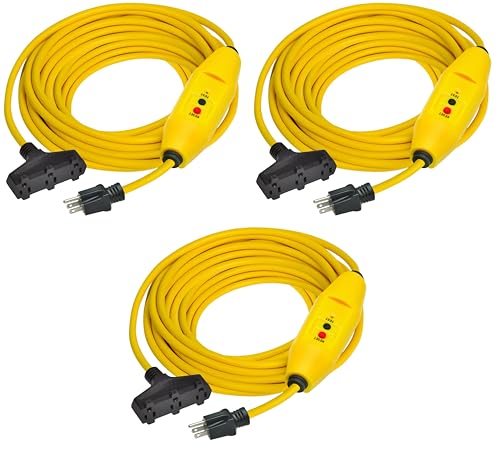
MEETS SAFETY STANDARDS: UL and cUL designated as rainproof for use in outdoor areas | NEMA 5-15 P&R Connectors | Equipped with automatic GFCI protection that trips to protect against shock and can be used in high moisture areas, rain, or sprinklers.

Outdoor Design: Our 100ft outdoor extension cord waterproof design can handle water, sun, abrasion, and cold. A reliable 3 prong extension cord 100 ft for tools, lights, generators and much more. *(Plugs are not submersible. Avoid pooling or running water at the connections.)

Fits Standard 10 Inch Niches – Wide Compatibility: Compatible with most 10 inch pool light housings, including popular models from Pentair, Hayward, and Jandy. A great fit for both upgrades and replacement
Ensuring Proper Spacing and Tension of Lights
Although proper spacing and tension may seem straightforward at first glance, achieving a favorable arrangement for outdoor string lights requires precise measurements and deliberate adjustments to confirm functionality and longevity. Maintaining an even spacing of 24-36 inches between bulbs ensures balanced illumination and aesthetic appeal, facilitated by using a measuring tape and temporary fishing line for visualization. Anchor points must be strategically positioned to maintain consistent tension, preventing sagging that could lead to damage or uneven light distribution. A slight downward slope of 10-15 degrees between anchor points promotes water runoff, minimizing potential pooling on the bulbs. Proper tension controls ensure lights remain taut despite temperature fluctuations or weather changes. This combination of calculated spacing, optimized anchor points, and maintained tension safeguards the lights’ durability and operational efficiency. Additionally, using extension cords with weather-resistant properties ensures the power supply remains reliable and safe under various outdoor conditions.
Recommended Products

Up to 20% more fuel efficient than leading competitors, this 22-kilowatt generator provides 22,000 watts of continuous power on propane and 19,800 watts on natural gas, with no refueling, no manual operation, and no extension cords needed

Meets the following UL and CSA standards for Flexible Cords and Cables: UL62 and CSA C22.2 . SOOW stands for S = Service Cord, OO = Oil Resistant (both inside and outside insulation), W = Weather and Water Resistant.

HIGH-QUALITY CORD - The extension cord is made with thicker 16 AWG wire diameters which can handle more amperage, Get more from your heavy-duty 3-Prong extension cord with a high capacity of 1625 Watt rating (13 Amps, 125V). Link additional extension cords, power strips, surge protectors, plug adders, and devices up to a max of 1625W.
Maintaining and Inspecting Your Outdoor Lighting Setup
To guarantee ideal performance and longevity, regular inspections of outdoor string lights should be conducted every two to three weeks, carefully examining for frayed wiring, loose bulbs, or signs of corrosion at connection points, as these factors greatly influence both safety and illumination quality. During each inspection, one must assess wear on the cables and verify that all connections are secure, employing waterproof caps to prevent moisture intrusion. Additionally, bulbs that are burnt out or flickering should be promptly replaced to maintain consistent light output and prevent electrical faults. It is also critical to clean bulbs with a damp cloth to reduce dust accumulation. Stability of hanging supports and anchors warrants evaluation to avoid sagging caused by environmental stressors, ensuring that the entire installation remains both secure and visually uniform over time. Using energy-efficient options such as solar-powered lights can reduce electricity costs while enhancing outdoor lighting sustainability.
Frequently Asked Questions
How to Hang Outdoor Lights Without Damage?
Like a careful architect, one uses light placement tips and weather-resistant options to avoid damage. Creative hanging solutions and power source considerations guarantee lasting charm without harm, preserving surfaces as gently as a poet preserves words.
How to Keep String Lights From Unplugging?
To keep string lights from unplugging, one uses securing hooks and weatherproofing techniques alongside weatherproof outdoor extension cords. String light connectors with locking features enhance stability, ensuring connections remain firm despite wind or movement.
How to Properly Hang Outdoor String Lights?
Proper string light placement involves using durable outdoor light materials anchored securely. Weatherproofing tips include sealed connections and weather-resistant plugs. Incorporating decorative lighting ideas enhances ambiance while ensuring safety and longevity in outdoor settings.
How to Hang String Lights on Wall Outside Without Drilling?
Hanging string lights on an outside wall without drilling is a walk in the park using adhesive hooks or outdoor clips. Secure the lights firmly with wire ties or command strips, ensuring both stability and wall protection.