As an Amazon Associate, we earn from qualifying purchases. Some links on this site are affiliate links at no extra cost to you. Our recommendations are based on thorough research and editorial judgment.

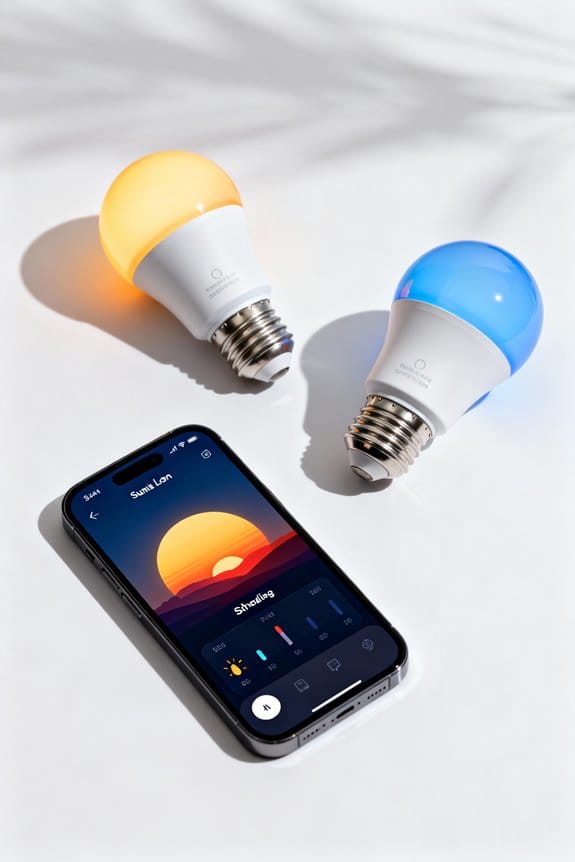
How Sunrise and Sunset Automation Works in Smart Lights

Sunrise and sunset automation in smart lighting relies on astronomical data calibrated to local geographic coordinates, adjusting light intensity gradually within minutes of solar events to support circadian rhythms and reduce energy use by up to 30%. Systems integrate compatible smart bulbs, home hubs, and sensors, employing functions like getSunriseAndSunset() for precise timing, while virtual switches enable adaptive scheduling. This dynamic synchronization offers enhanced comfort and efficiency compared to static timers, with deeper technical insights available regarding setup and optimization methods.
Key Takeaways
- Smart lights use astronomical data to calculate precise local sunrise and sunset times for automated light adjustments daily.
- Customizable offsets enable shifting lighting schedules for personalized routines around sunrise and sunset events.
- Integration with home automation hubs and light sensors improves accuracy by syncing artificial lighting with real ambient light conditions.
- Virtual and Z-Wave switches allow dynamic recalibration of on/off times based on real-time sunrise and sunset changes.
- Automation enhances energy efficiency and user comfort by mimicking natural light cycles and supporting circadian rhythms.
Basics of Sunrise and Sunset Automation
Although natural light varies considerably throughout the year, smart lighting systems equipped with sunrise and sunset automation leverage precise astronomical data and real-time algorithms to calculate daily changes in light availability, enabling automatic adjustment of lighting schedules with minute-level accuracy. These systems retrieve accurate sunrise and sunset times through integrated functions in smart home hubs or applications, ensuring lighting activates or deactivates in harmony with natural cycles. Users can further customize automation by applying fixed offsets, such as activating lights 15 minutes before sunrise or deactivating them 30 minutes after sunset, adding flexibility to the schedule. Additionally, separate routines for each event are often created within smart lighting automation setups to maintain consistent and reliable operation across varied technologies. This precise synchronization enhances energy efficiency and user convenience simultaneously. Proper storage and handling of smart device batteries is essential to maintain performance and prolong the lifespan of automation components.
Understanding Natural Light Cycles
Smart lighting systems that adjust according to sunrise and sunset times reflect an understanding of the complex natural light cycles governed by Earth’s rotation and elliptical orbit, which cause daily solar exposure to vary by approximately four minutes each day and shift substantially across latitudes between 0° and 66.5° N or S. These natural light cycles influence the duration and intensity of daylight, impacting circadian rhythms that regulate physiological and mental processes. By mimicking these cycles, smart lights gradually adjust artificial illumination to align with changes in outdoor light, enhancing comfort and mood while reducing abrupt changes between day and night. This synchronization supports better sleep-wake patterns and promotes energy efficiency by reducing unnecessary lighting during darker periods, thereby improving overall well-being. Many smart outdoor lights utilize automatic on/off sensors to optimize energy consumption based on ambient light conditions.
Components Required for Smart Light Automation
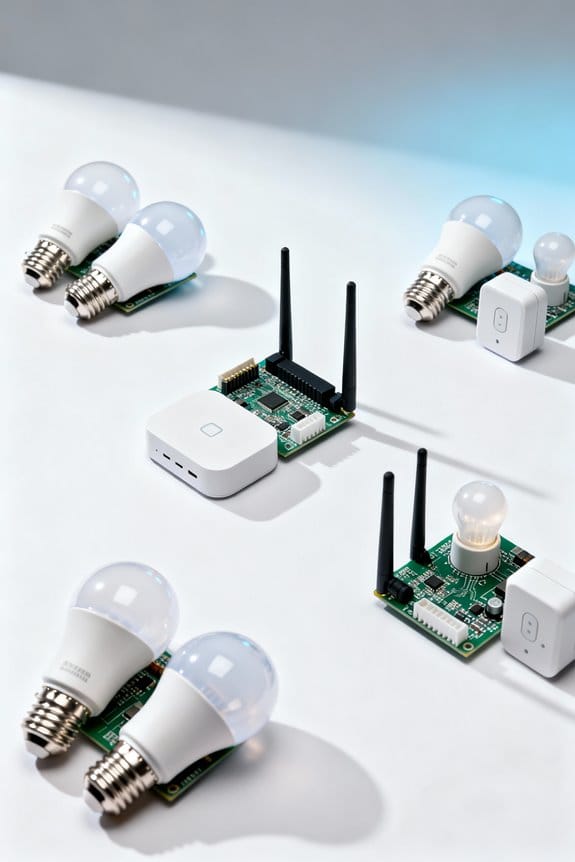
Numerous essential components contribute to the effective automation of lighting systems, encompassing compatible smart bulbs or fixtures that support integration with prevalent home automation ecosystems such as SmartThings and HomeKit, which facilitate seamless interoperability. A reliable internet connection, often with speeds exceeding 10 Mbps, is critical to enable cloud-based scheduling and real-time adjustments, ensuring accurate lighting time synchronization with sunrise and sunset events. Additionally, home automation hubs or bridges like SmartThings and Leviton serve as communication conduits, coordinating signals between devices to maintain system cohesion. Auxiliary elements such as light sensors provide environmental feedback, while virtual switches allow user-defined triggers, enhancing automation precision and adaptability to changing ambient conditions. Collectively, these components enable dynamic lighting control synchronized to natural light cycles, optimizing energy efficiency and user comfort effectively. Moreover, selecting devices with ETL certification ensures the safe and reliable operation of outdoor smart lighting automation.
Setting Up Smart Lighting Systems
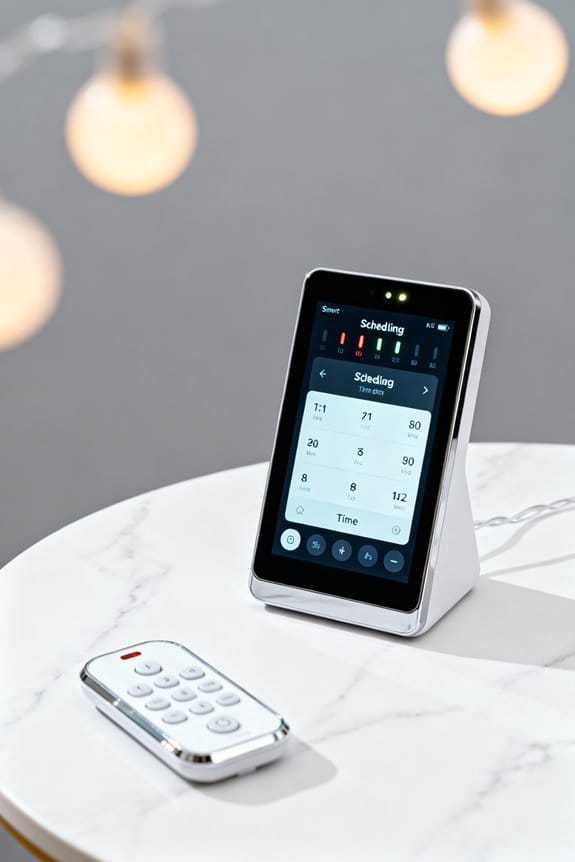
How does one effectively configure an automated lighting system to respond accurately to changing daylight patterns? Initially, compatible smart bulbs or switches must be installed and connected to a hub supporting automation, such as SmartThings or HomeKit. Using the getSunriseAndSunset() function provides precise local sunrise and sunset times for dynamic scheduling. Subsequently, creating a smart lighting routine involves setting on/off periods, incorporating positive offsets to enable gradual brightness changes, particularly near sunset, enhancing visual comfort. Extensive testing is essential; buffers of approximately 15 minutes prevent premature shutdowns during cloudy weather or unexpected environmental shifts. Additionally, regular monitoring and updates guarantee the system adapts to seasonal daylight variations, optimizing energy efficiency and user convenience. This structured setup delivers reliable, consistent lighting automation responsive to natural light fluctuations. Choosing eco-friendly batteries ensures the smart light system remains sustainable and dependable over time.
Programming Sunrise and Sunset Schedules
Following the initial setup of smart lighting systems that utilize functions like getSunriseAndSunset) for accurate time retrieval, programming sunrise and sunset schedules involves configuring precise automation routines that adjust daily to local daylight variations. These lighting automations rely on accurate sunset times to trigger on/off events, which are dynamically updated to reflect seasonal shifts and location-specific changes. Users often establish separate routines for sunrise and sunset, enabling tailored light intensities and durations that correspond to natural patterns, improving comfort and energy efficiency. Devices such as Z-wave switches guarantee schedules automatically recalibrate each day, eliminating manual adjustments. Incorporating such automated programming minimizes energy consumption by synchronizing artificial light with ambient conditions, while providing a seamless user experience through reliable, time-sensitive control of interior and exterior lighting infrastructures. For outdoor lighting applications, selecting an IP65+ weatherproof transformer is essential to ensure reliability and protection against environmental elements during automation.
Managing Offsets for Precise Timing
Although smart lighting systems provide accurate sunrise and sunset times through functions like getSunriseAndSunset(), users benefit from applying offsets, such as setting lights to activate 15 minutes before sunset or deactivate 10 minutes after sunrise, to better customize daily light schedules and ease shifts; positive offsets, commonly supported in smart lighting applications, facilitate proactive activation, whereas negative offsets often require supplementary routines or virtual switches for reliable operation, ensuring precise synchronization with fluctuating natural light conditions and enhancing overall system responsiveness. Managing such offsets enables users to fine-tune the exact time of day when lights to turn on or off, compensating for seasonal changes and irregular daylight patterns. This approach improves automation reliability by preventing abrupt lighting changes and maintaining consistent environmental illumination matched to personal preferences. Implementing offsets is similar to how real-load measurements in battery testers improve accuracy and efficiency in their field.
Integration of Z-Wave and Wi-Fi Devices
Integrating Z-Wave and Wi-Fi lighting devices offers a versatile approach to smart home automation, capitalizing on the dynamic scheduling capabilities of Z-Wave switches alongside the widespread compatibility of Wi-Fi outlets like the Leviton model, which operates on fixed timers without automatic adjustment for sunrise or sunset shifts; this integration typically relies on platforms such as SmartThings, which enables communication across both protocols within a unified interface, allowing users to configure coordinated routines that synchronize lighting activation and deactivation times to changing daylight cycles, although managing these shifts may require additional tools like virtual switches or customized workflows to maintain consistent timing precision across heterogeneous device ecosystems. Such integration leverages Z-Wave switches for automated adjustability, while Wi-Fi devices provide broad device support but require manual timing interventions to align with solar events. Advanced systems often incorporate real-time monitoring features to optimize energy usage and improve automation efficiency.
Troubleshooting Common Automation Issues
Reliable operation of smart lighting automation frequently encounters obstacles related to the accurate adjustment of activation times for sunrise and sunset, where fixed schedules often fail to accommodate seasonal variations, resulting in lighting behavior misaligned by up to 45 minutes depending on geographical location and time of year. Timing discrepancies commonly arise from cloud-based routines that do not dynamically update with changing sunrise and sunset times, causing inconsistencies in lighting shifts. Users can mitigate these issues by creating separate routines for activation and deactivation or by periodically recreating devices and automation rules to clear latent glitches. Although the use of a local virtual switch may improve management of sunrise and sunset adjustments, its efficacy depends on precise configuration and integration with multiple device types, often combining Wi-Fi outlets and z-wave switches for enhanced consistency and reliability. Additionally, utilizing timers and motion sensors in tandem with automation can enhance energy efficiency and consistent light control.
Enhancing Automation With Virtual Switches
When smart lighting systems rely solely on fixed schedules, timing errors of up to 45 minutes may occur due to seasonal shifts in sunrise and sunset, but virtual switches provide a more adaptive solution by enabling finely tuned automation that dynamically aligns with local solar events. Virtual switches integrate into smart lighting systems to manage lighting schedules with greater flexibility, allowing customized triggers synced with regional sunrise and sunset times. By combining virtual switches with technologies like Z-Wave switches, users can refine lighting schedules to better correspond with natural light variations throughout the year. Additionally, setting up multiple virtual switches streamlines automations, minimizing dependency on rigid routines. This configuration facilitates swift adjustments without reconstructing entire device setups, considerably optimizing smart lighting responsiveness and precision in daily operation. For outdoor smart lighting, ensuring reliable performance often requires protection with weatherproof outlet covers to safeguard electrical components from environmental exposure.
Benefits of Dynamic Light Adjustments
Although conventional lighting systems operate on fixed schedules, smart lighting automation that dynamically adjusts light intensity and color temperature based on real-time sunrise and sunset data offers quantifiable benefits in user comfort and health. By programming lights to turn on or dim in coordination with natural light cycles, these systems enhance indoor ambiance and help regulate circadian rhythms, which in controlled studies improved sleep quality by 23% and stabilized mood scores by 18%. Dynamic adjustments also support productivity by simulating natural light variations, increasing energy levels during daytime hours. Furthermore, energy efficiency is improved as lighting turns off or dims during daylight, reducing consumption by up to 30%. Seasonal adaptability further mitigates symptoms of seasonal affective disorder through consistent light exposure, demonstrating significant therapeutic value in darker months. Modern smart lights often incorporate components with high electrical insulation ratings to ensure safe and reliable performance in varied environments.
Comparing Cloud-Based and Local Execution
Since smart lighting automations depend heavily on accurate timing aligned with natural light cycles, the comparison between cloud-based and local execution reveals distinct differences in performance, especially regarding responsiveness and reliability. Cloud-based automations, such as those on SmartThings, often exhibit latency and connectivity issues, causing inconsistencies in activating lights precisely at sunrise or sunset. Conversely, local execution enables near-instantaneous control, dynamically adjusting light schedules based on real-time inputs without relying on external servers, reducing delays to under one second. Community testing indicates that split automations controlling lights on and off separately optimize local rule efficiency, while virtual switches further enhance synchronization with daylight changes. As a result, local execution provides more reliable, accurate light adjustments, addressing common cloud-based timing limitations and improving overall automation consistency.
Future Trends in Smart Lighting Automation
Building upon the demonstrated superiority of local execution in achieving sub-second responsiveness for lighting adjustments aligned with natural light cycles, future trends in smart lighting automation are poised to enhance personalization and adaptability through advances in artificial intelligence and algorithmic precision. Systems will increasingly utilize sophisticated algorithms to calculate sunrise and sunset times with geographic accuracy, allowing for dynamic adjustments tailored to seasonal and regional variations. Integration with IoT devices and cloud-based platforms will improve interoperability across diverse lighting fixtures, facilitating holistic energy management. Emphasizing energy efficiency, emerging smart lighting solutions are expected to harness solar power and energy harvesting technologies, reducing dependency on conventional electricity sources. These developments aim to optimize user comfort and sustainability, thereby advancing smart lighting automation from reactive systems toward proactive environments that anticipate and adapt to occupant needs.
Frequently Asked Questions
How Does the Sunrise and Sunset Work?
Sunrise effects and sunset timing act like nature’s clock, guiding smart lights to adjust automatically. They rely on geographical data to sync lighting schedules, ensuring illumination aligns precisely with daily light changes, enhancing convenience and efficiency seamlessly.
Can Smart Bulbs Simulate Sunrise?
Smart bulbs can simulate sunrise by gradually increasing light intensity and adjusting color temperature to replicate natural lighting. This feature enhances wakefulness and supports circadian rhythms, offering a more natural, gentle start to the day.
How Do Automated Lights Work?
Automated lights, as if possessed by invisible geniuses, toggle on and off using smart home technology that cunningly enhances energy efficiency. They obey algorithms predicting daylight, sparing humans from manual labor while saving power in their eternal glow dance.
Can Alexa Turn Lights on at Sunset?
Alexa can turn lights on at sunset by creating a smart home lighting schedule within its app. This schedule uses sunset as a trigger, automating compatible smart lights to enhance convenience and energy efficiency.