As an Amazon Associate, we earn from qualifying purchases. Some links on this site are affiliate links at no extra cost to you. Our recommendations are based on thorough research and editorial judgment.

How Often Should You Discharge Rechargeable Batteries Completely

Rechargeable batteries like NiMH and Li-Ion should rarely undergo complete discharge, as deep discharging below 20% capacity can reduce lifespan from approximately 500 to under 200 cycles, markedly accelerating degradation. NiMH batteries benefit from partial discharges between 10% and 50%, which can more than double cycle life, while Li-Ion batteries prefer maintaining charges above 20% to avoid irreversible damage. Older NiCd cells require full discharges to prevent memory effects, but modern types do not. Additional insights explain how to maximize battery durability and performance.
Key Takeaways
- NiCd batteries require monthly complete discharges to manage memory effects and maintain performance.
- NiMH batteries should avoid complete discharges; partial discharges between 10%-50% optimize lifespan.
- Li-Ion batteries do not need full discharges and prefer staying between 20%-80% charge for longevity.
- Full discharge of NiMH batteries reduces cycle life and risks ineffective recharging and battery degradation.
- Regular complete discharges are unnecessary for modern NiMH and Li-Ion batteries and can harm their lifespan.
Understanding Rechargeable Battery Types
Although rechargeable batteries share the common purpose of energy storage and reuse, their chemical compositions—such as nickel-cadmium (NiCd), nickel-metal hydride (NiMH), and lithium-ion (Li-Ion)—create distinct performance characteristics, longevity, and maintenance requirements; for example, NiCd cells typically tolerate roughly 500 full charge-discharge cycles and require monthly complete discharges to mitigate memory effects, whereas modern NiMH batteries, which also average about 500 cycles, benefit from partial discharges to between 10% and 50% capacity to avoid premature wear, and lithium-ion variants, despite having a slightly lower cycle life range of 300 to 500, allow recharge at any state without necessitating deep discharges, with a preferable charge retention window of 20% to 80% to maximize lifespan. NiMH batteries particularly do not experience a significant memory effect, so they should not be fully discharged regularly, as doing so may reduce overall battery capacity. Lithium-Ion batteries, meanwhile, can be recharged frequently without deep discharges and maintain stable capacity over many charge cycles. For longer-lasting performance, choosing batteries with a high cycle life and good retention, such as those providing around 1000 cycles, is highly recommended.
Effects of Complete Discharge on NiMH Batteries
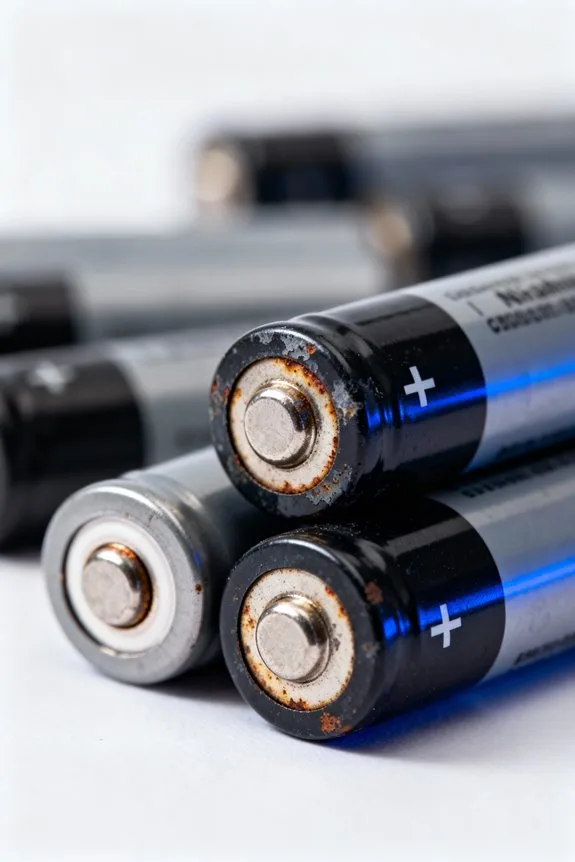
Studies analyzing the effects of complete discharge on nickel-metal hydride (NiMH) batteries reveal that fully depleting these cells to 0% capacity can greatly reduce their lifespan, whereas maintaining discharges around 50% capacity has been shown to extend cycle life by more than double compared to full depletion methods. Complete discharge risks causing deep discharge conditions, which impede effective recharging and degrade the overall battery health. Modern NiMH batteries, unlike their predecessors, do not require frequent full discharges to sustain performance, as the memory effect is minimal. Users consistently stopping discharge near 50% capacity benefit from longer-lasting cells, with many experiencing over twice the number of charge-discharge cycles. As a result, avoiding deep discharge not only preserves lifespan but also guarantees reliable performance and more efficient recharging in contemporary NiMH batteries. Using a battery tester with internal resistance diagnosis can help detect early degradation signs to better manage battery health and avoid deep discharge damage.
Recommended Products

RUGGED ALL-IN-ONE SYSTEM: This GL1425C dual grade laser kit includes the laser transmitter plus B10 NiMH battery pack, CH10 charger and a compact carrying case engineered for commercial jobsite durability and ease of transport.

180 degree reversible display and dual keypad

Measures tensile (pull) or compression (push) forces
Memory Effect and Its Relevance Today
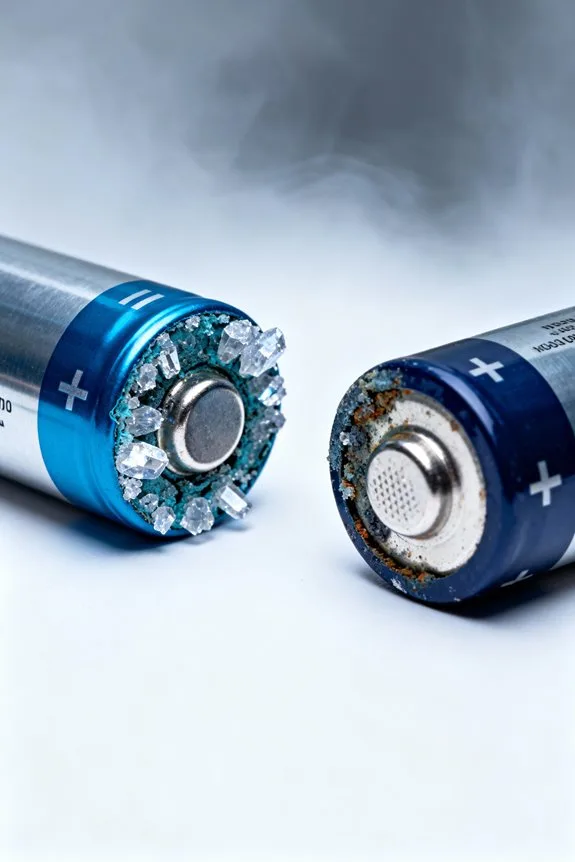
Why does the memory effect remain a topic of interest when discussing rechargeable batteries today? Historically, the memory effect greatly impacted NiCd batteries, which lost usable capacity unless fully discharged regularly. However, modern NiMH batteries demonstrate minimal susceptibility to this phenomenon due to refined chemical design, allowing recharging without requiring full discharge to maintain longevity. In fact, fully discharging NiMH batteries can harm their lifespan, reducing effective charge cycles. Research indicates that preserving a charge level between 10% and 50% optimizes battery health and extends overall usage. Consequently, the once-critical practice of complete discharge is unnecessary for NiMH rechargeable batteries, contrasting with older NiCd models. This understanding promotes improved battery maintenance, fostering extended charge cycles and reliability in everyday applications. Battery-powered outdoor lighting systems often rely on durable 24V transformers to ensure consistent and safe power delivery, indirectly supporting battery longevity by stabilizing voltage and current supply.
Recommended Products

GL722 Dual Grade Laser for long range, high accuracy elevation control; Automatic self-leveling, advanced radio remote, grade matching, Planelok, and automatic axis alignment allow quick and accurate set-ups for any fine grading or major construction project

Spectra Precision DG813 Pipe Laser with RC803 IR/Radio Long-Range Remote - Long Runtime

It is a multipurpose electronic air balancing instrument primarily used for efficiently taking direct air volume readings at diffusers and grilles
Best Practices for Charging NiMH Batteries
When charging nickel-metal hydride (NiMH) batteries, maintaining ideal charging conditions considerably impacts their overall cycle life, which typically ranges from 500 to 1000 full recharge cycles depending on charger efficiency and ambient usage parameters. Proper battery care involves avoiding overcharging and overheating by using chargers with negative delta-V detection, which halts charging when the NiMH battery is fully charged, thereby preventing gas buildup and damage. Charging batteries at room temperature without trickle charging minimizes loss of capacity and extends cycle life. Modern NiMH cells do not require deep discharges; leaving 10-20% charge during recharge benefits long-term performance. Consistent adherence to these best practices balances maximizing cycle life while mitigating premature degradation, ensuring reliable, efficient use within specified performance tolerances. Additionally, using maintenance tools with corrosion control features can help prolong battery terminals’ longevity and overall battery health.
Recommended Products

Free Programing For Your Battery Type (Contact Us At Purchase)

Power Tools and Accessories

Battery charger for Zeiss Trimble DiNi 12 Geodetic Digital Levels, 3600 3600DR 3605DR total stations
Comparing NiCd and NiMH Discharge Recommendations
Although both nickel-cadmium (NiCd) and nickel-metal hydride (NiMH) batteries serve similar portable power applications, their discharge requirements differ significantly, largely due to the distinct electrochemical properties and degradation mechanisms inherent to each chemistry; specifically, NiCd cells benefit from a complete discharge approximately once per month to prevent the onset of the memory effect and to maintain nominal capacity, whereas NiMH cells exhibit minimal memory effect and, as a result, do not require full discharges prior to recharging, with evidence indicating that retaining the last 10 to 20 percent of charge during recharge cycles can more than double their operational lifespan by reducing stress-induced capacity reduction. NiCd batteries therefore rely on periodic full discharge for peak performance, while NiMH batteries’ discharge recommendations prioritize avoiding full depletion to extend lifespan and preserve consistent performance over time. It is also advisable to use chargers with independent channels and delta-V cutoff for NiMH batteries to ensure safe and optimal charging that supports battery longevity.
Recommended Products

Brand New - Premium Quality. This Radio Charger is 100% Compatible with the Original Equipment and Includes a 12 Month Warranty.

Brand New - Premium Quality. This Radio Charger is 100% Compatible with the Original Equipment and Includes a 12 Month Warranty.

Excellent live sound featuring renowned evolution microphone capsules
Impacts of Over-Discharging on Battery Lifespan
Over-discharging rechargeable batteries, particularly nickel-metal hydride (NiMH) and lithium-ion chemistries, substantially accelerates capacity degradation and shortens cell lifespan, with empirical data demonstrating that NiMH cells subjected to full discharge cycles commonly achieve fewer than 500 charge iterations, whereas maintaining a minimum state of charge above 50 percent frequently extends cycle life beyond 1,000; similarly, lithium-ion batteries exposed repeatedly to charge levels below 20 percent risk irreversible capacity loss due to adverse electrochemical reactions and heat generation, which can damage internal components and compromise safety by inducing swelling or electrolyte leakage—consequences that underscore the necessity of adhering to recommended depth-of-discharge limits to optimize performance longevity and prevent premature failure. Although NiCd batteries benefit from occasional full discharges to reduce memory effect, over-discharging still diminishes capacity and lifespan across chemistries, emphasizing the critical balance in discharge practices. Using appropriate battery protection boards can help prevent the detrimental effects of over-discharge by managing cutoff voltages and protecting cells from damage.
Tips for Maintaining Lithium-Ion Batteries
Because lithium-ion batteries exhibit peak longevity when neither fully depleted nor continuously maintained at full charge, it is recommended to recharge these cells once their capacity declines to approximately 20-30 percent, rather than allowing complete discharge cycles; research indicates that partial discharge cycles—ideally down to about 50 percent capacity before recharging—can extend the overall cycle life by mitigating electrochemical stress, thereby preserving active materials and maintaining voltage stability. Regularly monitoring the charge status and recharging before deep discharge helps maintain performance, while avoiding prolonged exposure to full charge prevents premature capacity loss. Additionally, temperature plays a crucial role in battery life, with maintaining storage environments below 20°C proving indispensable to minimize aging and degradation. Adhering to these steps guarantees optimized battery health and functional longevity over time. For enhanced safety and durability, many modern batteries incorporate thermal management systems to keep cell temperatures within safe operating ranges.
Recommended Products

BUCK BOOST DESIGN - offers high efficiency (95-98%). Because the charger doesn't waste much energy, it stays remarkably cool even when running at maximum output for hours.

MEET THE GENIUSPRO50 — A more powerful evolution of the G26000, delivering next-level performance and charging speed. Built for professionals, it redefines what’s possible in a world-class smart battery charger.

Victron Energy Skylla IP65 12-Volt 70 amp Battery Charger (3) features 3 isolated outputs (3 Bank) - All outputs can supply the full rated output current
Safe Storage and Handling to Preserve Battery Health
Proper long-term preservation of rechargeable batteries relies considerably on controlled storage conditions and handling protocols designed to minimize chemical degradation and capacity loss over time. To maximize battery health and longevity, it is crucial to store batteries in a cool, dry environment with temperatures maintained between 5 °C and 20 °C, as elevated heat accelerates self-discharge and deteriorates performance. NiMH batteries should be stored at approximately 50% charge, avoiding complete discharge or full charge to prevent capacity reduction during non-use. Batteries must be removed from devices if unused for extended periods to prevent leakage and corrosion. Regularly monitoring charge levels and recharging to around 50% every six months supports sustained battery health. These protocols collectively facilitate ideal preservation and function throughout the battery’s lifespan. Using a battery tester periodically can help ensure batteries maintain proper charge levels and identify when replacement is necessary.
Frequently Asked Questions
What Is the 80 20 Rule for Charging Batteries?
The 80/20 rule for charging batteries advocates maintaining charge cycles between 20% and 80% capacity, enhancing battery lifespan by reducing performance degradation, improving energy retention, and supporting ideal charging and capacity management through proper maintenance practices.
Is It Better to Charge to 80% or 100%?
Like Icarus avoiding the sun, partial charging to 80% enhances battery lifespan by reducing stress and preserving capacity. This ideal charging improves energy efficiency, maximizes recharge cycles, and sustains battery performance over time, outperforming full 100% charges.
How to Make Rechargeable Batteries Last Longer?
Battery maintenance tips emphasize reducing discharge cycles and following charging frequency guidelines. Battery lifespan extension relies on ideal storage conditions and temperature effects control. Implementing smart charging practices also greatly enhances rechargeable battery longevity.
How Do I Keep My Battery 100% Healthy?
Battery maintenance tips emphasize ideal charging practices, managing temperature impact, and proper battery storage suggestions. Understanding charge cycles explained helps maximize battery lifespan factors, while energy efficiency techniques improve performance, keeping rechargeable batteries close to 100% health over time.