As an Amazon Associate, we earn from qualifying purchases. Some links on this site are affiliate links at no extra cost to you. Our recommendations are based on thorough research and editorial judgment.

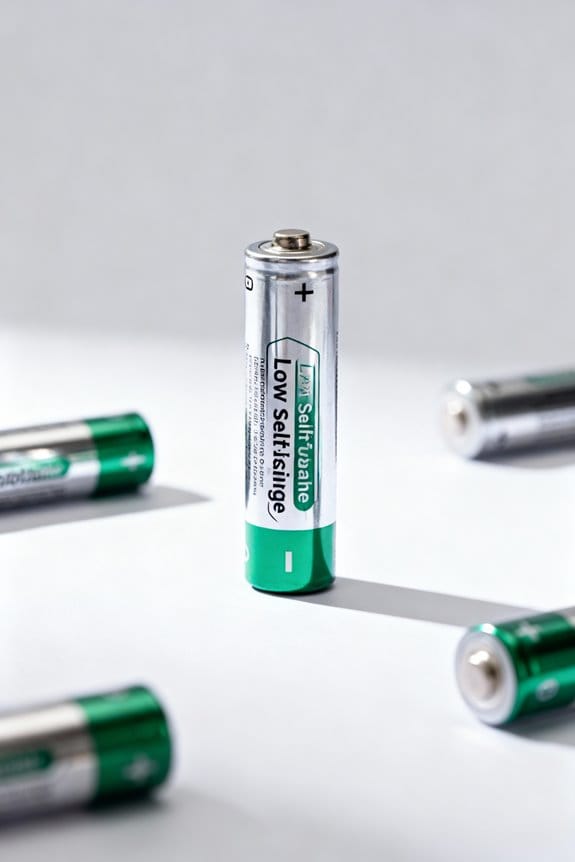
How Low Self-Discharge Technology Improved Rechargeable Batteries

Low self-discharge (LSD) technology has improved rechargeable batteries by reducing charge loss from over 30% monthly in standard NiMH cells to as low as 1-2% in lithium-ion variants, enabling retention of approximately 70% capacity after one year and extending cycle life to 1,500 charges or more under ideal conditions. These advancements arise from refined chemical formulations and optimized electrolytes that limit parasitic reactions, especially at 15–25°C storage, enhancing reliability for infrequent use. Further discussion reveals more about specific chemistries and practical implications.
Key Takeaways
- Low self-discharge (LSD) technology reduces battery charge loss to about 1-2% per month, greatly improving energy retention in rechargeable batteries.
- LSD batteries can retain up to 70% of their charge after one year, enabling longer shelf life and reliability for infrequently used devices.
- Enhanced chemistry and optimized electrolytes minimize parasitic reactions and degradation, boosting overall battery efficiency and lifespan.
- LSD technology supports more charge cycles, with some batteries achieving up to 1,500 cycles, enhancing cost-effectiveness and sustainability.
- Smart chargers paired with LSD batteries prevent overcharging and overheating, improving safety and extending battery usability across applications.
Understanding Battery Self-Discharge
Battery self-discharge, a characteristic inherent to all rechargeable battery chemistries, denotes the gradual loss of stored electrical charge over time when devices remain idle, with lithium-ion cells typically experiencing self-discharge rates of approximately 1 to 2 percent per month, while nickel-metal hydride (NiMH) batteries may lose more than 30 percent within the same period; this variation arises from differences in chemical composition and internal construction, which are critical to understanding battery maintenance and performance longevity in practical applications. Advances in battery technology, especially low self-discharge rechargeable batteries, have resulted in improved energy storage, retaining up to 70 percent charge after one year compared to less than 50 percent in conventional batteries. Ideal storage conditions, including moderate temperatures and partial charge levels, also play a significant role in minimizing self-discharge caused by ongoing chemical reactions within these battery types. Additionally, accurate monitoring through internal resistance diagnosis helps identify battery health and self-discharge trends over time.
Chemical Causes of Self-Discharge in Rechargeable Batteries
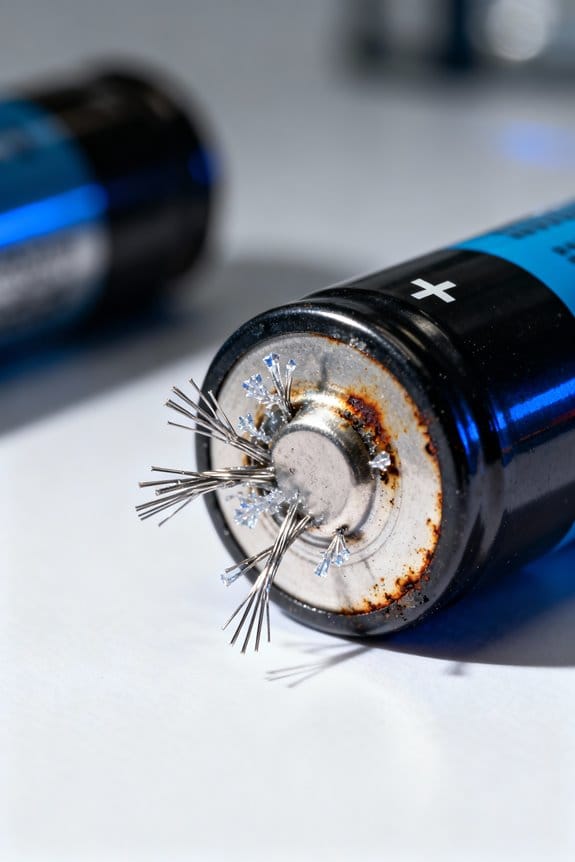
Although self-discharge is an unavoidable phenomenon in rechargeable energy storage devices, it primarily results from complex internal chemical reactions, such as parasitic side reactions and electrode material degradation, which vary widely depending on the battery chemistry involved. In nickel-metal hydride batteries, self-discharge reaches 10-20% within 24 hours because of impurities and charge redistribution, whereas low self-discharge variants maintain about 70% capacity after one year. Lithium-ion batteries exhibit lower self-discharge, around 1-2% monthly, with organic electrolyte breakdown accelerating chemical decomposition at elevated temperatures. The degradation of electrode materials and components like PET tape generates redox-active compounds, further increasing self-discharge. Advances in battery chemistry, including enhanced electrode materials and optimized electrolytes, have been essential for developing low self-discharge technologies, considerably extending the shelf life and practical usability of rechargeable batteries. Proper care and maintenance of batteries, such as avoiding extreme temperatures and ensuring regular charge cycles, can further improve battery longevity.
Environmental Factors Influencing Self-Discharge Rates
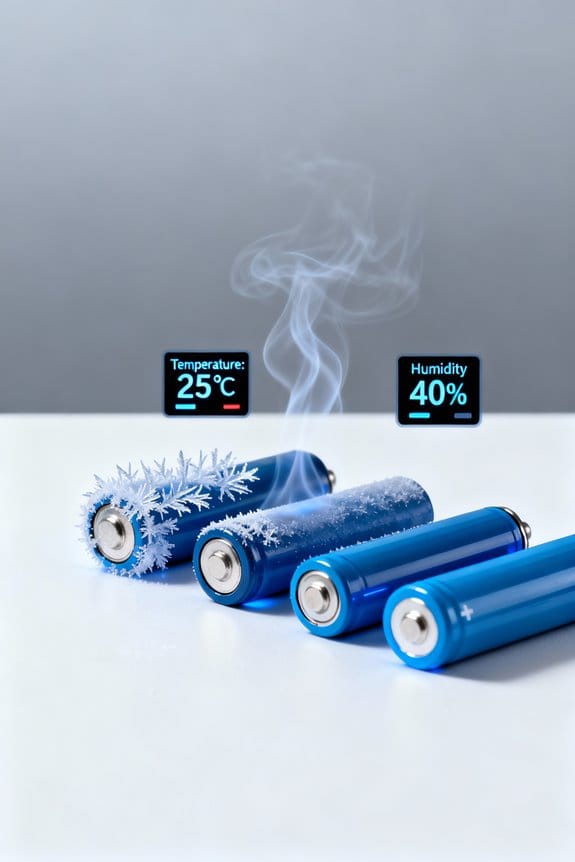
When exposed to elevated ambient temperatures above 30°C, rechargeable lithium-ion cells experience accelerated self-discharge rates, often increasing by 50% or more compared to storage at ideal temperatures between 15 and 25°C, while cooler environments near 0 to 10°C effectively slow chemical breakdown and help retain charge capacity over extended periods. Environmental factors such as high temperatures and humidity considerably affect rechargeable batteries, where excessive moisture contributes to material degradation, raising internal resistance and further increasing self-discharge rates. Maintaining optimal storage conditions, including temperature control and humidity reduction, preserves electrochemical stability and improves battery performance. Additionally, storing cells at partial charge levels of 40–50% during idle periods reduces self-discharge, limiting unwanted side reactions that degrade battery components and ensuring prolonged retention of charge levels and overall functionality. Proper maintenance practices, such as regular inspection and protection from environmental stressors, are essential for extending battery lifespan and reliability in various applications, including outdoor lighting systems.
Comparison of Self-Discharge Rates Among Battery Chemistries
While self-discharge rates vary considerably depending on battery chemistry, lithium-ion cells generally demonstrate superior charge retention with rates around 1-2% per month, making them favorable for long-term energy storage applications; in contrast, standard nickel-metal hydride (NiMH) batteries experience rapid self-discharge exceeding 30% monthly, which restricts their efficacy in devices requiring infrequent use. Low self-discharge (LSD) NiMH batteries address this by retaining up to 70% charge after years, substantially outperforming standard NiMH varieties. Lead-acid batteries present intermediate rates, with flooded types reaching 8% and AGM or gel types around 4% monthly. These differences underscore how self-discharge rates depend on battery chemistry and storage conditions. Environmental factors, particularly temperature, exacerbate high self-discharge universally, impacting all chemistries, including lithium batteries and NiMH batteries, consequently influencing practical energy storage applications. Additionally, choosing batteries paired with low-resistance contacts in adapters can help optimize power retention in devices using rechargeable AA cells converted to larger sizes.
Impact of Self-Discharge on Battery Performance and Lifespan
Self-discharge rates considerably influence rechargeable battery performance, directly affecting available capacity during use and overall service life, as repeated partial charge losses increase cycle stress and capacity fade. Standard NiMH batteries may lose up to 20% of charge within 24 hours, resulting in reduced reliability and approximately 500 recharge cycles before significant capacity degradation. In contrast, rechargeable batteries utilizing low self-discharge (LSD) technology, such as Sanyo’s Eneloop series, maintain about 70% charge retention after one year and offer up to 1,500 recharge cycles, substantially extending lifespan. This enhanced charge retention diminishes the frequency of deep discharges, thereby improving recharge cycle efficiency and long-term performance. Consequently, incorporating LSD technology into NiMH batteries enhances both reliability and expected service duration, making devices more dependable during prolonged storage and sporadic usage. Furthermore, selecting batteries with cycle life ranges between 300 and 1200+ cycles can help reduce long-term costs and environmental impact.
The Development and Benefits of Low Self-Discharge Technology
Although typical nickel-metal hydride (NiMH) batteries may lose up to 30% of their charge each month during storage under standard conditions, the introduction of low self-discharge (LSD) technology has transformed this aspect by enabling batteries to retain approximately 70% of their charge after one full year, as demonstrated in controlled tests at room temperature. LSD technology in rechargeable batteries minimizes energy loss through advanced construction, enhancing charge retention and enabling reliable performance during long-term storage. This consistent power output makes LSD rechargeable batteries particularly suitable for devices with infrequent use, reducing the risk of unexpected power failure. Moreover, LSD technology maintains effectiveness across varying environmental conditions, preserving energy extendedly in storage. Overall, the development of LSD technology marks a significant advancement in rechargeable battery reliability and lifespan. Many modern rechargeable battery solutions also feature smart chargers that prevent overcharging and overheating, further improving battery safety and longevity.
Key Features of Low Self-Discharge NiMH Batteries
What distinguishes low self-discharge (LSD) NiMH batteries from their conventional counterparts is their remarkable ability to conserve charge, retaining approximately 70% of their energy after one year of storage at room temperature, as verified in standardized testing environments. LSD NiMH batteries achieve superior charge retention through advanced engineering that reduces internal resistance, which notably lowers self-discharge rates compared to standard NiMH batteries. This results in reliable performance over extended storage periods, with cycle lives ranging from 1000 to 1500 recharges, marking a longer lifespan than typical rechargeable batteries. Furthermore, LSD NiMH batteries maintain effectiveness in low temperatures, where standard models often falter. These combined features make LSD NiMH batteries particularly valuable when consistent voltage output and minimal energy loss are critical across diverse operating conditions. The Eneloop Panasonic’s long lifespan reduces frequency of replacements, making it a leading example of LSD NiMH battery technology.
Applications and Advantages of Low Self-Discharge Batteries in Everyday Devices
Low self-discharge (LSD) NiMH batteries have found widespread application in everyday devices where maintaining charge readiness and delivering consistent voltage over time are paramount, particularly in emergency equipment such as flashlights and smoke detectors, which require around-the-clock reliability. These rechargeable batteries retain up to 70% of their charge after one year of storage, ensuring prolonged usability and peak performance during infrequent use. Devices demanding consistent performance, like cameras and remote controls, benefit from LSD batteries’ stable capacity and extended shelf life, reducing the risk of power loss during spontaneous operation. Leading brands offer up to 1500 recharge cycles while competing with disposable options, promoting sustainability through reduced waste. The enhanced storage capabilities, combined with reliable voltage output, solidify low self-discharge rechargeable batteries as superior choices in emergency devices and everyday applications. Proper storage in a cool, dry place further optimizes their charge retention, ensuring long-term reliability.
Best Practices for Extending Battery Life Using Low Self-Discharge Technology
Since rechargeable nickel-metal hydride batteries with low self-discharge technology, such as Sanyo Eneloop, retain approximately 70% of their charge after one year of storage, users can considerably reduce the frequency of recharging cycles compared to standard NiMH variants, which often lose charge more rapidly. To extend battery life and maintain ideal performance, it is advisable to store these NiMH batteries at room temperature within a cool, dry environment, as elevated temperatures accelerate self-discharge and degrade overall capacity. Additionally, rotating battery stock to utilize older cells first helps minimize self-discharge beyond usable levels. Employing a charger specifically designed for low self-discharge batteries enhances charging efficiency and supports battery health by accommodating their distinct charge retention characteristics, thereby maximizing charge consistency and cycle longevity over more than 500 recharge cycles. Many batteries constructed with 22% recycled materials also contribute to environmental sustainability while maintaining performance.
Future Trends and Innovations in Battery Self-Discharge Reduction
Although rechargeable batteries with low self-discharge (LSD) technology already demonstrate substantial improvements in charge retention—such as LSD NiMH variants retaining up to 70% of their charge after five years of storage—ongoing innovations continue to push the boundaries of battery longevity and efficiency. Emerging nanotechnology-based battery materials aim to reduce self-discharge rates further while enhancing energy density and overall performance, offering promising advances for future rechargeable batteries. Additionally, smart battery technology incorporating real-time monitoring enables users to track self-discharge rates precisely, optimizing maintenance and extending battery life. Brands like Sanyo Eneloop already achieve over 1,500 charge cycles with 75% charge retention after three years, illustrating these innovations’ practical impact. Research into alternative construction methods continues, focusing on minimizing internal degradation mechanisms to improve self-discharge efficiency across diverse applications. Promising developments in solid-state batteries provide enhanced safety and reduced leakage currents, which contribute significantly to lowering self-discharge rates in next-generation rechargeable cells.
Frequently Asked Questions
What Are Low Self-Discharge Batteries?
Like a steady heartbeat in winter’s chill, low self-discharge battery types maintain energy efficiency during long-term storage, enhancing user experience through extended charging cycles. Technological advancements influence market trends, consumer benefits, manufacturing processes, and reduce environmental impact.
Have Rechargeable Batteries Gotten Better?
Rechargeable batteries have advanced through innovation strategies like smart charging and eco friendly technology, enhancing energy efficiency and battery lifespan. Meeting consumer demand and market trends, they offer competitive advantages while reducing environmental impact, shaping promising future developments.
What Is the Self-Discharge Rate of a Rechargeable Battery?
The self-discharge rate of rechargeable batteries varies by battery chemistry, affecting energy retention and battery efficiency. It influences the discharge curve, rechargeable lifespan, and charging cycles, impacting performance metrics, long-term durability, environmental impact, and suitability for different usage scenarios.
What Is the 80 20 Rule for Charging Batteries?
The 80/20 rule for charging batteries involves maintaining charge between 20% and 80%, optimizing capacity to enhance battery maintenance, extend charging cycles, improve energy efficiency, and align with industry standards for lifespan extension and user experience.