As an Amazon Associate, we earn from qualifying purchases. Some links on this site are affiliate links at no extra cost to you. Our recommendations are based on thorough research and editorial judgment.

How to Tell When Rechargeable Batteries Need Replacing

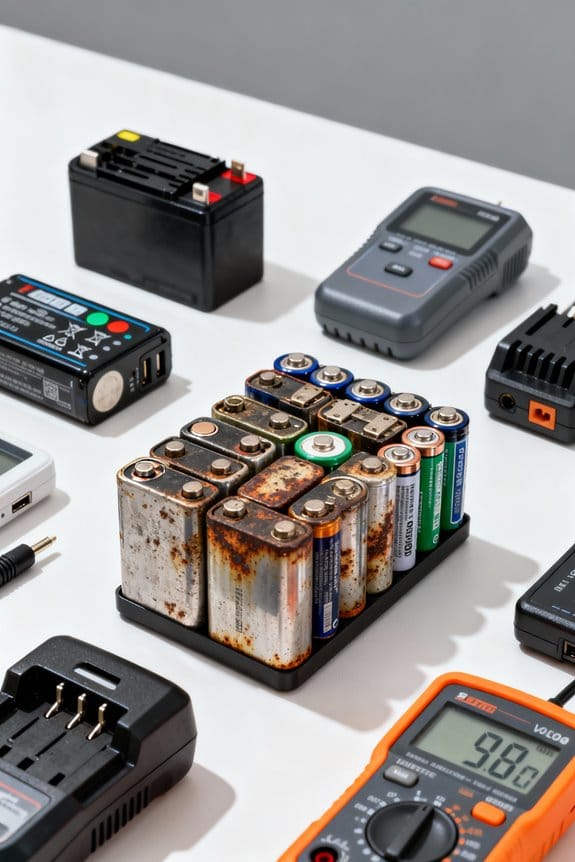
Rechargeable batteries need replacing when their capacity falls below about 80%, charge cycles approach 300–1,000 depending on type, or when physical issues like swelling, leakage, or persistent overheating appear. Prolonged charging times exceeding normal levels or inconsistent device performance also indicate deterioration. Testing with a 0.1C constant-current discharge profile reveals capacity loss, while internal resistance measurements track aging. Understanding these signs alongside lifespan variability guides correct replacement timing, ensuring optimal device function and safety; further details clarify best maintenance and monitoring practices.
Key Takeaways
- Replace batteries if they show physical deformities like bulging, leakage, or casing damage.
- Noticeable decrease in charge retention or significantly shorter battery life indicates replacement is needed.
- Frequent overheating during use or charging signals potential internal damage requiring replacement.
- Inability to reach full charge or prolonged charging times suggest the battery is failing.
- Unexpected device shutdowns or inconsistent performance often indicate battery wear and the need for replacement.
What Are Rechargeable Batteries?
Rechargeable batteries, sophisticated energy storage devices designed to endure hundreds to thousands of charge and discharge cycles, serve as the backbone for numerous portable electronics and power tools; among the most prevalent types are nickel-metal hydride (NiMH), nickel-cadmium (NiCd), and lithium-ion (Li-ion), each characterized by distinct capacities, voltage outputs, and internal resistances that influence their suitability for specific applications. The average lifespan of rechargeable batteries typically ranges from 300 to 1,000 charge cycles, with NiMH batteries often providing a balance between cost and cycle longevity, while lithium-ion batteries offer higher energy density but are more sensitive to extreme conditions. Users aiming to maintain peak performance must consider the specific performance characteristics of each battery type, as improper charging or deep discharges can notably shorten the life of your rechargeable device. Many NiMH batteries, like those from Eneloop Panasonic, can be recharged over 2,000 times while retaining a significant portion of their capacity.
Common Signs of Battery Wear and Failure
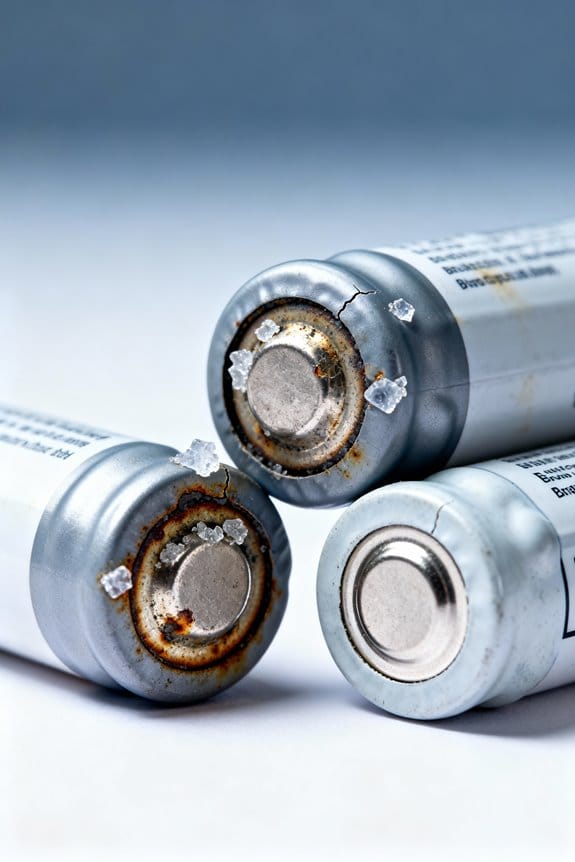
After understanding the fundamental differences and lifespans associated with nickel-metal hydride, nickel-cadmium, and lithium-ion battery chemistries, recognizing the indicators of approaching battery failure becomes important to maintain device performance and safety. Common signs that it’s time to replace your rechargeable batteries include decreased battery life, where devices cease to hold a charge adequately after numerous charge cycles. Overheating during normal use or charging often points to a damaged battery with internal faults. Charging issues such as prolonged charging times or failure to attain full charge also indicate battery degradation. Inconsistent device performance, including unexpected shutdowns or flickering lights even when fully charged, signals voltage instability. Physical deformities like bulging or fluid leakage necessitate immediate replacement to prevent hazards and maintain reliable battery performance. Additionally, using energy-efficient options like LED lighting can help reduce battery drain and extend the useful life of your rechargeable batteries.
Typical Lifespan of Rechargeable Batteries
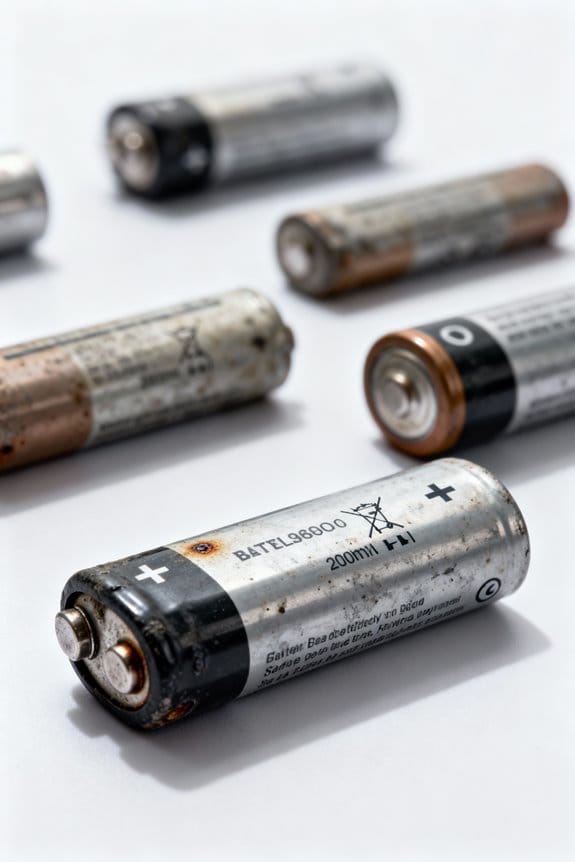
Typical lifespans for rechargeable batteries generally range from 300 to 1,000 charge cycles, with notable variation depending on battery chemistry and usage conditions, such as nickel-metal hydride (NiMH) cells averaging between 300 and 500 cycles, while lithium-ion variants extend from approximately 500 to 1,000 cycles before significant capacity loss occurs. Rechargeable batteries maintain peak performance for about 2-3 years in NiMH types, whereas lithium-ion batteries often exceed this range if properly maintained. Environmental factors, including temperature and humidity control, directly impact battery lifespan by influencing chemical stability, thereby affecting when users must replace their units. To extend battery life, maintaining charge levels between 20% and 80% and avoiding extreme conditions is recommended. Monitoring charge cycles and performance decline helps determine the appropriate time to replace rechargeable batteries. It is also crucial to use chargers equipped with auto shut-off protection to prevent overcharging and extend battery longevity.
Factors That Accelerate Battery Degradation
Although proper maintenance can extend service life, several factors accelerate battery degradation by compromising chemical stability and structural integrity, often reducing effective lifespan well below the established 300 to 1,000 charge cycle range; deep discharges—where cells are drained close to 0% capacity—increase voltage stress and crystal formation, while persistent overcharging, especially without auto cut-off mechanisms, generates excessive heat that deteriorates electrode materials. Additionally, exposure to extreme temperatures, particularly above 45°C, intensifies electrolyte breakdown, considerably reducing battery performance. The use of incompatible or low-quality chargers interrupts ideal charging cycles, further diminishing the lifespan of a rechargeable unit. As battery technology evolves, understanding these degradation factors is crucial to ensuring reliable power. When performance drops markedly, it is advisable to replace these batteries to maintain device functionality and safety. Choosing battery holders made from durable materials can also help preserve battery health by preventing physical damage and ensuring secure connections.
How to Monitor Battery Health Effectively
Several methods exist to monitor the health of rechargeable batteries, each providing critical data points such as charging cycle counts, internal resistance measurements, and physical condition assessments; for instance, nickel-metal hydride (NiMH) batteries typically endure between 300 and 500 cycles, while lithium-ion counterparts can last from 500 up to 1,000 cycles, making cycle tracking an essential metric. Battery management systems offer accurate internal resistance readings, where a rising resistance signals declining capacity and the need for replacement. Charging times provide additional insight: prolonged periods to reach fully charged status often indicate battery wear. Furthermore, observable signs that it’s time for replacement include swelling or leakage. Evaluating device performance—specifically how long a battery is holding a charge and whether unexpected shutdowns occur even when fully charged—helps determine the battery’s health and possible replacement necessity. Using integrated battery testers can simplify monitoring by quickly classifying batteries as good, weak, or requiring replacement, improving battery lifecycle management.
Safe Practices for Using and Charging Batteries
Effective maintenance of rechargeable batteries extends beyond monitoring their health to include strict adherence to safe handling and charging protocols designed to maximize longevity and performance. Users should always use manufacturer-recommended chargers tailored to the specific battery type, which helps prevent overcharging and overheating, both detrimental to battery life. Maintaining charge levels between 20% and 80% stabilizes performance by reducing chemical stress and degradation. Batteries should be stored in cool, dry environments within 20°C to 25°C to extend their lifespan effectively. Regular inspections for swelling, damage, or leakage contribute to safe practices by identifying compromised batteries early. Charging before full discharge also supports sustained capacity. Near the end of a battery’s viable use, these combined precautions help determine time to evaluate replacement, balancing safety with maximum operational efficiency. Additionally, utilizing chargers with automatic pulse-current desulfation can help prolong battery life by restoring sulfated cells during maintenance.
When and How to Replace Your Rechargeable Batteries
How can one accurately determine the appropriate moment to replace rechargeable batteries, given their gradual decline in performance over time? Replacement is advisable when the capacity noticeably diminishes, indicated by devices exhausting power considerably faster despite full charge, or when batteries fail to reach a full charge or require unusually long charging durations. Physical signs such as swelling, leakage, or casing deformities unequivocally signal the need to replace the rechargeable battery, as do frequent overheating episodes during use or charging, which point to internal damage. Tracking the number of completed charge cycles is also essential; most rechargeable batteries have a lifespan of 300 to 1,000 cycles, beyond which capacity and overall performance degrade irreversibly, necessitating replacement to maintain device functionality and safety. Regularly testing battery health with a 0.1C constant-current profile can help identify when replacement is necessary before failure occurs.
Frequently Asked Questions
How Do I Know When to Replace Rechargeable Batteries?
Battery performance indicators like reduced capacity, extended charging cycles, and signs of battery swelling reveal replacement needs. User charging habits, battery lifespan factors, and types of rechargeable batteries influence battery health maintenance and cost effectiveness analysis alongside environmental battery disposal.
How Do You Know When Rechargeable Batteries Are No Longer Good?
Like a fading sunset, battery performance indicators reveal decline through capacity loss signs and voltage drop analysis. Charging cycles explained expose self-discharge rates, heat generation, unusual swelling, device compatibility issues, and environmental factors ultimately signal the battery’s end.
What Is the 80 20 Rule for Charging Batteries?
The 80/20 rule for charging batteries recommends maintaining charge between 20% and 80% to minimize capacity degradation, reduce charge cycles, and extend lifespan. Following these charging tips aids battery maintenance, performance monitoring, environmental impact, and recycling methods across battery brands.
What Is the Lifespan of a Rechargeable Battery?
The lifespan of rechargeable batteries depends on battery types, usage patterns, charging cycles, temperature effects, storage conditions, and lifespan factors. Capacity decline and performance metrics reveal degradation, while environmental impact encourages ideal care for prolonged efficiency and reduced waste.