As an Amazon Associate, we earn from qualifying purchases. Some links on this site are affiliate links at no extra cost to you. Our recommendations are based on thorough research and editorial judgment.

Understanding Cycle Life in Rechargeable Battery Performance

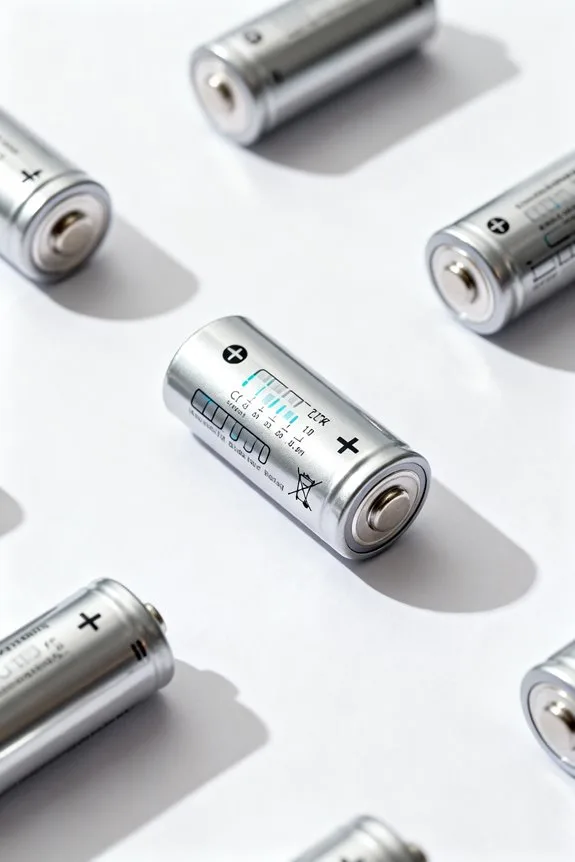
Battery cycle life refers to the number of full charge-discharge cycles a rechargeable battery endures before its capacity falls to about 80%, typically ranging from 300 cycles in lead-acid types to up to 10,000 in lithium titanate variants, with lithium iron phosphate offering 2,000 to 5,000 cycles; factors such as Depth of Discharge, temperature control between 59°F and 77°F, and battery management systems profoundly impact longevity and performance stability, influencing replacement costs and operational efficiency over time. Further exploration reveals practical strategies for optimizing these vital variables.
Key Takeaways
- Battery cycle life measures charge/discharge cycles before capacity drops to 80%, indicating overall longevity and performance.
- Depth of Discharge (DoD) significantly affects cycle life; lower DoD extends battery lifespan up to five times.
- Operating temperature critically impacts cycle life; high temperatures accelerate capacity loss and shorten battery lifespan.
- Advanced Battery Management Systems (BMS) optimize charging and discharge, maintaining ideal DoD and temperature for longer life.
- Different chemistries offer varied cycle lives, with Lithium Iron Phosphate and Lithium Titanate providing the highest durability.
Definition and Explanation of Battery Cycle Life
Battery cycle life is a fundamental metric that quantifies the number of complete charge and discharge cycles a rechargeable battery can endure before its capacity diminishes to approximately 80% of its initial level, serving as a critical indicator of overall battery longevity and reliability. This measurement depends heavily on various factors, including the Depth of Discharge (DoD), which, when maintained at a lower percentage such as 10%, can extend cycle life by up to five times. Lithium-ion batteries typically achieve between 300 and 2,000 cycles, whereas lead-acid variants last only 200 to 300 cycles. Additionally, operating temperature critically affects battery cycle life, with increases of 15°F potentially halving battery longevity. Proper battery management integrating these considerations is crucial to optimize capacity retention and guarantee dependable performance over time. Innovations in battery design, such as those improving temperature monitoring, are becoming standard to help protect battery cycle life and enhance safety.
Methods for Calculating Battery Life Cycle

Several established methods exist for calculating the life cycle of rechargeable power sources, typically centering on quantifying the total delivered capacity relative to a defined end-of-life threshold, which often corresponds to when capacity declines to about 80% of its original specification. The Battery Life Cycle is commonly determined by dividing total delivered capacity by this threshold, providing an estimate of usable cycles before capacity degradation impairs ideal performance. Depth of Discharge (DoD) critically influences cycle life; for lithium-ion batteries, limiting DoD to below 80% extends longevity greatly. Charging practices also play a crucial role—avoiding overcharging and maintaining partial recharges reduces stress on cells, further improving cycle life. Manufacturers’ specified cycle life ratings reflect these conditions, underscoring the importance of controlled DoD and disciplined charging protocols in precise Battery Life Cycle calculations. Additionally, using quality chargers with overcharge/over-discharge protection can significantly enhance battery lifespan by preventing damage during charging cycles.
Comparison of Cycle Life Among Different Battery Chemistries

When evaluating rechargeable energy storage options, differences in cycle life across various chemistries reveal significant trade-offs between longevity and application suitability, with Lithium Iron Phosphate (LiFePO4) batteries exhibiting a particularly high endurance range of 2,000 to 5,000 full cycles, making them especially favorable for large-scale energy storage solutions that demand prolonged service life. Lithium Titanate (LTO) batteries surpass this with up to 10,000 cycles, offering unmatched durability for high-use applications. Nickel Cobalt Manganese (NCM) batteries provide a moderate cycle life, typically between 1,000 and 2,000 cycles, balancing performance and capacity. In contrast, Lithium Cobalt Oxide (LCO) and Lithium Manganese Oxide (LMO) batteries have shorter cycle lives, about 500 to 1,000 and 300 to 700 cycles respectively, more suited for consumer electronics or lower-demand uses within rechargeable batteries. High-quality lithium batteries also often feature low self-discharge rates, enhancing their reliability and shelf life even in extended storage.
Recommended Products

★【Powerful】SUNGOLDPOWER UL1973 & UL9540A 51.2V 200AH LFP Battery is compact and well-designed, offering over 8000 deep cycles. It can connect up to 32 units in parallel, providing a total capacity of 328kWh. This versatility makes it ideal for both residential and commercial applications, as well as other energy storage systems. The Wall mounted accessories and WIFI module are Optonal, need to pay extra! And please note that the WIFI module doesn't work with the battery that you bought before August 2025!
★【Powerful】SUNGOLDPOWER 51.2V 200AH LFP Battery is compact and well-designed, offering over 8000 deep cycles. It can connect up to 32 units in parallel, providing a total capacity of 328kWh. This versatility makes it ideal for both residential and commercial applications, as well as other energy storage systems. The Wall mounted accessories and WIFI module are Optonal, need to pay extra! And please note that the WIFI module doesn't work with the battery that you bought before August 2025!

【Elite 314Ah Capacity Upgrade】 Stop settling for smaller cells. The DATOUBOSS 314Ah LiFePO4 battery delivers triple the energy of standard 100Ah units. With 64 kWh of total energy, this kit is the perfect foundation for high-performance DIY solar projects, RV bus conversions, or off-grid cabins.
Importance of Cycle Life for Battery Longevity
Cycle life represents a critical performance metric that quantifies the total number of full charge-discharge cycles a rechargeable battery can endure before its capacity declines below 80% of the original specification, typically ranging from 300 to 2,000 cycles for lithium-ion variants and approximately 200 to 300 cycles in lead-acid counterparts. Battery longevity strongly depends on factors such as Depth of Discharge (DoD) and operating temperature, with lower DoD values—below 50%—significantly extending cycle life, sometimes doubling it, while temperatures above 77°F can reduce cycle life by half due to increased chemical stress. Effective management of charge cycles, including maintaining charge levels between 20% and 80%, reduces stress on the battery, promoting a longer cycle life and, consequently, sustained performance over time without premature capacity loss. Using multi-stage charging technology can further enhance battery lifespan by optimizing the charge process according to the battery’s state of charge and temperature.
Financial Impact of Cycle Life on Replacement Costs
A substantial increase in battery cycle life directly correlates with reduced replacement frequency, greatly lowering long-term operational expenses, as demonstrated by Tesla’s Powerwall, which offers roughly 5,000 full charge-discharge cycles, providing over 13 years of continuous service under typical residential use conditions. Batteries with extended cycle life, such as LiFePO4 variants lasting between 2,000 to 5,000 cycles, greatly decrease replacement costs by minimizing the need for frequent battery swaps. The financial implications extend to industries reliant on energy storage, where high-quality chargers and optimized cycle life contribute to lower operational costs and enhanced budget forecasting accuracy. This reduction in replacements not only improves cost efficiency but also supports sustainability by reducing waste generated by discarded batteries, establishing a clear advantage for long-lasting battery technologies. Moreover, selecting batteries certified with RoHS and REACH certifications ensures environmental safety alongside extended performance benefits.
Recommended Products

Powerful Performance: Unleash the thrill of the waves with our 15KW rated power electric surfboard. Whether you're a seasoned surfer or just starting out, experience unmatched speed and agility on the water, reaching speeds of 65KM/H and above, easily adjustable to your preference.

【Grade A battery Cell】: SUNGOLDPOWER 51.2V 100Ah LiFePO4 Battery Manufactured with automotive grade battery cells. High quality battery cells make LiFePO4 battery to provides 7000+deep cycles and up to 15- year life time.
![eAhora M1P Pro [2026] Peak 6000W Electric Motorcycle for Adults, 50MPH High Speed Street Legal Electric Scooter, 110 Miles Max Range with Dual Battery, DOT Certified Fat Tire Chopper for Commuting](https://m.media-amazon.com/images/I/41iszPp6uCL._SL500_.jpg)
[Industry-Leading 110-Mile Range: The Ultimate Distance] – Redefine your boundaries. The 2026 M1P Pro introduces a revolutionary dual-battery system, extending your total range to a massive 110 miles. Whether it's a cross-city commute or a weekend road trip through the countryside, this smart design eliminates range anxiety forever. Swap batteries in seconds and keep the adventure going—freedom is now truly limitless.
Depth of Discharge and Its Effect on Cycle Life
Numerous studies have demonstrated that Depth of Discharge (DoD) critically affects a battery’s operational lifespan, with lithium-ion and lead-acid chemistries exhibiting distinct responses; for lithium-ion batteries, maintaining a DoD below 50% can approximately double their cycle life, while further reductions to around 10% may extend it by up to five times, although exceeding 80% DoD tends to accelerate degradation, especially under elevated temperatures. Maintaining consistent DoD levels during cycling enhances battery performance by reducing stress on battery materials, which prolongs battery life. In lead-acid batteries, controlling DoD along with effective temperature control proves essential, as increased temperatures considerably worsen cycle life. Optimizing the Depth of Discharge, together with careful temperature management, forms a strategic framework to maximize rechargeable battery cycle life and overall reliability. Additionally, choosing alkaline or lithium cells with verified long-term shelf life can complement such strategies by ensuring stable voltage and reduced performance loss during periods of inactivity.
Operating Temperature and Environmental Influences
Beyond managing the Depth of Discharge to optimize battery longevity, monitoring and controlling operating temperature plays an equally significant role in influencing rechargeable battery performance and cycle life. Operating within the ideal temperature range of 59°F to 77°F (15°C to 25°C) is essential, as deviations can drastically reduce cycle life and impair battery health. For instance, lithium battery capacity declines by roughly 3.3% at 77°F and 6.7% at 113°F after 200 cycles, illustrating temperature’s environmental impact. Elevated temperatures above 30°C combined with high voltage charges may cause permanent capacity loss, shrinking cycle life from 600–1,000 cycles to as few as 150–250 cycles. Additionally, storing fully charged batteries in heat accelerates chemical degradation, emphasizing the critical need for strict thermal management to maximize cycle life and preserve overall battery performance. Effective waterproof designs can also help maintain battery integrity by protecting against environmental factors such as rain and humidity.
Best Charging and Discharging Practices
While optimizing a rechargeable battery’s cycle life involves multiple factors, adherence to recommended charging and discharging practices remains paramount, particularly for lithium-ion chemistries where maintaining a Depth of Discharge (DoD) between 50% and 70% can effectively double lifespan compared to full discharges; in addition, limiting charging capacity to approximately 80% prevents undue stress on electrode materials, as studies indicate that exceeding this threshold accelerates capacity fade and reduces cycle counts. Avoiding frequent full charge cycles and deep discharges mitigates capacity drops, hence increasing the number of cycles achievable by Li-ion batteries. Furthermore, promptly disconnecting chargers after reaching full charge reduces overcharging risk that can decrease performance. Employing these regulated charging and maintenance techniques contributes considerably to extending battery’s lifespan, ensuring a balanced trade-off between usable capacity and overall durability. Proper protection circuits, similar to those used in GFCI protection for electrical devices, are crucial to enhancing safety and reliability in rechargeable battery systems.
Recommended Products

80V BRUSHLESS MOTOR WITH 32HP GAS EQUIVALENT: Experience powerful gas-like performance with zero emissions. Powered by Greenworks' 80V TruBrushless motor technology delivering 32HP equivalent power . Provides instant torque, quiet operation, and no fumes—without the maintenance of gas engines

【All-in-one solar charge inverter】: SUNGOLDPOWER UL1741 6.5KW DC 48V Pure Sine Wave Solar Inverter Combined with Max 140A battery charging, 2 MPPT Solar controller inbuilt, Max. Voltage of Open Circuit: 550VDC, Split phase (120V/240V) or Single phase (120v) output. Wifi module is included, which allows the user to view the operating status and parameters of the inverter via the mobile phone APP.

Lightweight and Compact LiFePO4 Battery:10.24"L x 5.24"W x 8.96"H dimensions with 19.13 lb weight, perfect for RVs, Vans, and trolling motors.
Maintenance Strategies for Extending Battery Life
Effective maintenance strategies build upon ideal charging and discharging practices by incorporating continuous monitoring and environmental controls designed to extend battery cycle life. Maintaining the state of charge between 20% and 80% reduces stress, while storing batteries at about 50% charge in cool, dry conditions minimizes chemical degradation, thereby helping to extend your battery’s lifespan. Staying within the recommended temperature range of 59°F to 77°F (15°C to 25°C) prevents accelerated capacity loss and preserves max capacity. Charging at rates around 1C or lower prevents overheating and supports consistent cycle life. Regularly tracking Depth of Discharge (DoD) and the number of charge cycles further informs maintenance decisions, allowing for timely interventions that optimize longevity. Employing a battery management system supports these strategies through automated monitoring of temperature and voltage parameters, enhancing overall battery health. In addition, integrating battery terminal cleaning tools into routine maintenance helps prevent corrosion and ensures optimal electrical contact for better performance.
Recommended Products
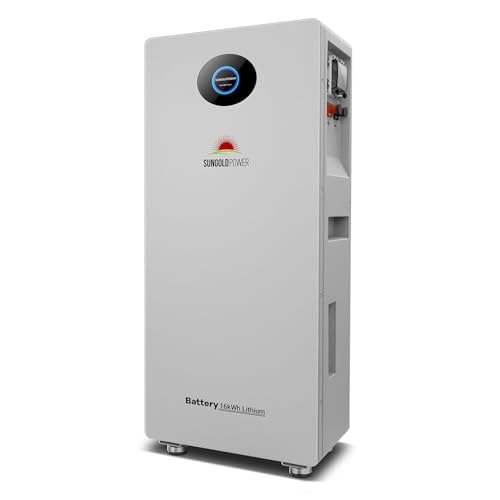
[High Capacity Solar Battery]: SUNGOLDPOWER UL1973 and UL9540A 48V 314Ah LiFePO4 lithium battery with over 8,000 deep cycles. Parallel up to 16 pcs ,maximum capacity of 16.07kWh.Ideal for solar systems, off-grid living, and whole-home backup power with reliable long-lasting performance.
[High Capacity Solar Battery]: SUNGOLDPOWER UL1973 and UL9540A 48V 314Ah LiFePO4 lithium battery with over 8,000 deep cycles. Parallel up to 16 pcs ,maximum capacity of 16.07kWh.Ideal for solar systems, off-grid living, and whole-home backup power with reliable long-lasting performance.

System Components:Delivers up to 10kW power output with 120V/240V single-phase split-phase support, making it suitable for smoothly running common household appliances. The system includes 18 × 590W solar panels with a total PV capacity of 10620W, capable of generating up to 39.36 kWh per day under optimal conditions, along with two 48V 314Ah portable LiFePO₄ battery offering 32.2 kWh of energy storage. Complete with necessary cables, this all-in-one solar solution is designed for convenient setup and reliable home power support.
Role of Battery Management Systems in Cycle Life
Although the fundamental chemistry of rechargeable batteries determines their inherent capacity, the incorporation of a Battery Management System (BMS) plays an essential role in substantially extending cycle life by continuously monitoring state of charge (SoC) and depth of discharge (DoD), which are maintained within ideal ranges of 50% to 70% to reduce degradation. Battery management systems automate regulation of charging practices and guarantee operation within the recommended temperature range, preventing overcharging and overheating that cause premature capacity loss. Advanced BMS models include thermal management and charge limit functions, optimizing real-time data to adjust usage patterns effectively. Proper integration of these systems can extend your battery’s lifespan by two to five times compared to unregulated batteries, demonstrating significant improvements in reliability, performance, and overall cycle life through precise DoD control and temperature management. Modern battery chargers equipped with thermal sensors and smart technology further enhance the protective role of BMS by adapting charge rates to ambient conditions, thereby maximizing battery health and longevity.
Recommended Products

Copper cable certifier for TIA category 5 through 8, twisted-pair cabling with touchscreen project management, 8 second Cat 6A test time, TIA Level 2G accuracy, professional reports through free LinkWare software / service, advanced troubleshooting, 8-hour battery life.

Whole-Home Off-Grid Power: Still worried about power outages or unstable electricity? This system includes six 51.2V 100Ah LiFePO4 batteries and one 10000W MPPT hybrid inverter. It can support high-power appliances such as refrigerators and air conditioners, enabling stable whole-home power supply. It meets the needs of off-grid living and backup power, providing a reliable solution for energy independence.

【Next-Generation Robotic Companion: Meet the Unitree Go2 Robotic Dog】 The Unitree Go2 X is a powerful and intelligent quadruped robot designed for tech enthusiasts, researchers, and developers seeking ultimate performance and expandability. It measures 27.6""x12.2""x15.7"" and weighs just 33 lbs, yet carries up to 17.8 lbs and reaches speeds of 3.7 m/s. Its advanced joint mobility allows it to climb 40° slopes and overcome 6.3"" obstacles. An 8000 mAh battery provides 1–2 hours of operation.
Environmental Considerations for Optimal Battery Performance
Thermal conditions play a decisive role in determining rechargeable battery longevity, as maintaining lithium-ion batteries within a narrow ideal temperature range from 59°F to 77°F has been demonstrated to considerably slow capacity degradation and extend cycle life; temperatures exceeding 77°F, specifically by increments of 15°F, can drastically reduce lead-acid battery cycle life by approximately 50%, underscoring the critical importance of effective thermal management systems. Environmental factors such as avoiding direct sunlight and freezing conditions additionally safeguard Li-ion battery performance, as the battery’s discharge cycles experience significant drops—around 3.3% capacity loss at 77°F and 6.7% at 113°F over 200 cycles. For peak health, storing batteries at roughly 50% charge in cool, dry places is recommended, given that storing fully charged batteries in hot environments accelerates chemical degradation, further reducing cycle life.
Frequently Asked Questions
What Is the 80 20 Rule for Charging Batteries?
Like a wise gardener pruning vines, the 80/20 rule guides ideal charging, preserving energy storage and battery longevity. Limiting charge cycles between 20% and 80% enhances charging efficiency, reduces performance degradation, and offers key maintenance tips.
How to Interpret Battery Cycle Count?
Battery cycle count significance lies in charge cycle interpretation as a key battery life measurement. Performance degradation analysis and capacity retention evaluation must consider usage patterns influence to develop effective lifespan extension strategies, ensuring accurate understanding of real-world battery longevity.
What Is the Life Expectancy of a Rechargeable Battery?
Rechargeable batteries often greet their final curtain after 300-5,000 cycles depending on lithium ion lifespan and factors like battery degradation factors, usage habits, environmental impact, ideal charging practices, and diligent battery maintenance tips determining cost effectiveness analysis.
Is 20 to 90 a Good Charge Cycle?
Charging between 20 to 90% is beneficial for battery health, balancing voltage levels and discharge cycles. Proper thermal management, moderate charge rates, and consideration of fast charging and usage patterns further optimize battery longevity and performance.