As an Amazon Associate, we earn from qualifying purchases. Some links on this site are affiliate links at no extra cost to you. Our recommendations are based on thorough research and editorial judgment.

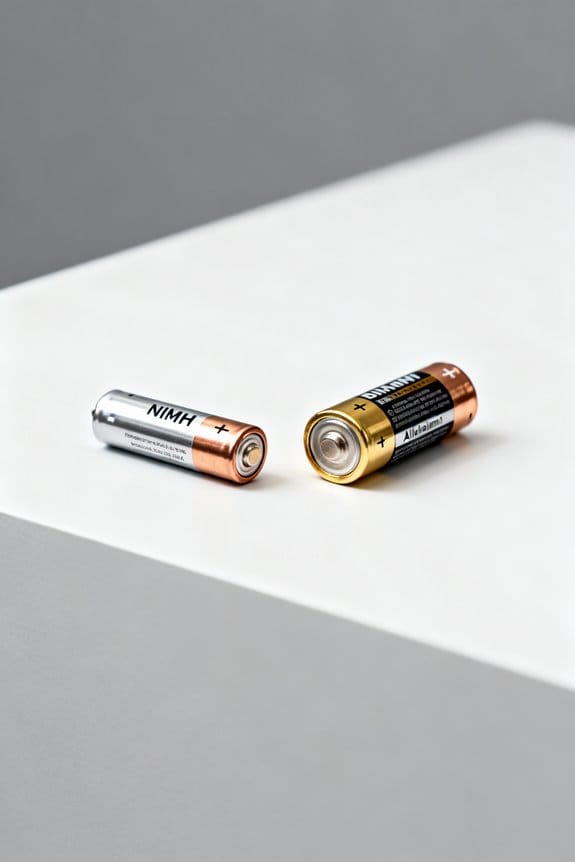
Nimh Vs Alkaline Batteries: Which Type Lasts Longer

Nickel-metal hydride (NiMH) batteries typically outlast alkaline batteries in high-drain devices by maintaining a stable voltage near 1.2 volts through about 500 recharge cycles, compared to alkaline’s 1.5 volts but single-use capacity, which declines faster under heavy loads. NiMH offers capacities often above 2000 mAh, surpassing alkaline’s 1500 mAh, thereby providing more sustained current. Alkaline batteries, however, suit low-drain use with longer shelf life. Detailed comparisons reveal nuanced performance metrics and cost implications.
Key Takeaways
- NiMH batteries last longer in high-drain devices due to higher capacity and consistent current output compared to alkaline batteries.
- Alkaline batteries have a longer shelf life and perform better in low-drain, infrequent use applications than NiMH batteries.
- NiMH batteries support around 500 recharge cycles, extending their useful lifespan significantly beyond single-use alkaline batteries.
- Although alkaline batteries provide 1.5 volts, NiMH deliver 1.2 volts but maintain power more steadily under heavy use.
- Over time, NiMH batteries are more cost-effective and environmentally friendly due to rechargeability and reduced waste versus alkalines.
How Alkaline and NiMH Batteries Work
The operation of alkaline and Nickel-Metal Hydride (NiMH) batteries is founded on distinct electrochemical principles that determine their respective performances and applications. Alkaline batteries generate power through a chemical reaction between zinc at the anode and manganese dioxide at the cathode, with potassium hydroxide serving as the electrolyte, producing a nominal voltage of 1.5 volts. In contrast, NiMH batteries rely on electrochemical processes involving nickel oxyhydroxide as the cathode and a metal hydride as the anode, releasing hydrogen during battery discharge, and presenting a nominal voltage of 1.2 volts. Despite lower voltage, NiMH rechargeable batteries offer higher energy density and superior current capacity, making them better suited for high-drain devices. Alkaline batteries remain single-use, non-rechargeable options, whereas NiMH batteries support approximately 500 recharge cycles before capacity degradation becomes significant. When considering outdoor lighting options, it is important to evaluate battery types, as devices like the AUDERWIN solar spot lights depend on energy-efficient power sources for reliable operation.
Performance Differences in Varied Devices
Although NiMH batteries provide a nominal voltage of about 1.2 volts, which is lower than the typical 1.5 volts supplied by alkaline batteries, they demonstrate superior performance in high-drain devices such as digital cameras and gaming controllers due to their higher capacity ratings—often exceeding 2000 mAh compared to alkaline’s average 1500 mAh—and their ability to maintain consistent current output under demanding conditions; this contrast becomes evident in testing scenarios where devices like LED flash units operated markedly longer on NiMH cells before battery depletion, while alkaline batteries excel in low-drain applications like remote controls and clocks by offering extended shelf life and reduced self-discharge rates, factors critical for devices with intermittent use. Additionally, NiMH batteries are rechargeable, permitting reuse up to 500 cycles, whereas alkaline batteries are single-use, limiting longevity primarily to storage conditions rather than repeated activity. It is also important to consider batteries with long shelf life when purchasing for devices that are used infrequently to ensure sustained performance over time.
Cost Implications Over Battery Lifespan
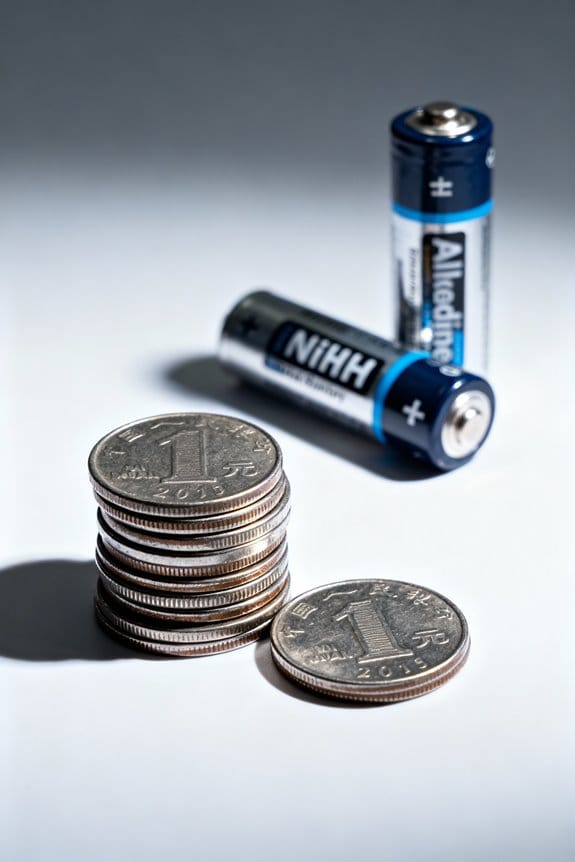
When evaluating long-term affordability, initial purchase prices of alkaline batteries, ranging from $0.20 to $0.75 per unit, present a lower entry cost compared to NiMH batteries, which typically retail between $2.00 and $4.00 each; however, the rechargeable nature of NiMH cells, capable of enduring up to 500 charge cycles, greatly diminishes replacements and waste, translating into substantial cumulative savings—especially in high-drain applications demanding frequent power replenishment. While alkaline batteries’ single-use design reduces upfront investment, their cost-effectiveness declines with increased frequency of replacements and higher device power requirements. Conversely, NiMH batteries, despite a higher initial price, deliver superior long-term cost savings by minimizing waste and meeting diverse usage conditions through rechargeable options, ultimately offering a more economical solution over the full battery lifespan when frequent recharging offsets single-use expenditure. Considering energy efficiency, NiMH batteries align well with low-voltage systems that consume less power and enhance overall sustainability.
Environmental Considerations and Recycling
Because rechargeable NiMH batteries can be reused up to 500 times, their environmental footprint is noticeably lower than that of single-use alkaline batteries, which contribute substantially to waste accumulation and require careful disposal to prevent soil and water contamination. Alkaline batteries, with a longer shelf life, often remain in waste streams longer, exacerbating their environmental impact unless properly recycled. Although NiMH batteries typically have a shorter shelf life of 3 to 5 years, their rechargeability considerably reduces waste production compared to disposable batteries. Both battery types are included in recycling programs; however, NiMH batteries are considered more eco-friendly due to their sustainability benefits, including reduced resource extraction and decreased landfill usage. Selecting a rechargeable battery aligns more closely with environmental goals by minimizing waste and supporting recycling efforts for long-term ecological health. Using UN-certified recycling kits ensures safe collection and transport, further reducing environmental risks associated with battery disposal.
Choosing the Right Battery for Your Needs
Selecting the appropriate battery type depends heavily on the device’s power consumption and usage patterns, as alkaline batteries, with an initial voltage of 1.5 volts and a shelf life ranging from 5 to 10 years, excel in low-drain applications like remote controls or clocks, where infrequent use and consistent power output are priorities. In contrast, NiMH batteries, offering 1.2 volts but being rechargeable, are ideal for high-drain devices such as digital cameras and game controllers, where frequent usage demands sustained power. Device compatibility and usage frequency should guide selection, since alkaline batteries provide longer shelf life but may falter under high loads, while NiMH batteries, capable of hundreds of recharge cycles, deliver cost savings and consistent power output, making them ideal for devices requiring repeated use and high energy demands. For frequent use, high-capacity NiMH rechargeables are recommended to minimize long-term costs and environmental impact.
Frequently Asked Questions
What Type of Battery Lasts the Longest?
Like a marathon runner versus a sprinter, rechargeable battery types surpass alkaline in battery lifespan comparison by excelling in energy density analysis and managing discharge rates impact, with superior cost effectiveness, usage scenarios, charging cycles, and environmental considerations informing maintenance tips.
Do Li-Ion Batteries Have a Shorter Lifespan Than Nimh Batteries?
Li-ion longevity typically surpasses NiMH efficiency despite varied battery chemistry. Li-ion offers better capacity comparison and shelf life, though recharge cycles and performance degradation depend on usage scenarios, with trade-offs in environmental impact and cost effectiveness.
How Long Do Nimh Batteries Last?
Like a candle flickering through time, NiMH batteries last 2 to 5 years with about 500 charging cycles. Usage efficiency tips, maintenance practices, and temperature effects influence self-discharge and reusability, impacting performance, cost effectiveness, and environmental footprint.
What Is the Longest Lasting Type of Rechargeable Battery?
Lithium-ion rechargeable battery types exhibit superior longevity due to higher battery capacity comparison, optimized charging cycle differences, and enhanced safety features batteries. Performance in devices, environmental impact batteries, and battery maintenance tips also affect longevity factors batteries and cost analysis batteries.