As an Amazon Associate, we earn from qualifying purchases. Some links on this site are affiliate links at no extra cost to you. Our recommendations are based on thorough research and editorial judgment.

How to Tell When Rechargeable Batteries Need Replacing

Rechargeable batteries need replacing when charge retention drops below 70%, internal resistance surpasses 40 milliohms, or physical changes like swelling and leakage appear, all measurable through capacity tests under controlled loads and voltage stability checks during charging cycles. Additional signs include reduced runtime, failure to reach full charge within set times, and overheating during use or charging, indicating deteriorated chemical stability or internal damage. The following sections explore these indicators alongside maintenance strategies for ideal battery lifespan.
Key Takeaways
- Noticeably reduced runtime or capacity requiring more frequent recharging signals battery wear.
- Battery overheating during charging or use indicates potential internal damage needing replacement.
- Physical signs like swelling, leakage, or corrosion clearly show it’s time to replace the battery.
- Battery failing to achieve full charge within the manufacturer’s recommended time suggests deterioration.
- Erratic voltage behavior or unexpected device shutdowns during operation are warning signs of battery failure.
What Are Rechargeable Batteries
Rechargeable batteries, a fundamental component of modern portable power solutions, are engineered to endure multiple recharge cycles, typically ranging from 300 to 1,000, depending on their electrochemical composition; the predominant types—nickel-metal hydride (NiMH), nickel-cadmium (NiCd), lead-acid, and lithium-ion (Li-ion)—each present distinct trade-offs in capacity retention, energy density, and cycle longevity, with Li-ion variants generally achieving between 500 and 1,000 full charge-discharge cycles and offering higher energy density suitable for compact electronics, whereas NiMH batteries, known for their more economical cost and respectable lifespan of 300 to 500 cycles, are frequently employed in household devices; however, these batteries’ effectiveness can be greatly compromised by deep discharges, overcharging, thermal extremes, or improper storage, necessitating management strategies such as maintaining charge levels between 20% to 80% and avoiding prolonged charging sessions, which collectively contribute to enhanced lifespan and performance reliability. Understanding the lifespan of a rechargeable and how to maintain peak performance is critical to extend their lifespan. Recognizing when to replace your rechargeable batteries is vital to guarantee device functionality without interruption. Rechargeable batteries like NiMH with high-capacity ratings (2,400-3,000 mAh) are ideal for high-drain devices due to their long-term cost-efficiency.
Common Signs of Battery Failure
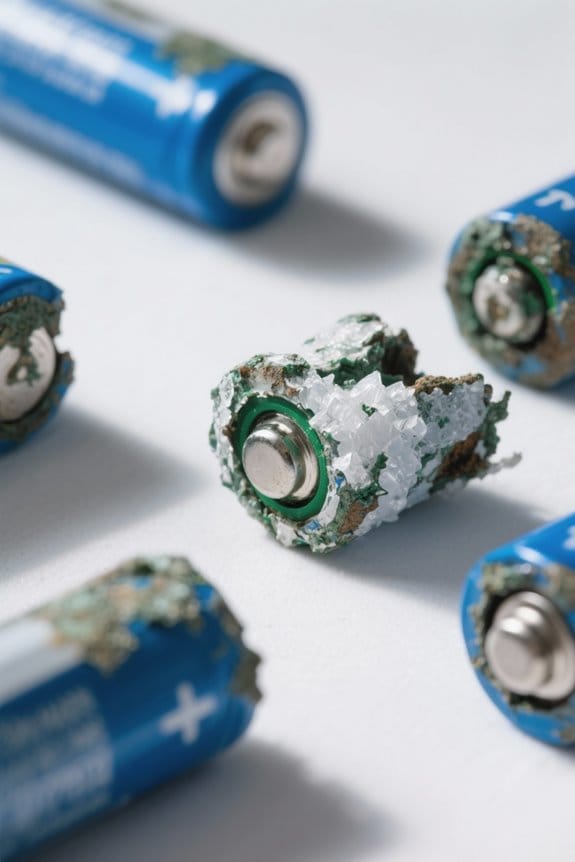
Although battery technology has advanced markedly, subtle yet consistent indicators often reveal imminent failure in commonly used cells, with diminished charge retention capacity frequently manifesting as device runtimes reduced by 30% or more within several charge cycles; this decline can be quantitatively assessed using controlled discharge tests—typically performed at a standardized current of 0.5C until cutoff voltage—to monitor decreasing milliampere-hour output relative to original specifications, which, in addition to runtime reductions, often correlates with overheating during fast charging or prolonged use, an internal resistance increase of 20 to 40 milliohms, and erratic voltage behavior during charging cycles signaling compromised electrochemical stability. Common signs include decreased battery life causing devices to shut down abruptly, irregular charging patterns where the battery doesn’t charge fully, and visible physical changes such as bulging, which indicate the need to replace these batteries promptly. Regular use of battery maintenance solutions is shown to enhance battery life and performance by maintaining clean connections and preventing corrosion.
Factors Causing Rechargeable Batteries to Deteriorate
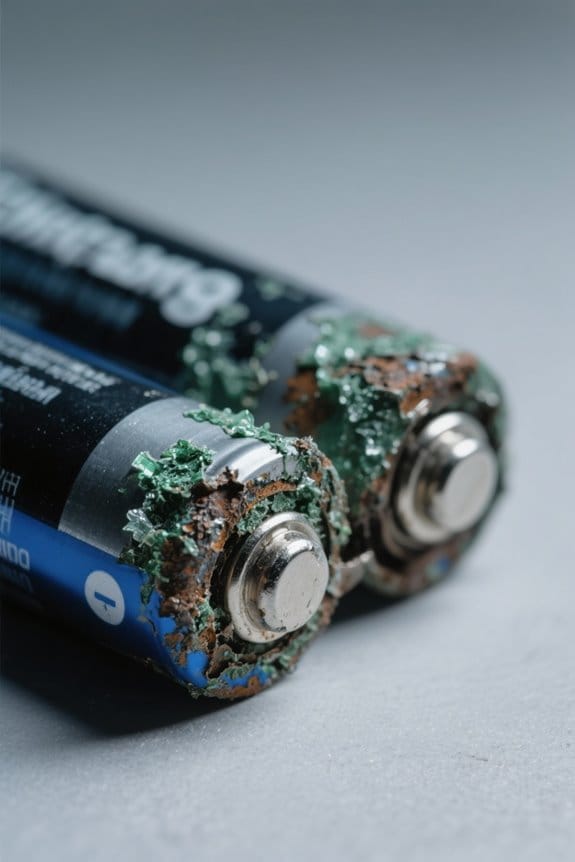
When subjected to frequent deep discharge cycles or charged beyond their designed cutoff points without proper automatic regulation, battery cells typically experience accelerated capacity loss, with most lithium-ion variants showing a marked decline after 300 to 1,000 full charge-discharge cycles; this degradation is often exacerbated by exposure to extreme temperatures ranging from below 0°C to above 45°C, which impair chemical stability and reduce overall efficiency. Additionally, charging habits that allow the battery to fully discharge before recharging shorten lifespan compared to maintaining charge levels between 20% and 80%. Physical damage, including swelling, leakage, or corrosion, further diminishes performance and reliability. Using recommended chargers supports ideal performance and reliable power. It is essential to store batteries in cool, dry places to prevent degradation over time. These factors collectively influence the number of charge cycles and overall battery degradation, essential for understanding the signs that the rechargeable battery is deteriorating.
Indicators It’s Time to Replace Your Rechargeable Batteries
How can one definitively determine that rechargeable batteries require replacement? Indicators vary by battery type, yet a significant decrease in device run time, combined with the battery requiring frequent recharging, strongly suggests diminished capacity. When batteries fail to reach a full charge within the manufacturer’s specified timeframe, or take substantially longer than the original charge duration, performance degradation is evident and replacement is warranted. Overheating during charging or normal use signals potential internal damage, demanding immediate attention. Moreover, physical changes such as swelling, leakage, or visible corrosion on battery casings represent safety hazards, necessitating that users replace the batteries promptly. Unexpected shutdowns or erratic device behavior during operation also indicate the batteries can no longer reliably supply power and should be replaced without delay. It is also important to consider the cycle life of rechargeable batteries, as this can impact long-term cost savings and determine when a replacement might be needed.
How to Extend the Life of Rechargeable Batteries
Maximizing the lifespan of rechargeable batteries requires maintaining charge levels between 20% and 80%, as avoiding both deep discharges below 20% and full charges above 80% considerably reduces capacity degradation over time. To extend battery life across various battery types, it is essential to use high-quality chargers that prevent overcharging and enhance charging efficiency. Users should regularly monitor and test batteries for early signs of wear, such as rapid voltage drop or swelling, ensuring timely identification of when it is time to replace compromised cells. Additionally, maintaining ideal charging conditions helps preserve the lifespan of rechargeable cells and prevents premature failure. To effectively monitor battery health, consider using battery capacity indicators that offer accurate state-of-charge displays and real-time voltage checking. Proper practices to store batteries—although discussed elsewhere—correlate closely with these efforts by minimizing stress factors that accelerate aging and capacity loss.
Best Practices for Storing Rechargeable Batteries
Consistently adhering to ideal storage conditions greatly influences the longevity and operational reliability of rechargeable batteries, particularly lithium-ion and nickel-metal hydride varieties, which exhibit accelerated capacity loss when exposed to elevated temperatures or improper charge levels. To store batteries effectively, maintaining a temperature range between 20°C and 25°C is critical, as higher temperatures expedite aging. Additionally, keeping batteries at a partial charge of 40-60% during long-term storage minimizes stress, avoiding full charges or deep discharges that reduce life and degrade performance. Batteries should not remain inside devices for extended periods to prevent slow discharge and potential leakage, which causes damage. Regular inspections for signs such as swelling or corrosion are essential; discovering such damage warrants immediate replacement to guarantee safety and peak battery function. Moreover, utilizing IP65 weather resistance ensures that outdoor rechargeable lights are safeguarded against adverse conditions, prolonging their functional lifespan.
Frequently Asked Questions
How Do I Know When to Replace Rechargeable Batteries?
Battery performance indicators like voltage drop signs and charging habits guide help identify battery fatigue and common battery issues. Following battery maintenance tips prolongs battery lifespan, while understanding battery charging myths aids timely replacement and eco friendly disposal methods guarantee safety.
How Do You Know When Rechargeable Batteries Are No Longer Good?
Battery degradation signs include increased self-discharge rates, voltage drops, and performance decline. Charging cycles effects, temperature impact analysis, and voltage measurement techniques aid detection. Visual inspection methods reveal damage. Manufacturer recommendations guide replacement timing and recycling options address compatibility concerns.
What Is the 80 20 Rule for Charging Batteries?
The 80/20 rule for charging batteries advises maintaining charge between 20% and 80% to optimize battery maintenance. This improves performance, extends lifespan, reduces charging cycles, enhances energy efficiency, and mitigates safety risks across battery types and usage frequencies.
What Is the Lifespan of a Rechargeable Battery?
Rechargeable batteries gently approach their twilight after 300 to 1,000 charging cycles, influenced by battery chemistry, usage patterns, environmental impact, and maintenance tips. Performance metrics and energy density vary among battery brands, affecting cost efficiency and disposal methods.