As an Amazon Associate, we earn from qualifying purchases. Some links on this site are affiliate links at no extra cost to you. Our recommendations are based on thorough research and editorial judgment.

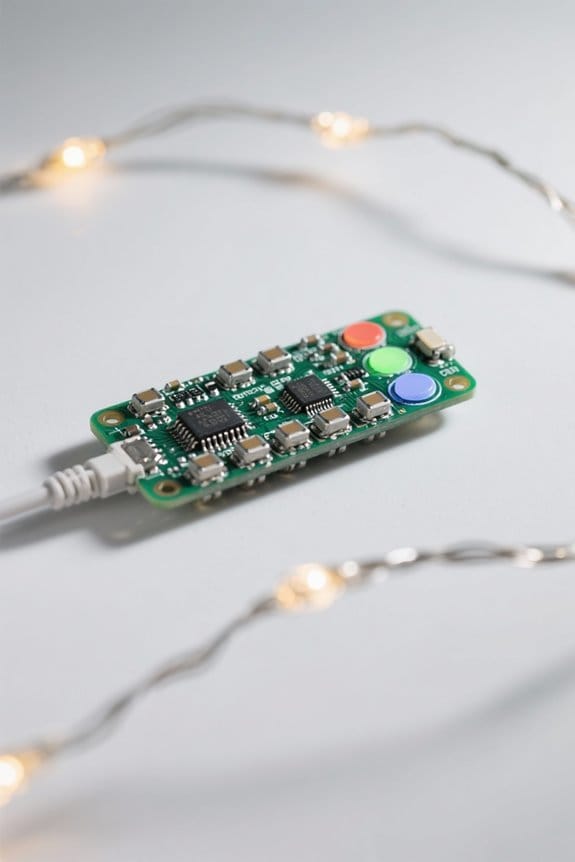
The Technology Behind Color-Changing RGB String Lights

Color-changing RGB string lights use red, green, and blue LEDs housed in compact 5mm by 5mm packages, emitting wavelengths from 450 to 750 nm based on semiconductor materials like indium gallium nitride, gallium phosphide, and aluminum gallium arsenide. A microcontroller independently modulates each diode’s brightness through additive mixing, enabling over 16 million colors with energy efficiencies up to 80% and a lifespan near 50,000 hours. Remote control enhances user customization and dynamic effects across varied applications. Further details reveal how these technical features optimize performance and versatility.
Key Takeaways
- RGB string lights use red, green, and blue LEDs with independent control for additive color mixing, producing over 16 million color variations.
- Semiconductor materials like AlGaAs, GaP, and InGaN determine the emitted colors and efficiency of each LED diode.
- A microcontroller regulates each LED’s brightness, enabling smooth color transitions and dynamic lighting effects.
- Remote controls and smart tech allow users to adjust colors, brightness, and modes from a distance for convenience.
- These lights offer high energy efficiency, durability, long lifespan, and customizable lighting for diverse indoor and outdoor applications.
Composition and Structure of RGB LEDs
The composition of RGB LEDs consists of three distinct diode elements—red, green, and blue—embedded within a single compact casing that measures approximately 5.0mm by 5.0mm in the commonly utilized 5050 LED size, a standard revered for its balance of durability and consistent color output. These LEDs operate through additive color mixing, combining the red, green, and blue light emissions to produce a wide spectrum of colors, with each diode controlled independently by a microcontroller to adjust brightness and color intensity precisely. The integration of individual diodes into one unit enhances light blending and overall color quality, while the design eliminates the need for current-limiting resistors in many configurations, contributing to improved energy efficiency and simplified circuitry often preferred in string light applications. Smart outdoor lights provide customizable lighting with millions of color choices to enhance curb appeal, demonstrating their versatility and aesthetic potential.
Semiconductor Materials in RGB Diodes
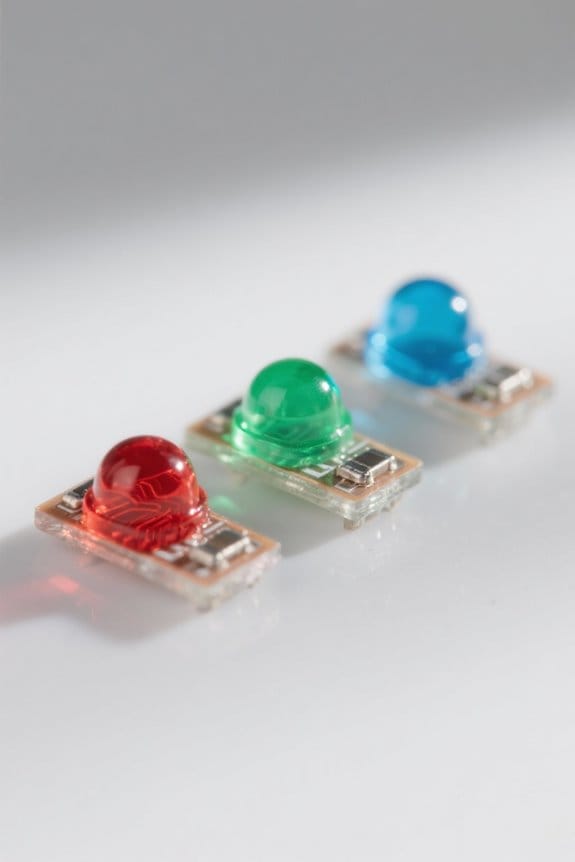
Semiconductor materials serve as the fundamental components that define the color output and efficiency of RGB diodes, with each primary color—red, green, and blue—utilizing distinct compounds tailored to emit specific wavelengths; red diodes commonly incorporate aluminum gallium arsenide (AlGaAs), which produces light in the 620–750 nm range, while green diodes typically use gallium phosphide (GaP) emitting wavelengths around 495–570 nm, and blue diodes are engineered with indium gallium nitride (InGaN), capable of emitting high-energy wavelengths near 450–495 nm. The energy bandgap of these semiconductor materials determines photon emission, directly impacting the color and luminous efficiency of each LED. Variations in electrical current modulate brightness, enabling precise control in color changing LED applications. Improvements in semiconductor composition have enhanced device lifespan and energy efficiency in RGB diodes used in string lights. Multi-protection circuitry in power banks ensures the safety and longevity of these devices, preventing overheating and electrical malfunctions.
Mechanism of Color Mixing in RGB Lights
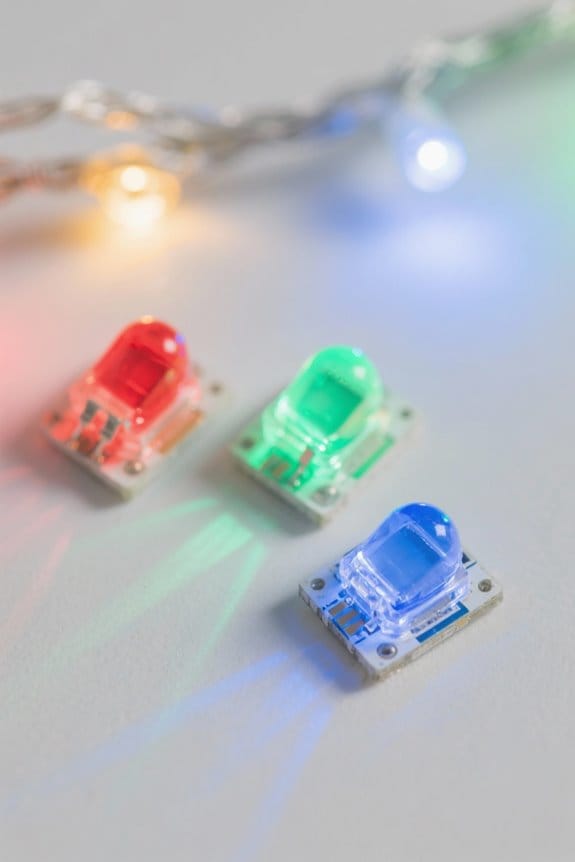
Brightness levels of red, green, and blue LEDs within RGB string lights can be individually modulated through electronic controllers, facilitating additive color mixing that produces a vast range of hues by varying intensity ratios. RGB LEDs combine specific brightness values to generate over 16 million possible color combinations, enabling precise color change effects. The mixing process follows additive principles: blending red and green at comparable brightness yields yellow, while blue combined with red produces magenta, illustrating foundational color mixing rules. This fine modulation of brightness across three color channels enhances the overall lighting experience, permitting smooth shifts and gradients in color output. Rapid switching of LEDs at high frequencies sustains consistent perceived brightness, optimizing dynamic effects essential to modern RGB string lights’ versatility and visual appeal. String lights, such as Brightown Outdoor String Lights, offer energy-efficient options that last thousands of hours, making them a sustainable choice for outdoor lighting solutions.
Role of the Microcontroller in RGB String Lights
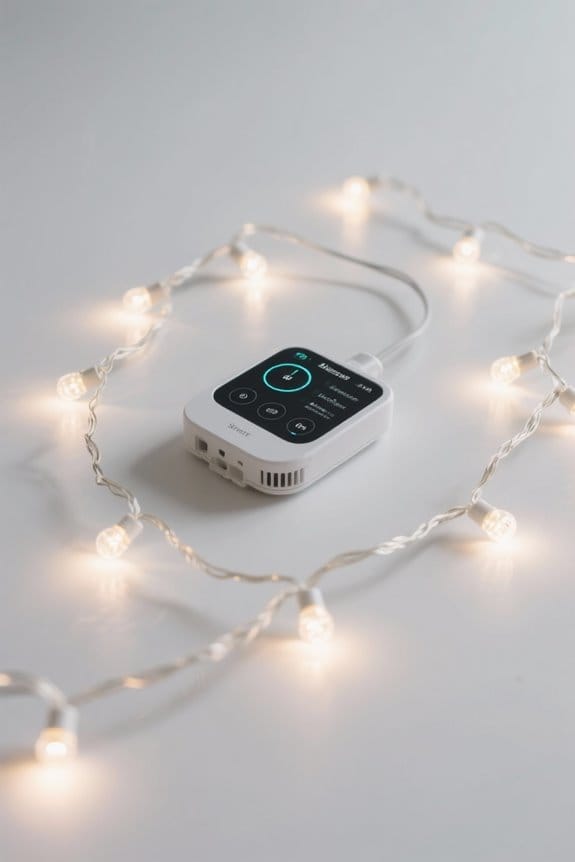
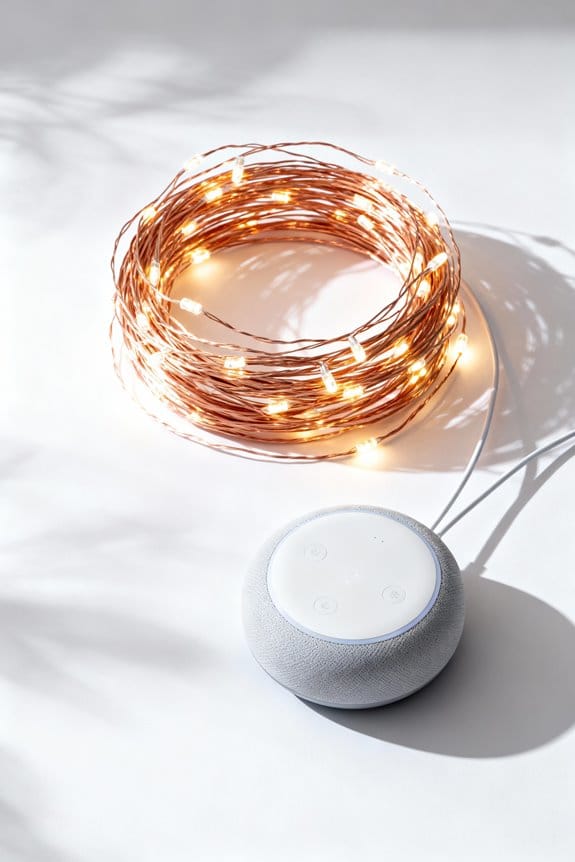
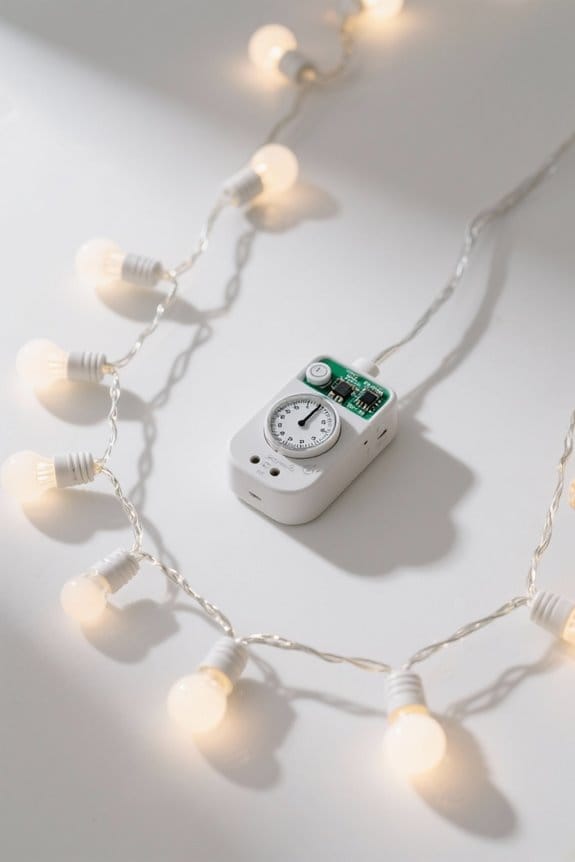
Although the primary function of RGB string lights relies on the LEDs themselves, the microcontroller functions as the indispensable central processing unit that orchestrates individual diode operation, regulating red, green, and blue brightness levels through finely tuned electronic signals. The microcontroller, acting as the RGB controller, executes programmed instructions that enable precise color control by varying the intensity of each diode independently, allowing for a broad spectrum of colors. It also processes user inputs from remotes or apps, facilitating dynamic lighting effects such as fades, flashes, and complex sequences. Through real-time brightness adjustments, the microcontroller guarantees smooth shifts and consistent color output. Advanced models integrate with smart home systems, enhancing usability with voice commands and automation, solidifying the microcontroller’s essential role in managing RGB string lights’ performance and versatility. Additionally, the use of energy-efficient designs in RGB string lights ensures optimized power consumption, aligning with modern demands for sustainable technology.
Recommended Products

【Individually addressable LED 】 This is digitally-addressable WS2811 LED pixel string lights. Per string has 50pcs F8 RGB LED chips and WS2811 smart IC. 500LEDs in total. You can set the color of each LED and their brightness individually! 256-level brightness and 24-bit color display, achieve 16777216 colors full color display.(8inch spacing)

【Individually addressable LED 】 This is digitally-addressable WS2811 LED pixel string lights. Per string has 50pcs F8 RGB LED chips and WS2811 smart IC. You can set the color of each LED and their brightness individually! 256-level brightness and 24-bit color display, achieve 16777216 colors full color display.

【Less Voltage drop】These Lights are DC12V voltage ,different from the common fairy lamp with voltage DC 5V on the market.
Brightness Control and Perception in RGB LEDs
Frequently, the perceived luminance of RGB LEDs depends heavily on the duty cycle applied to each color channel, with a 50% on/off modulation resulting in roughly half the apparent brightness observed by the human eye; this rapid switching, typically exceeding 100 cycles per second, exploits persistence of vision to generate a continuous light effect despite intermittent operation. Brightness control is achieved through precise light modulation of red, green, and blue channels, whose individual intensity adjustments enable extensive color blending capabilities. The microcontroller facilitates seamless brightness changes, ensuring smooth shifts between hues while maintaining consistent perceived brightness. User perception is critical, as effective color blending depends on visual continuity produced by modulated light rather than steady-state emission, highlighting the importance of optimized brightness control in enhancing the overall visual quality of RGB LEDs. The dynamic color effects produced by these LEDs enhance special occasions and gatherings with vibrant color options, making them ideal for both festive and daily use.
Recommended Products

Modern Staircase Chandelier: Elevate entryways with this gold high-ceiling chandelier; featuring (36 Droplets) and a 36-inch adjustable design, it creates a striking focal point for staircases, foyers, and open spaces

Triple-Color Lighting Effect: Unlock a new era of ambient lighting with Govee Permanent Outdoor Lights Prism. One head, 3 dynamic color zones, limitless DIY. Ditch monotone lighting and enhance your outdoor decor layering.

INCLUDES (1) Pre-installed Inline RGB Mini-Controller
Energy Efficiency of RGB Color-Changing Lights
Precise modulation of red, green, and blue channels not only enhances visual effects but also influences the overall power consumption of RGB color-changing lights, which have demonstrated energy efficiencies reaching up to 80% compared to traditional incandescent bulbs, according to standardized laboratory testing following the ANSI C78.377-2017 guidelines. Utilizing advanced LED technology, RGB color-changing lights maintain consistent power levels across different color settings, contributing to significant reductions in energy consumption and resulting in lower electricity bills for both residential and commercial users. With an operational lifespan of approximately 50,000 hours, these lights represent a sustainable lighting choice by minimizing environmental impact through reduced energy use. Their superior energy efficiency, durable LED components, and standardized evaluation metrics collectively position RGB color-changing lights as an effective solution for energy-conscious consumers. For projects requiring battery power, choosing durable, high-impact plastic battery holders with secure lids is essential to prevent shorts and accidental discharge.
Color Range and Customization Capabilities
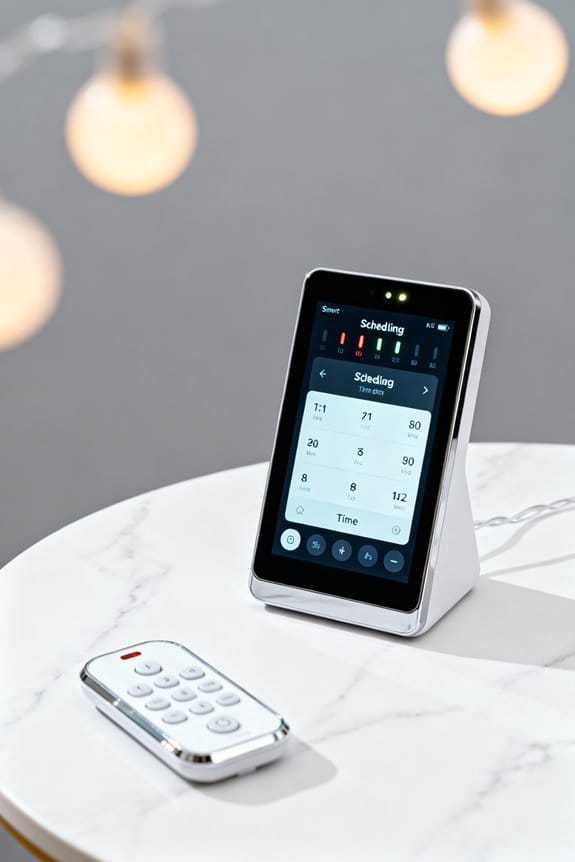
How do RGB string lights achieve such a vast array of colors while offering extensive customization options? By varying the intensity of the red, green, and blue LEDs through additive color mixing, RGB LEDs can produce over 16 million different colors. Colour changing lights incorporate advanced circuitry and software that allow users to select specific hues, adjust brightness levels, or establish cycling patterns for dynamic displays. Many models provide remote control via mobile apps, enabling precise adjustments of colour, changing the brightness, and activating preset light sequences from a distance. Some units also feature memory functions that retain the last chosen color, enhancing convenience. Additionally, programmable gradients and smooth shift effects offer visually complex changes between different colors over defined intervals, greatly expanding customization capabilities beyond simple static colors. The inclusion of remote control functionality allows users to effortlessly manage the lighting modes and settings from afar, adding a layer of convenience and flexibility.
Recommended Products

NEW DESIGNED REMOTE CONTROL AND 4 LIGHTING MODES AVAILABLE: This is new arrival LED Strip Rope Light with 24key RF remote controller, there are 4 lighting modes available: Flash, Fade, Strobe, and Smooth

[Permanent LED Lights with RGB+IC Technology & Independent Control] – Bring your home’s eaves, soffits, or roofline to life with fully addressable, color-changing LEDs. Through the Lepro app, you can customize every detail—assign colors, create DIY scenes, or turn off specific lights for comfort, like keeping areas near bedroom windows dark for better sleep. The app is continuously updated with new features.

【Enhanced RGBCW Outdoor Lighting】Elevate your outdoor ambiance with ASAHOM permanent outdoor lights. Powered by ASAHOM app with AIGC intelligence and WLED integration for endless DIY creativity. 144 upgraded RGBCW LEDs deliver 50lm per light, 2700K-6500K tunable white, and 30,000+ lighting combination. Dual output extends up to 800ft. Smart schedule. 92 preset scenes for Halloween, Christmas decor and accent lighting. Perfect for roof, backyard, patio, gazebo, garage, porch, fence, etc.
Applications and Benefits of RGB String Lights
Building upon the extensive color customization and control afforded by RGB string lights through advanced additive mixing and smart technology, their applications span residential, commercial, and event-focused environments where visual ambiance and energy efficiency are prioritized. RGB string lights offer customizable color options encompassing a spectrum of 16 million shades, enhancing aesthetic appeal for diverse settings. The energy-efficient design consumes considerably less power than traditional incandescent bulbs, reducing operational costs and environmental impact. Integration with smart technology facilitates remote adjustments to brightness, color, and dynamic lighting effects via smartphone apps, eliminating manual intervention. These features make RGB string lights ideal for festive celebrations, intimate gatherings, or commercial displays, where adaptability and precise lighting control improve atmosphere, marketability, and user convenience, demonstrating a substantial advancement over conventional lighting solutions. In addition to their energy efficiency, shatterproof and weather-resistant features ensure that RGB string lights are durable and reliable for outdoor use, making them a practical choice for various outdoor events and settings.
Recommended Products
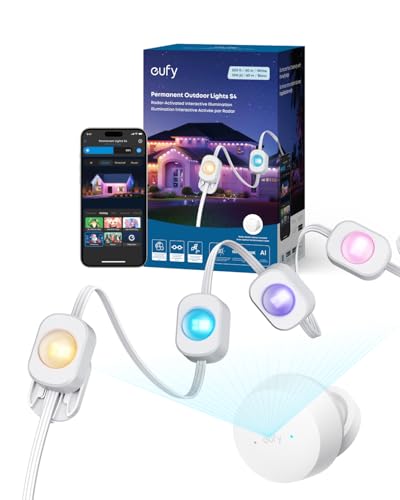
3-in-1 Lighting for Daily, Holiday, and Security: With 120°, 12 m radar coverage, this smart light strip offers precise motion detection for automatic lighting effects that follow your movement. Set customizable security alerts with flashing warnings to deter intruders.

Product 1: WHAT’S IN THE BOX - Includes one White and Color Ambiance 65" TV smart led light strip with mounting brackets designed for use on 65 inch TVs; Perfect for immersive gaming and TV watching experiences

Year-Round RGBIC Lighting: No more hassle of hanging every year, Govee Permanent Outdoor Lights 2 can be installed just once and used for year-round enjoyment. Perfect for roof, backyard and patio with 16 million colors and 100 scene modes
Frequently Asked Questions
Recommended Products

Flexible silicone cased tape light for enhanced Damp location listing. Peel and stick3 construction adhesive on back. Indicator marks every 6 inch for field cutting at the end of a run

Get your SMD-5050 RGB multi-color LED strip lighting cut just for your project. Just select the length of your strip lights (in intervals of 1.64 feet or every 19.5 inches) and we will put it together for you including a mini inline controller

Invisiled Pro 1Ft indicator marks every 2 inch for field cutting at the end of a run
How Do RGB Lights Change Color?
RGB lights change color through color mixing by adjusting red, green, and blue diodes within the light spectrum. User control and smart technology enable customization via application settings, allowing precise and dynamic color shifts tailored to specific preferences.
How Do Color Changing LED Lights Work?
Color changing LED lights operate by emitting light across the color spectrum through precise color mixing of red, green, and blue diodes. Their superior LED efficiency enables versatile lighting applications with dynamic, vibrant effects produced via controlled light emission.
How Are Color-Changing LEDS Made?
Color-changing LEDs arise through a meticulous LED manufacturing process, assembling RGB diode types harmonized by color mixing techniques. Light diffusion methods soften the glow, while LED lifespan considerations guarantee enduring brilliance in diverse applications and environments.
Does LED Ghosting Use Electricity?
LED ghosting does use electricity, but it is minimal due to LED efficiency and low power consumption. Voltage fluctuations and light dimming can exacerbate ghosting, yet energy saving benefits remain largely unaffected by this faint residual illumination.