As an Amazon Associate, we earn from qualifying purchases. Some links on this site are affiliate links at no extra cost to you. Our recommendations are based on thorough research and editorial judgment.

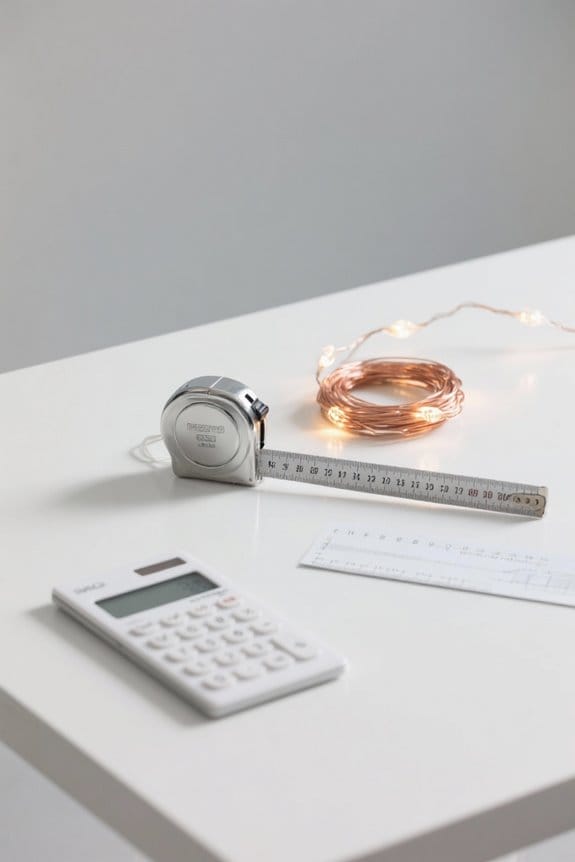
How to Calculate the Right String Light Length for Your Space

Calculating the right string light length begins by measuring the total linear distance between anchor points, then adding 2 to 6 feet to accommodate natural sag or swag for a graceful drape rather than taut lines. Bulb spacing typically ranges from 4 to 5 feet, adjusted for bulb size such as larger G50 globes requiring more length. Evaluate cumulative wattage to verify power source capacity around 1800 watts is not exceeded, favoring durable LED bulbs for efficiency and outdoor weather resistance. Proper planning guarantees balanced coverage and safety, with detailed installation techniques available for optimized results.
Key Takeaways
- Measure the linear distance between anchor points where lights will be installed.
- Add 2 to 6 feet to the length to accommodate natural sag or desired swag style.
- Consider bulb size and spacing; larger bulbs require more distance between anchors.
- Adjust length for uneven areas by selecting longer strings to cover the total swag length.
- Ensure total length matches your power source capacity and installation height requirements.
Measuring Your Outdoor Space Accurately
Accurately measuring the outdoor space intended for string light installation requires calculating the linear distance between anchor points while factoring in the natural sag or swag of the lights, which typically adds between 2 and 6 feet to the total length; this guarantees the lights hang with the desired aesthetic and functional clearance. To precisely measure the area, one must extend the measured length beyond the straightforward linear distance to accommodate the desired swag effect, ensuring the lights form graceful arcs rather than taut lines. Selecting a long light that sufficiently covers this adjusted length, especially in uneven areas, is essential to avoid gaps. Incorporating such allowances not only simplifies the task to hang lights effectively but also enhances the capacity to add ambient illumination, improving both visual appeal and functional coverage. Additionally, ensure that the string lights have a suitable IP65 waterproof rating to withstand outdoor conditions and provide reliable performance.
Understanding String Light Bulb Spacing
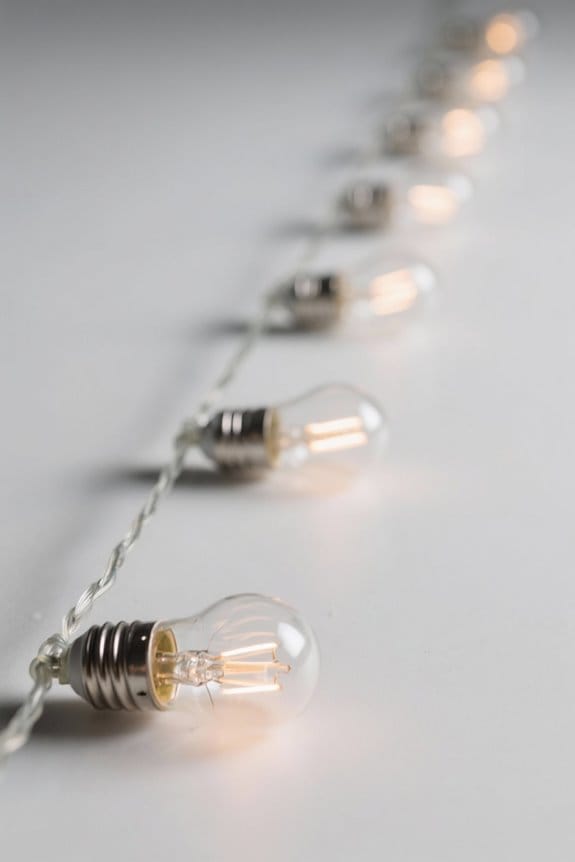
When planning string light installations, the spacing between bulbs markedly influences both illumination quality and visual impact, with a common recommendation ranging from every 4 to 5 feet to balance brightness and ambiance effectively. The required bulb spacing varies depending on the bulb base size and type of patio bulbs used; larger bulbs such as G50 generally require wider spacing compared to smaller C7 or C9 bulbs. Additionally, how you hang your lights affects spacing calculations, as zig zag patterns typically necessitate closer bulb placement to maintain consistent lighting. Proper attention must also be given to matching bulb socket size with the string lighting cords, as incompatibility can alter effective bulb spacing. Many string lights offer energy savings of up to 98% compared to incandescent lights, making them a cost-effective choice for outdoor settings. Careful measurement guarantees the desired lighting effect by accounting for these technical factors.
Adding Extra Length for Swag and Hanging
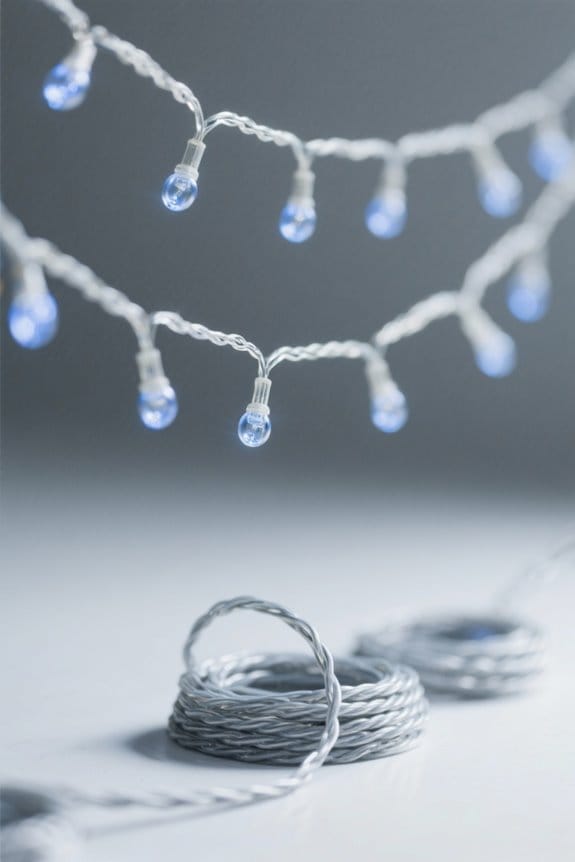
Although it may seem straightforward to measure the linear distance for string light installation, adding an extra 2 to 6 feet is essential to accommodate the natural swag or arc that develops when the lights are suspended, thereby preserving both functionality and aesthetic quality. This extra length accounts for the hanging curvature that cannot be captured by simple horizontal measurements, ensuring thorough lighting coverage without tension on the fixtures. When calculating total string length, it is crucial to evaluate the desired swag style; looser, more elaborate patterns require additional footage beyond the minimal 2 feet, sometimes approaching 6 feet or more. Proper adjustment of extra length improves visual impact by preventing gaps and uneven drops, while also facilitating better durability. Managing surplus string by doubling it at the ends enhances overall presentation and balance within the designated space. Selecting IP65 or higher waterproof ratings ensures that your string lights maintain their function and appearance in various weather conditions, adding to their durability and reliability.
Selecting the Right Type of Bulbs for Your Design
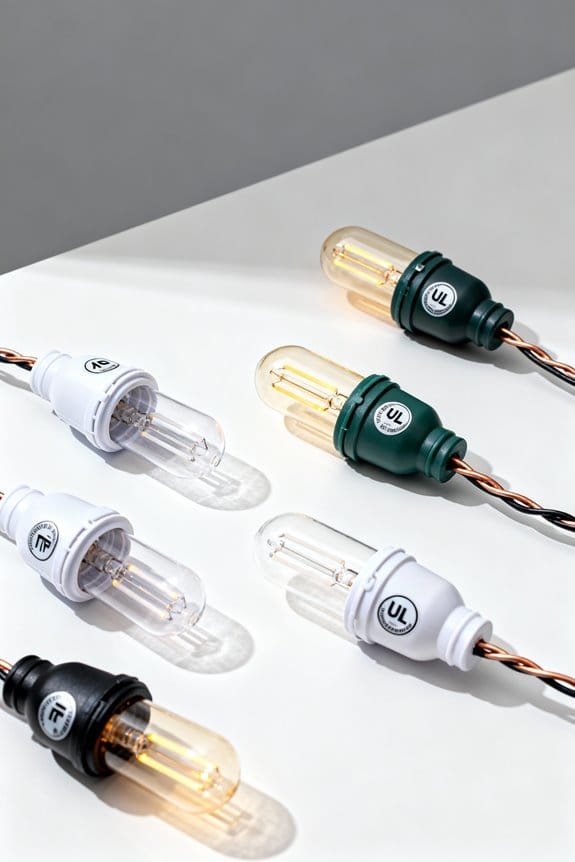
How does one determine the most suitable bulb type for an outdoor string light design, considering factors such as size, material, and lighting technology? First, bulb sizes like C7 with E12 Base are critical; they typically range from 5W to 7W and produce slender halos, while Medium/E26 bulbs vary between 7W and 60W brightness ratings, influencing area coverage. A variety of shapes—globe bulbs (G40, G50) and Edison bulbs (S11, S14)—allow customization for ambiance. Material choice includes acrylic, which is shatterproof and colorfast, versus more fragile glass. When planning where and how to hang your string lights, selecting between LED bulbs, which offer higher brightness with energy efficiency, and incandescent bulbs, known for warmer tones, can optimize lighting quality without compromising durability or aesthetic appeal. Most landscape lighting kits include fixtures that are IP65 rated, ensuring protection against dust and moisture, which is important for outdoor installations.
Recommended Products

FESTIVE LIGHTING: Commercial outdoor Christmas decorations take a festive leap with this 1,000-foot C9 Christmas stringer bulk reel, sized to immerse your entire home in the holiday spirit.

FESTIVE ILLUMINATION: Illuminate your festive occasions with this 1,000-Foot C7 Christmas stringer bulk reel, a perfect Christmas light wire spool to brighten up any space.

FESTIVE ILLUMINATION: Illuminate your festive occasions with this 1,000-foot C7 Christmas stringer bulk reel, a perfect Christmas light wire spool to brighten up any space.
Choosing Between LED and Glass Bulbs
Considering energy efficiency, durability, and lighting quality, the decision between LED and glass bulbs for string lights hinges on measurable performance characteristics and material properties; specifically, LED bulbs typically consume only 1 watt to produce brightness comparable to an 11-watt incandescent, offering roughly 25,000 operational hours, while traditional glass incandescent bulbs, despite costing less upfront, generally last about 1,000 hours and are more fragile and prone to breakage. LED bulbs exhibit greater durability and are remarkably energy-efficient, making them suitable for outdoor installations where extended lifespan and safety are priorities. Glass bulbs cater to certain aesthetic preferences but demand careful handling due to their susceptibility to shattering. When selecting bulbs for outdoor use, it’s crucial to evaluate cold-weather performance as lower temperatures can impact bulb efficiency and lifespan. Ultimately, selecting between LED and glass bulbs involves balancing energy consumption, durability, lifespan, and visual appeal, particularly when planning outdoor string lighting configurations.
Recommended Products

BRIGHT: Enjoy 3600 Lumens of crisp, natural white light (4500K) with replaceable LED strips and drivers. Instantly experience energy savings and improved visibility. Lightly frosted lens cover for optimal light distribution.

NEW AND IMPROVED BRIGHTER LED'S. Our new SMD energy efficient LED bulbs have 3 radiant LED's for a beautiful vivid look that compares to the old incadescent lights. Plus each bulb has a 60,000 hour bulb life. All bulbs fit into any C9/E17 light socket.

NEW AND IMPROVED BRIGHTER LED'S. Our new SMD energy efficient LED bulbs have 2 radiant LED's for a beautiful vivid look that compares to the old incadescent lights. Plus each bulb has a 60,000 hour bulb life. All bulbs fit into any C7/E12 light socket.
Planning Popular Hanging Patterns and Layouts
Beyond the choice of bulb type, planning the hanging patterns and layouts for string lights involves careful consideration of spatial dimensions and aesthetic objectives, with common configurations including zig-zag, PX, and scallop patterns that complement various environments. In outdoor spaces, selecting the perfect hanging pattern depends on the area size; for instance, the V pattern suits smaller spaces by creating a natural curve between two points, whereas the PX or W patterns are ideal for larger areas, offering intricate visual appeal and full coverage by utilizing multiple hanging points. When determining string lengths, it is crucial to measure the total linear distance accurately, factoring in the desired swag and drop—typically lights are hung every 4 to 5 feet—to guarantee maximum brightness and alignment with the chosen hanging pattern. Additionally, shatterproof and weather-resistant bulbs are recommended to ensure durability in outdoor settings, allowing the lights to withstand various weather conditions while maintaining their visual appeal.
Recommended Products

Size: 12' x 24' gazebo with 36 bulbs outdoor hanging lights for 72 ft. With 12x14 gazebo( 155.51"L x 131.89"W x 120.8"H) and 12x10 Gazebo( 113.39"L x 131.89"W x 120.8"H ).

The Tallest of the PURPLE LEAF Pergolas: This creates a grand, open atmosphere with ample space for gatherings. It is perfect as a standalone piece or an extension for dining, outdoor furniture, hot tubs, or kitchens/bars.

Upgrade Yarn-dyed Curtain: Made with advanced techniques, our upgraded fabric offers strong fade resistance for at least 2 years and stays intact even after a month in extreme conditions.
Calculating Total Linear Feet Needed
Accurate calculation of total linear feet needed for string light installation begins with precise measurement of the designated area, incorporating both horizontal width and vertical height dimensions, as well as any intervening segments that accommodate desired hanging patterns such as zig-zag or scallop; these measurements must then be summed, with an additional allowance of 2 to 6 feet to compensate for natural sag, swag, or drop in the light strands. To calculate total linear feet, measure all sections where globe lights or other string lights will hang, adding lengths for each straight run or angled segment. This approach guarantees the entire space is covered adequately, while accounting for proper tension and spacing, ultimately preventing under- or over-purchasing of string lights essential for a balanced illumination outcome. For outdoor setups, selecting lights with an IP65 waterproof rating ensures durability and resilience against weather conditions.
Considering Power Source and Wattage Limits
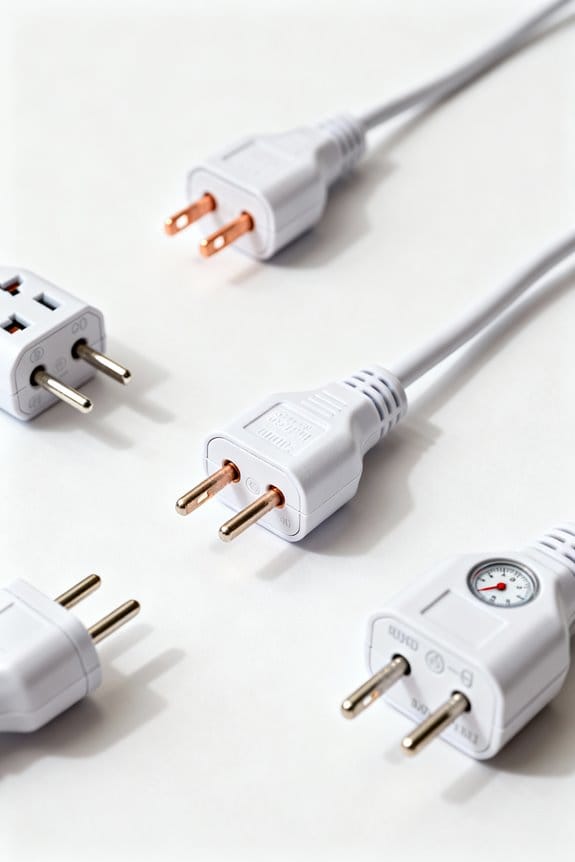
Although the total length of string lights is paramount in installation planning, equal attention must be given to the power source’s capacity to handle electrical loads without risk; most standard household outlets are rated for a maximum of approximately 1800 watts, which dictates the permissible cumulative wattage of all connected strands. It is crucial to verify the wattage per bulb and the total number of allowable connections by consulting manufacturer specifications to prevent overheating and blown fuses. Utilizing a wattage calculator can aid in determining the safe number of strings based on individual bulb wattage and strand length, especially since LED bulbs consume considerably less wattage than incandescent alternatives. For installations involving multiple string lights, increasing power source capacity or employing a dedicated circuit is advisable to maintain safe wattage limits and guarantee reliable operation. Additionally, using IP65-rated string lights ensures weatherproofing and enhances durability in outdoor settings.
Recommended Products

Widened Cedar Wood Frame: Designed with the widened size 4.7"x4.7", our durable hardtop gazebo has exceptional strength and stability. The wood column create a timeless look, effortlessly complementing the natural beauty of your outdoor space

Massive 33FT Flagpole Light Tree – Stunning Holiday Centerpiece:Transform your existing flagpole into a breathtaking 33-foot Christmas tree. With 8,400 ultra-bright LEDs, this mega display instantly becomes the highlight of your home, business, or community.

【Heavy-Duty Permanent Hardtop Gazebo】Made of galvanized steel double roof and rust-resistant aluminum frame with powder-coated finish, this gazebo is waterproof, wind-resistant, fade-proof and all-weather durable. It performs stably in rain, snow, and strong wind, providing a long-lasting outdoor shelter for year-round use.
Tips for Securing and Installing String Lights Safely
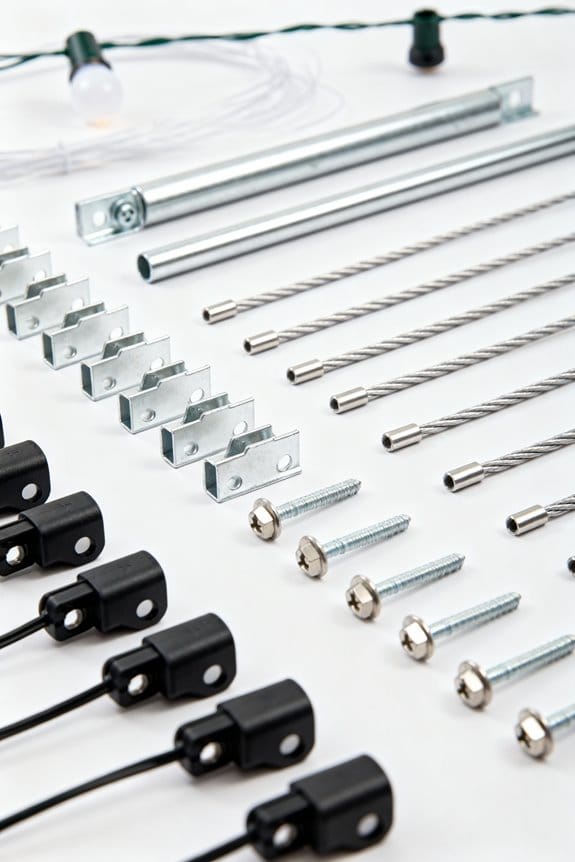
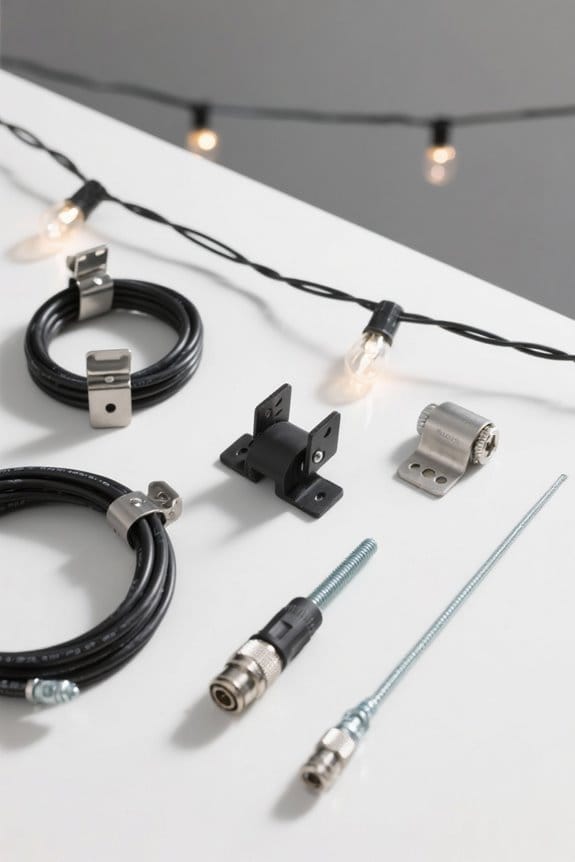
After confirming the power source can handle the cumulative wattage of all connected string light strands, attention should be directed toward the physical installation process to secure safety and durability. Employ heavy duty hardware, such as corrosion-resistant clips or hooks, to secure string lights firmly and prevent sagging over time, guaranteeing an adequate length is selected for proper tension. Maintain an installation height of 8-10 feet or more to allow sufficient walking clearance while considering larger bulb sizes and obstructions. For longer runs or heavier bulbs, use guy wires to enhance stability. Adhere strictly to manufacturer guidelines when linking multiple strands to verify safe electrical connections and avoid overheating. When planning outdoor installations, apply weather-resistant coatings and insulation to protect wiring from moisture and environmental exposure, further promoting longevity and safety. For installations on specific surfaces like masonry, ensure pilot holes and appropriate anchors are used to maintain security and stability.
Recommended Products

【Galvanized Steel Double Roof】: Sun room Made of galvanized steel, and can effectively prevent falling objects from high altitude. In addition, the double-deck design provides better insulation and ventilation to protect your time outdoors

Durable Frame: Made with 1.2mm extruded aluminum tubing and welded joints, this aluminum outdoor sectional features a stable frame. Each seat supports up to 500 lbs; The powder-coated finish is designed to help reduce rust and corrosion in outdoor environments; The lightweight frame allows pieces to be moved and reconfigured as needed for patios, decks, or backyard

Designed for those who have difficulty walking or standing for extended periods, the SNAPnGO mobility scooter prioritizes comfort. Experience all-day support with the plush 18.5-inch wide deluxe seat featuring a backrest, adjustable armrests, and comfortable footrests. Additionally, the electronic motor brake and dual rear drum brakes ensure smooth and secure stopping.
Frequently Asked Questions
How to Calculate String Light Length?
Calculating string light length balances precise measurement with creative design. Using string light tips, one must consider installation techniques, outdoor lighting needs, indoor ambiance, party decorations, holiday lighting patterns, and lighting safety to guarantee flawless, secure illumination.
How Long Should My String Lights Be?
The ideal string light length depends on coverage area and installation methods. Considering string light styles, light bulb types, and whether for indoor ambiance or festive occasions guarantees maximum outdoor lighting tips for balanced illumination and aesthetic appeal.
How Many Feet of String Lights Do I Need for a 10X10 Room?
For a 10×10 room, approximately 40 feet of string lights suit room dimensions. Considering string light types, installation tips, and decoration themes enhances lighting ambiance, energy efficiency, and mood setting, creating a tailored atmosphere fitting the space precisely.
What Size Light for a 12X12 Room?
In a 12×12 living room, choosing G50 bulbs balanced lighting styles and room ambiance, considering ceiling height and light brightness. Outdoor options suited patios, while power source and installation tips guaranteed safe, effective illumination throughout.