As an Amazon Associate, we earn from qualifying purchases. Some links on this site are affiliate links at no extra cost to you. Our recommendations are based on thorough research and editorial judgment.


How to Plan String Light Layouts for Patios and Decks

Planning string light layouts for patios and decks involves measuring the area’s length and width, identifying anchor points spaced 8 to 12 feet apart, and suspending lights 8 to 10 feet high to guarantee safe clearance and even illumination. Selecting patterns like V, X, or scalloped enhances visual appeal, while secure supports—including wooden posts or mature trees—must withstand outdoor conditions. Proper hook installation with pilot holes and load checks prevents sagging. Further exploration reveals critical safety practices and design optimizations for ideal ambiance.
Key Takeaways
- Measure the patio or deck area and identify anchor points 8 to 12 feet apart for even and stable string light suspension.
- Choose a string light pattern like V, X, W, or Scalloped Square based on space size and desired visual effect.
- Use robust support structures such as wooden posts, mature trees, or pergolas to safely bear the weight of the lights.
- Install hooks with pilot holes and outdoor-rated anchors, maintaining consistent tension to prevent sagging and ensure durability.
- Prioritize safety by clearing cords from walkways, using GFCI outlets, and selecting outdoor smart plugs with weather resistance.
Assessing Your Patio and Deck Space for Lighting
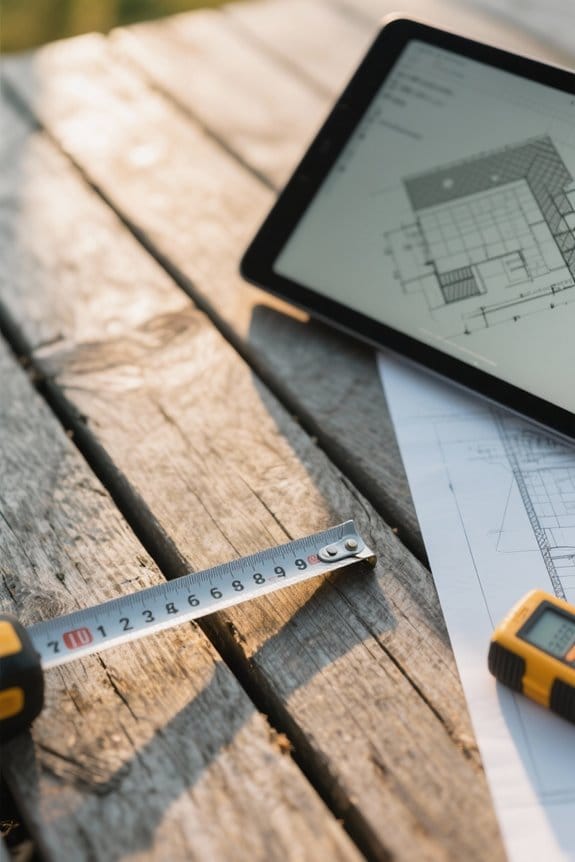
Before installing string lights, a thorough assessment of the patio or deck space is essential to guarantee ideal illumination and aesthetic appeal; this process begins with accurately measuring the area’s length and width to calculate the total square footage that requires coverage. Identifying suitable anchor points is vital, selecting stable surfaces such as walls, posts, or trees spaced approximately 8 to 12 feet apart to evenly distribute weight and maintain structural integrity for the hanging lights. The height at which lights are suspended should ideally be between 8 and 10 feet to allow safe passage underneath. Preliminary planning involves sketching the layout and determining the most efficient light patterns, such as V, X, or zig-zag configurations, tailored to the space’s dimensions while accounting for necessary light swag of 2 to 6 feet to enhance visual interest. When planning outdoor lighting, consider using energy-efficient LED lights that last over 25,000 hours, which reduces electricity costs and ensures long-term performance.
Choosing the Right String Light Patterns

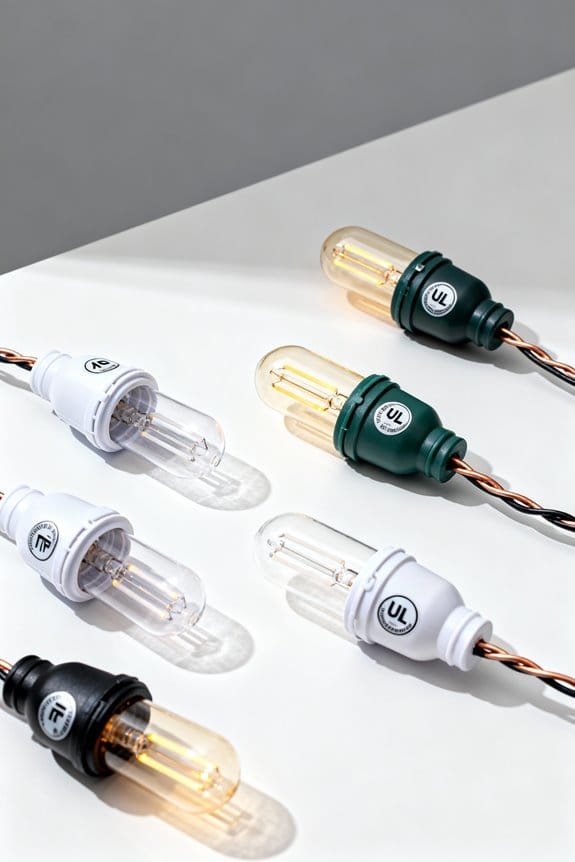
Selecting an appropriate string light pattern markedly influences both the functional coverage and visual appeal of an outdoor space, with each configuration offering distinct advantages based on spatial dimensions, anchor point availability, and desired lighting density. For a Patio with limited hanging points, the V Pattern offers versatility and requires a strong anchor at the apex for enhanced aesthetics. In contrast, wider areas benefit from the X Pattern, featuring two strands crossing at 45-degree angles to increase visual interest over traditional 90-degree setups. Larger spaces can utilize the W Pattern, deploying five hanging points to create a zig-zag effect that improves illumination coverage. The Scalloped Square pattern surrounds the perimeter with dramatic swags, demanding precise planning. Meanwhile, the Horizon Point design fans multiple strands consistently spaced and elevated, delivering a polished finish. For optimal results, consider using energy-efficient designs that can significantly reduce electricity consumption while enhancing the ambiance of your outdoor space.
Selecting Suitable Support Structures
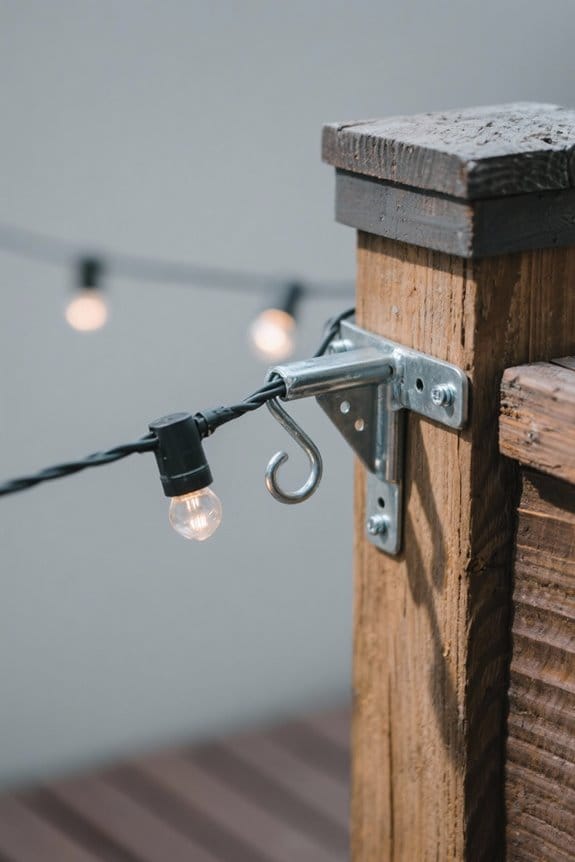
Although numerous options exist for supporting string lights, selecting robust structures capable of withstanding prolonged outdoor conditions and bearing the cumulative weight of the lighting system is critical to guarantee durability and safety; typically, 4×4 or 6×6 wooden posts, securely embedded 24 to 36 inches deep in concrete footings, provide ideal stability and resistance to wind loads measured up to 30 mph. Additional natural support structures like mature trees offer aesthetic advantages and reduce construction needs, while existing patio string features such as pergolas and railings can substitute if sufficiently stable and elevated at least 8 to 10 feet above ground level. When necessary, treated-wood DIY poles complement these support structures, increasing coverage. Ensuring all supports maintain appropriate height and strength is essential when planning where to hang string lights in outdoor environments. For added reliability, consider selecting WeatherTite cables that enhance durability and protect against the elements.
Measuring and Marking Anchor Points
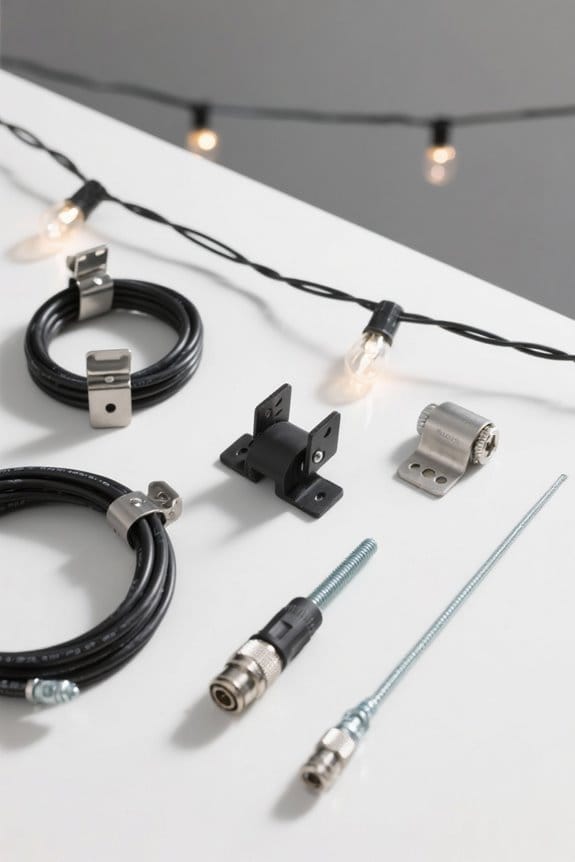
Once sturdy support structures are identified and secured, accurately measuring and marking anchor points becomes a pivotal step in achieving a well-organized string light layout; using a durable measuring tape, spacing intervals between hooks should fall within an 8 to 12-foot range, balancing load distribution and minimizing sagging. The measuring tape guarantees precise distances while planned anchor points are marked on walls, posts, pergola beams, or fence edges to meet both aesthetic and functional requirements. Prior to installation, double-checking measurements and level alignment verifies even spacing, which impacts overall visual appeal and structural performance. For masonry surfaces, pilot holes and suitable wall anchors rated for outdoor loads are essential to maintain integrity under tension. Verifying each anchor point’s capacity to support expected outdoor loads prevents sagging and contributes to a tidy, durable string light arrangement. Many outdoor light hooks are weather-resistant features, ensuring they withstand various weather conditions and maintain the aesthetic of outdoor lighting displays.
Installing Hooks and Guide Wires
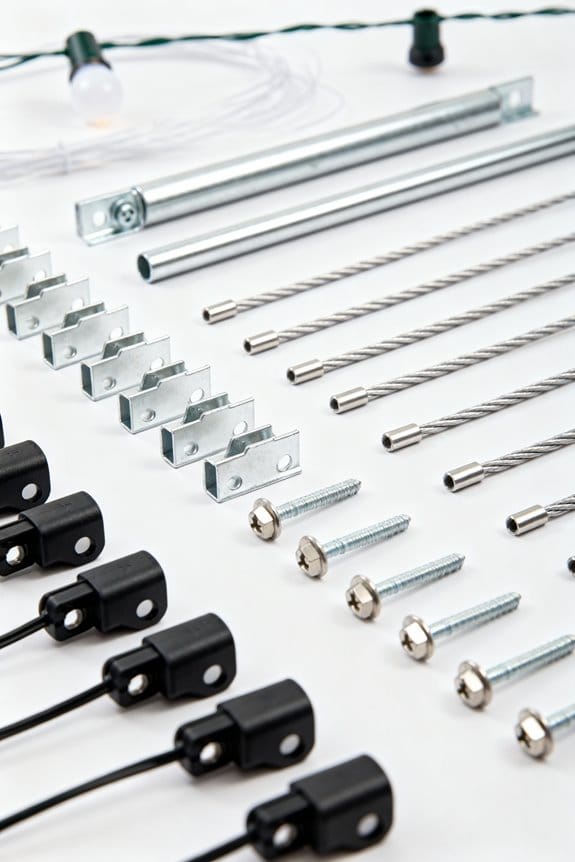
Begin installing hooks by accurately drilling small pilot holes at the previously marked anchor points spaced between 8 and 12 feet apart, which facilitates easier insertion and guarantees structural integrity for supporting string lights; screw in appropriate hardware such as cup hooks or screw eyes tightly, verifying their capacity to handle outdoor tension and environmental stress. When installing on masonry surfaces, use outdoor-rated wall anchors to maintain stability. For extended or heavier light runs, incorporate a guide wire secured firmly at both ends, distributing weight evenly and enhancing durability while preventing sagging. Ascertain the guide wire’s tension is regularly checked and adjusted to sustain a clean, level appearance. Proper installation of hooks and guide wires optimizes both support and longevity, contributing to an orderly and aesthetically pleasing outdoor lighting arrangement. Ensure that any batteries used in outdoor lighting have a 10-year shelf life to maintain consistent power and reliability over time.
Hanging and Adjusting String Lights
Careful measurement of the distance between anchor points is essential before hanging string lights, with recommended spacing maintained between 8 and 12 feet to optimize support and guarantee even light distribution; secure attachment to hooks or screws must prevent sagging by sustaining consistent tension throughout the run, which should be periodically checked and readjusted if necessary. When hanging patio lights around deck railings or utilizing natural supports like tree branches, it is important to verify their structural integrity for load bearing. Zip ties offer an effective means to stabilize cords while allowing for straightforward adjustments and removal without damage. Regularly inspecting the lights for wear enhances durability. Employing these methods guarantees the string lights remain taut, visually cohesive, and functionally reliable throughout the outdoor lighting season. For additional safety, consider using UL94 V0 rated materials to ensure flame resistance and overall durability in diverse outdoor environments.
Ensuring Safety and Maintenance of Your Outdoor Lights
Although aesthetic appeal is a priority when installing outdoor string lights, ensuring safety and maintenance is equally critical to prevent hazards and prolong functionality; only outdoor-rated, weather-resistant lights and cords should be employed, as these are engineered to withstand temperature fluctuations, moisture, and UV exposure, typically featuring reinforced insulation and sealed connectors. When planning installation, wire first to assess proper circuit load and avoid overloading, adhering strictly to manufacturer wattage limits for each string. Keeping light cords clear from walkways is essential to minimize tripping hazards and maintain a safe environment around decks or patios. Regular inspections for fraying or damage must be conducted, with immediate replacement of compromised sections. Additionally, utilizing GFCI outlets adds a layer of protection against electrical shocks, especially in damp conditions common outdoors. When selecting outdoor smart plugs for your string lights, ensure they have ETL certification for electrical and thermal safety, and are compatible with your smart home system for easy remote management.
Frequently Asked Questions
How to String Outdoor Lights Around a Patio?
Like weaving a delicate tapestry, one chooses string light styles suited to the space, ensuring overhead installation follows lighting safety guidelines by using sturdy supports, secure hooks, and weather-resistant cords to create a charming patio ambiance.
How Many String Lights Do I Need for My Patio?
The number of string lights needed depends on patio size and desired brightness considering light wattage. Installation tips recommend spacing lights 8 to 12 feet apart and adding extra length for decorative swags to guarantee even coverage.
What Is the Best Spacing for Outdoor String Lights?
Like stars gently scattered across the night sky, the ideal spacing for outdoor string lights ranges from 8 to 12 feet, balancing light intensity and design aesthetics to create a warm, inviting atmosphere without overwhelming brightness.
What Is the Rule of Thumb for Outdoor Lighting?
The rule of thumb for outdoor lighting emphasizes spacing fixtures 8 to 12 feet apart. Ambient lighting tips recommend safe fixture types and installation height. Safety measures include weather-resistant materials to guarantee durability and avoid hazards.