As an Amazon Associate, we earn from qualifying purchases. Some links on this site are affiliate links at no extra cost to you. Our recommendations are based on thorough research and editorial judgment.

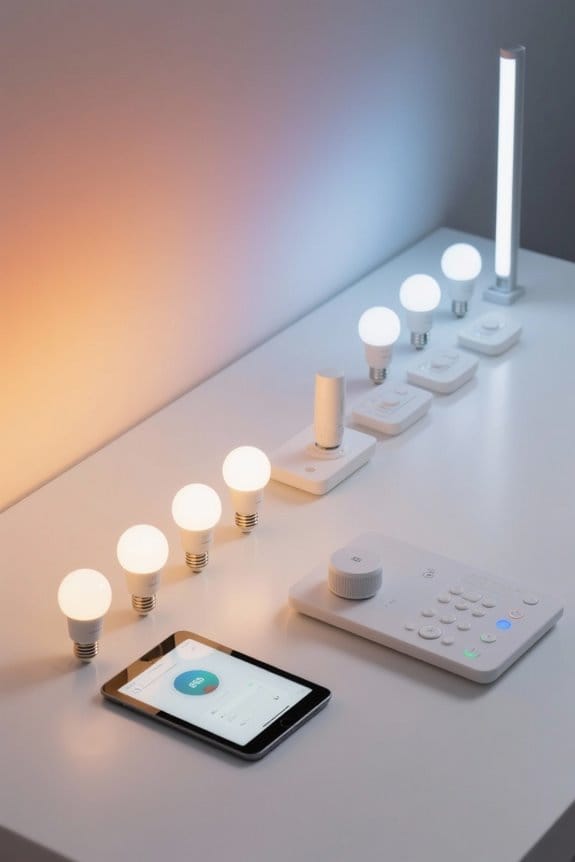
How Sunrise and Sunset Automation Works in Smart Lights

Sunrise and sunset automation in smart lights relies on geolocation and astronomical calculations to activate lighting within ±30 minutes of local dawn or dusk, optimizing energy consumption and enhancing user convenience through precise scheduling. Adjustments using positive offsets of 5 to 30 minutes accommodate environmental lighting variations, while weatherproof outdoor fixtures guarantee reliability. Integration with virtual switches enables immediate control and synchronization, addressing cloud-based latency issues. Exploring further reveals technical setups, offset calibration, and best practices for consistent automation performance.
Key Takeaways
- Smart lights use geolocation and astronomical algorithms to activate or deactivate based on local sunrise and sunset times with ±30-minute accuracy.
- Automation schedules can include positive offsets, adjusting lighting times by 5 to 30 minutes to compensate for environmental light variability.
- Virtual switches and functions like `getSunriseAndSunset()` enhance precise control and synchronization with natural light cycles.
- Weatherproof outdoor smart lights ensure reliable operation in various conditions, typically featuring IP65 or higher ratings.
- Combining smart lighting with energy monitoring and app control optimizes energy efficiency, convenience, and home security.
Understanding Sunrise and Sunset Automation
Sunrise and sunset automation in smart lighting systems employs geolocation and astronomical algorithms to determine exact local times for dawn and dusk, enabling lights to activate or deactivate in sync with natural light patterns that vary by several minutes daily. This smart lighting automation uses location-specific data to calculate precise sunrise and sunset moments, often allowing users to set offsets of up to ±30 minutes, consequently customizing when lights turn on or off relative to these events. By aligning lighting schedules with the fluctuating daylight, the system minimizes energy consumption caused by unnecessary illumination during daylight hours. Furthermore, the automation enhances energy efficiency and user convenience by gradually adapting to seasonal daylight changes, ensuring that residential and commercial environments remain ideally lit while reducing electricity waste over time without manual intervention. The use of IP65+ weatherproofing in outdoor smart lighting systems ensures durability and reliable performance under various environmental conditions, complementing the automation features by maintaining consistent operation throughout seasonal changes.
Technical Setup for Automated Lighting
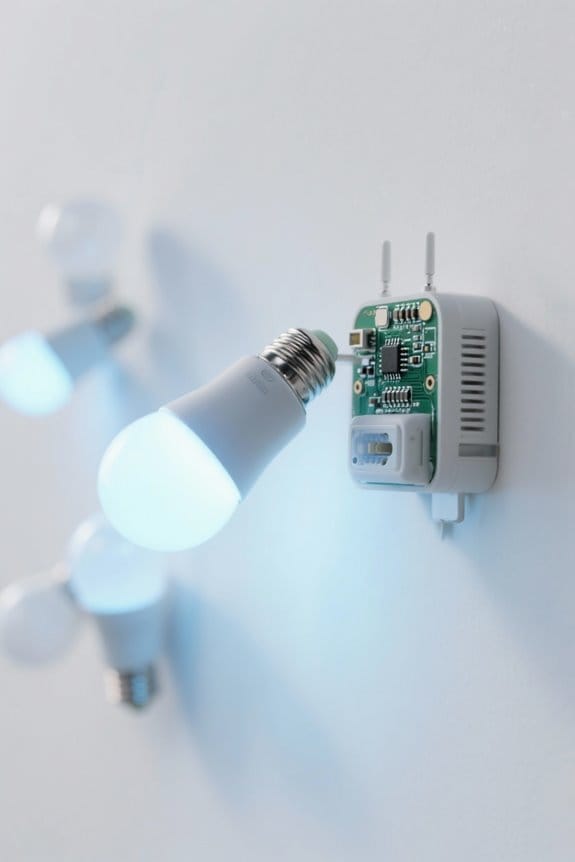
Implementing automated lighting that corresponds precisely with natural light variations involves utilizing specialized programming functions such as `getSunriseAndSunset()`, which calculates exact times based on geolocation and astronomical formulas accurate to the nearest minute. Smart lights leverage these calculations to trigger lighting automations that align with local sunrise and sunset times, enabling lights to activate or deactivate automatically. A smart lighting routine typically involves creating separate scenes for turning lights on at sunrise and off at sunset, simplifying management and enhancing energy efficiency. Additionally, integrating local virtual switches improves system responsiveness by allowing more immediate control over lighting automations. These functionalities collectively guarantee that smart lighting offers convenience, energy savings, and synchronization with natural light cycles, optimizing user environments with minimal manual intervention. Outdoor-rated smart plugs with an IP64 weather resistance rating further enhance the reliability of smart lighting setups by ensuring safe and effective operation in various environmental conditions.
Adjusting Light Scheduling With Offsets
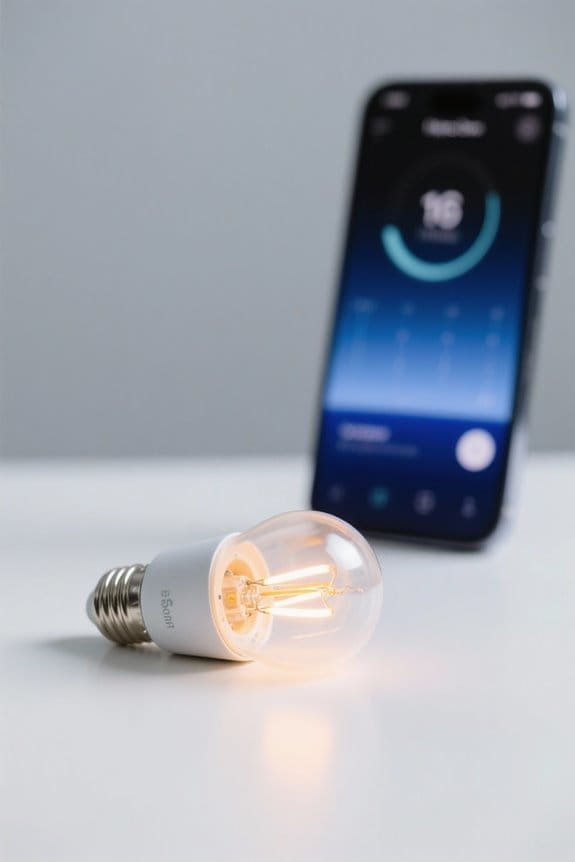
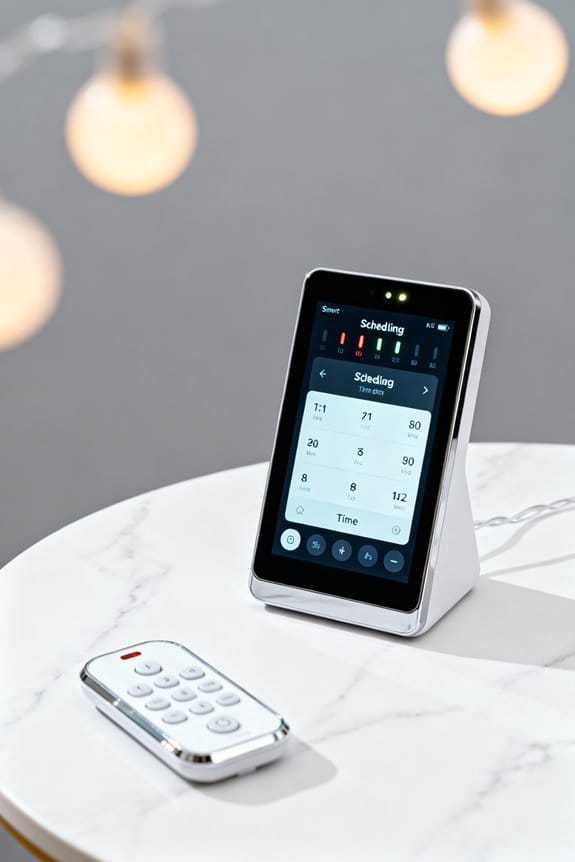
Although smart lighting systems frequently rely on precise astronomical calculations for automation, users often enhance their schedules by applying positive offsets—typically ranging from 5 to 30 minutes before sunrise or after sunset—to account for environmental variability such as cloud cover or urban shading, which may reduce natural light intensity. These offsets allow lights to activate or deactivate slightly earlier or later than astronomical times, ensuring consistent indoor illumination despite unpredictable external conditions. Implementing offsets within scheduling provides a customizable buffer that improves user comfort and energy efficiency. Regular testing and adjustment of these offsets is recommended to maintain peak performance as daylight duration shifts seasonally. While configuring negative offsets can be complex, combining automation features like virtual switches enables more nuanced control over sunset and sunrise-related lighting behaviors, enhancing overall scheduling flexibility. Incorporating energy monitoring smart plugs can further optimize energy consumption by providing users with detailed insights into their lighting usage patterns.
Addressing Challenges in Smart Lighting Automation
When integrating smart lighting systems, users often encounter challenges related to the inconsistent performance of cloud-based automations, particularly when Wi-Fi outlets operate on fixed schedules rather than adjusting dynamically to daily sunset and sunrise times; this limitation contrasts with Z-Wave switches, which typically update their timings automatically based on accurate astronomical data. Such discrepancies necessitate manual scheduling adjustments, often twice annually, to align with seasonal daylight changes. To mitigate these issues, combining Wi-Fi outlets into routines alongside Z-Wave devices can partially synchronize automation, enhancing consistency. Additionally, implementing distinct routines for lighting activation at sunset and deactivation at sunrise improves reliability. However, many systems lack built-in offset features, requiring precise user intervention to optimize scheduling accuracy and guarantee automation adapts effectively to evolving environmental conditions. For outdoor task lights, an IP66 rating ensures protection against severe weather conditions, which is crucial for maintaining the longevity and reliability of lighting systems in varying climates.
Enhancing Automation With Virtual Switches
Because fixed schedule automations often fail to adapt accurately to shifting sunrise and sunset times, virtual switches provide an essential solution by acting as logical triggers that can be precisely programmed to operate based on real-time astronomical data; these virtual devices, when integrated with Z-Wave or ZigBee smart lighting systems, enable local execution of routines, greatly reducing cloud dependency and associated latency. By utilizing virtual switches, smart lighting automation can dynamically adjust to the time of day with custom offsets accommodating seasonal daylight variations, thereby improving responsiveness. This approach streamlines multiple automations, allowing lights to turn on at sunrise and off at sunset with minimal delay. Virtual switches consequently enhance system reliability by bypassing fixed schedules, ensuring consistent, adaptive lighting control tailored to fluctuating natural light levels. To ensure durability and stability of outdoor installations, it’s important to select ground stakes that are corrosion-resistant and suitable for the terrain.
Best Practices for Reliable Lighting Automation
Since precise synchronization of smart lighting with natural light cycles depends heavily on accurate astronomical data, incorporating functions like getSunriseAndSunset) guarantees timely retrieval of sunrise and sunset times tailored to the user’s geographical coordinates; in addition, embedding a 15-minute buffer period accounts for variability in ambient lighting caused by weather fluctuations such as cloud cover or fog, thereby preventing premature activation or deactivation of lights. Best practices include regularly testing and adjusting automation schedules to accommodate seasonal daylight shifts, ensuring consistent performance over extended periods of time. Integrating multiple smart devices—such as Wi-Fi outlets and Z-Wave switches—into unified routines optimizes timing accuracy and simplifies management. Furthermore, prioritizing local automation over cloud-based solutions enhances system responsiveness and reliability, ultimately providing dependable lighting control aligned with natural daily cycles. When selecting daylight sensors for automation, it is crucial to prioritize IP65+ weatherproofing and 120-277V compatibility to ensure durability and reliable performance in various environmental conditions.
Frequently Asked Questions
How Does the Sunrise and Sunset Work?
Sunrise and sunset automation adjusts smart home lighting based on precise sun times, accounting for daylight savings and circadian rhythms. Light sensors enhance this by adapting brightness, promoting natural sleep cycles and energy-efficient illumination throughout the day.
Can Smart Bulbs Simulate Sunrise?
Smart bulb features enable simulated sunrise by adjusting light color temperature gradually. User customization options allow personalized brightness and timing, while sensory responsiveness enhances adaptation to environmental changes, promoting a natural, gentle wake-up experience tailored to individual preferences.
How Do Automated Lights Work?
Automated lights, like diligent gardeners tending a clock, follow smart lighting technology to nurture spaces. Using automated light schedules via user-friendly apps, they adapt seamlessly, offering energy efficiency benefits while responding intuitively to daily rhythms and user needs.
Can Alexa Turn Lights on at Sunset?
Alexa can turn lights on at sunset through automation settings within smart home apps. Integrated with smart ecosystems, it enables voice commands to control lighting, adjusting schedules automatically to align with sunset times for seamless user convenience.