As an Amazon Associate, we earn from qualifying purchases. Some links on this site are affiliate links at no extra cost to you. Our recommendations are based on thorough research and editorial judgment.

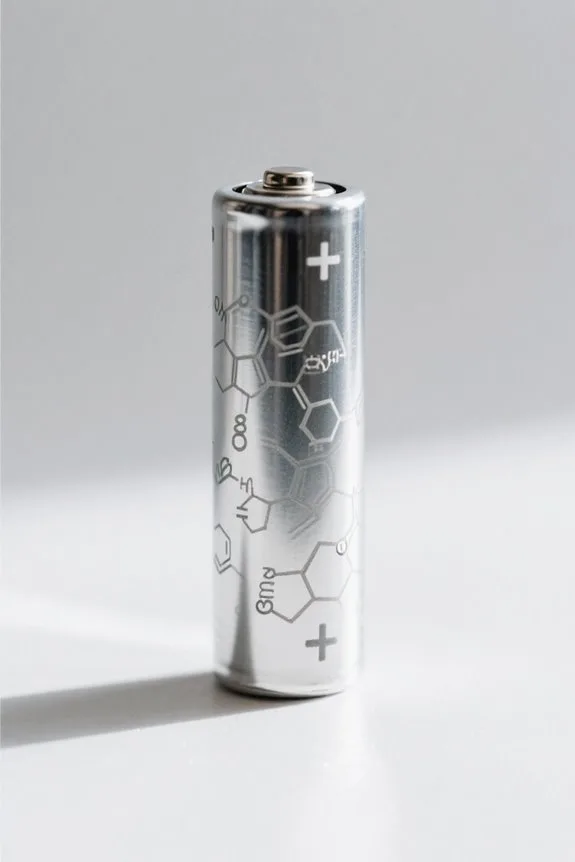
Understanding the Chemistry Behind Alkaline Batteries

Alkaline batteries rely on zinc anodes undergoing oxidation, releasing electrons via the half-reaction Zn → Zn²⁺ + 2e⁻, while manganese dioxide cathodes reduce through MnO₂ + H₂O + 2e⁻ → Mn(OH)₂, facilitated by a potassium hydroxide electrolyte that maintains ionic conductivity. These batteries achieve 100-150 Wh/kg, nearly doubling zinc-carbon cells, with a stable 1.5 V output, making them efficient for consumer devices. Their chemistry optimizes energy density and shelf life, while environmental protocols guide proper disposal to minimize impact. Further exploration reveals deeper chemical intricacies and performance nuances.
Key Takeaways
- Alkaline batteries use zinc as the anode, manganese dioxide as the cathode, and potassium hydroxide as the alkaline electrolyte.
- Zinc oxidizes to release electrons, following the half-reaction: \( \mathrm{Zn \rightarrow Zn^{2+} + 2e^-} \), powering external circuits.
- Manganese dioxide reduces by accepting electrons and water, forming manganese hydroxide in the cathode half-reaction.
- Potassium hydroxide electrolyte enables efficient ion flow, enhancing battery performance and maintaining steady 1.5-volt output.
- The overall discharge reaction is \( \mathrm{Zn + 2MnO_2 \rightarrow ZnO + Mn_2O_3} \), generating electrical energy during use.
Basic Components of Alkaline Batteries
Although often overlooked in everyday use, the basic components of alkaline batteries consist of three chemically distinct parts—zinc serving as the anode, manganese dioxide functioning as the cathode, and potassium hydroxide acting as the alkaline electrolyte—which together facilitate a controlled flow of electrons through redox reactions; specifically, zinc undergoes oxidation, releasing zinc ions and electrons according to the half-reaction $ce{Zn -> Zn^{2+} + 2e^-}$, while manganese dioxide accepts these electrons and combines with water to form manganese hydroxide in the reduction half-reaction $ce{MnO2 + H2O + 2e^- -> Mn(OH)2}$, a process crucial for energy generation reflected in the overall discharge reaction $ce{Zn + 2MnO2 -> ZnO + Mn2O3}$, where potassium hydroxide provides the necessary ionic conductivity, ensuring efficient electrode interaction and consistent voltage output under standard testing conditions. The electrolyte helps maintain ion flow, critical for balancing charge and sustaining battery performance throughout its lifespan. When evaluating performance in extreme temperatures, it is crucial to understand that different battery chemistries can significantly impact how well the batteries operate in harsh environmental conditions.
Recommended Products
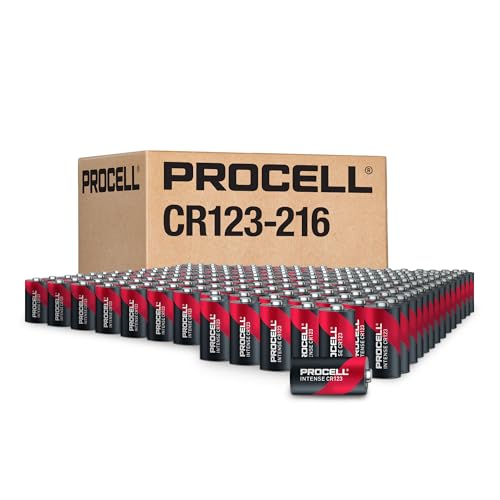
PROCELL HIGH POWER LITHIUM 123 3-volt industrial batteries deliver reliable and safe power in professional devices with high rate discharge under intermittent or continuous drain, such as security equipment

Voltage: 3.6, Amperage: 19mAh, Chemistry: Li-SOCl2

Voltage: 3.6, Amperage: 0.4mAh, Chemistry: Li-SOCl2
The Role of Zinc in Battery Function
A significant portion of an alkaline battery’s capability to generate reliable electric current stems from zinc, which serves as the anode and undergoes a pivotal oxidation process during discharge. The zinc anode releases electrons through the chemical reaction represented by Zn → Zn²⁺ + 2e⁻, providing the essential flow of electrons to the external circuit. As these electrons travel, zinc ions form and gradually convert to zinc oxide (ZnO), a key byproduct that influences battery stability. Utilizing powdered zinc increases the anode’s surface area, enhancing chemical reactions and improving energy density. Additionally, zinc oxide helps reduce anode corrosion, slowing degradation and extending battery life. This orchestration of zinc’s oxidation and electron flow underpins the efficient electrical output of alkaline batteries. Self-discharge rates are crucial to consider when evaluating battery performance, as they indicate how quickly a battery loses stored energy while idle.
Manganese Dioxide as the Cathode Material
Manganese dioxide (MnO₂) functions as the cathode material in alkaline batteries, where it plays an essential role in the electrochemical reactions that enable energy storage and release during discharge cycles. During discharge, manganese dioxide undergoes reduction by reacting with water and electrons, forming manganese hydroxide (Mn(OH)₂), as represented by the equation: MnO₂ + H₂O + 2e⁻ → Mn(OH)₂. This reaction facilitates electron flow through the external circuit, contributing directly to battery operation. Utilization of synthetic manganese dioxide enhances the energy density of alkaline batteries, yielding improved performance compared to other cathode materials, with notable increases in power output and shelf life reliability. Its stable chemical properties guarantee consistent cycling efficiency, making manganese dioxide an indispensable, high-performing cathode material in modern alkaline battery design. With leak-resistant construction being a key consideration in battery design, manganese dioxide’s stability ensures it plays a crucial role in maintaining battery integrity and preventing potential leaks.
How Potassium Hydroxide Electrolyte Works
Potassium hydroxide (KOH) functions as the primary electrolyte in alkaline batteries, enabling the efficient movement of hydroxide ions (OH⁻) between the zinc anode and the manganese dioxide cathode during discharge cycles, which is essential for maintaining a continuous electrochemical reaction. The ionic conductivity of potassium hydroxide facilitates rapid ion transport, directly enhancing alkaline batteries’ energy density by optimizing the rate of electrochemical reactions. Additionally, potassium hydroxide minimizes zinc anode corrosion, thereby extending battery life and ensuring consistent performance under varying loads. Unlike acidic electrolytes, KOH provides chemical stability and reduces risks related to leakage or environmental toxicity. Laboratory testing demonstrates that KOH-based electrolytes sustain stable ionic conductivities around 0.5 S/cm at room temperature, which supports higher discharge currents and improved overall efficiency in alkaline batteries compared to alternative electrolytic solutions. High-quality batteries, such as those from proven brands like Tenergy, ensure consistent performance and longevity due to their anti-leak design and stable voltage delivery.
Recommended Products

90+% Pure, Imported Material


Potassium Hydroxide Flakes – Strong alkaline compound suitable for laboratory, industrial, and research applications.
Chemical Reactions Occurring at the Anode
Although the zinc anode constitutes only one component of the alkaline battery, the chemical reactions occurring at this site are critical for the device’s overall functionality, as zinc metal undergoes oxidation by releasing two electrons per atom and converting into zinc ions; this half-reaction, represented as $ce{Zn -> Zn^{2+} + 2e^-}$, initiates the flow of electrical current essential for powering external circuits. During oxidation, zinc reacts with hydroxide ions in the electrolyte, forming zinc oxide and water, which sustains the anode’s activity. The powdered zinc’s increased surface area enhances this reaction efficiency, facilitating a steady electrons flow. As the battery discharges, oxidation progressively consumes zinc, reducing reactants and causing voltage decline, thereby limiting battery life and performance. This process governs the capacity and reliability of alkaline batteries in various applications. In certain cases, high-capacity NiMH AA batteries can be used as an alternative to alkaline batteries in devices, offering extended runtime and enhanced performance under high-drain conditions.
Reduction Reactions at the Cathode
The cathode in an alkaline battery serves as the site where reduction reactions occur, playing a vital role in sustaining the battery’s electrical output by consuming electrons and chemical species within the electrolyte; specifically, manganese dioxide (MnO₂) reacts with water molecules and incoming electrons, a process represented by the equation (ce{MnO2 + H2O + 2e^- -> Mn(OH)2}). This reaction produces manganese hydroxide (Mn(OH)₂), which is crucial for completing the electrochemical cycle. Electrons consumed at the cathode originate from the external circuit, enabling continuous charge balance by utilizing hydroxide ions from the potassium hydroxide electrolyte. The efficiency of these reduction reactions directly impacts the battery’s voltage—approximately 0.15 volts contributed by this cathode process—and influences overall battery longevity, underscoring the significance of manganese dioxide as an active cathode material in alkaline cells. High-quality alkaline batteries such as Duracell and Energizer MAX are known for their reliability in providing consistent power to low-to-moderate drain devices.
Electron Flow and Current Generation Process
Electron flow in an alkaline battery originates at the anode, where zinc atoms undergo oxidation according to the half-reaction (ce{Zn -> Zn^{2+} + 2e^-}), releasing electrons that then travel through an external circuit, thereby generating usable electrical current. These electrons flow toward the cathode, where manganese dioxide undergoes reduction by consuming electrons, following the half-reaction (ce{MnO2 + H2O + 2e^- -> Mn(OH)2}). This flow completes the circuit and sustains current generation. Meanwhile, chemical reactions inside the battery create charge imbalances that cause ions to move through the potassium hydroxide ((ce{KOH})) electrolyte, maintaining electrical neutrality and supporting continuous electron flow. Together, these coordinated electron flow, ion movement, and chemical reactions produce a stable voltage output near 1.5 volts, reflecting efficient energy conversion within alkaline cells. Smart plugs, like the Kasa Outdoor Smart Plug, utilize 2.4 GHz WiFi for operation and can manage outdoor appliances, enhancing the convenience of power management in a smart home setting.
Energy Density and Performance Benefits
Energy density stands as a critical metric distinguishing alkaline batteries from zinc-carbon counterparts, with alkaline cells typically delivering around 100 to 150 watt-hours per kilogram (Wh/kg), nearly doubling the energy capacity of standard zinc-carbon batteries that average 50 to 80 Wh/kg under comparable discharge conditions. This enhanced energy density results from the efficient use of powdered zinc anodes and synthetic manganese dioxide cathodes, which sustain consistent voltage output near 1.5 volts during discharge. Additionally, the employment of potassium hydroxide electrolyte contributes to a longer shelf life, allowing alkaline batteries to retain charge for extended periods without significant degradation. These factors combine to provide superior performance, particularly in devices requiring steady continuous power or intermittent bursts, making the alkaline battery a preferred choice for higher energy demands and reliability. When organizing batteries, selecting the proper AA battery holder can enhance safety and efficiency, ensuring reliable power delivery to devices.
Recommended Products

Type of Camera - Integral motor autofocus 35mm SLR (Single Lens Reflex) camera with electronically controlled focal-plane shutter.

A MODERN WINDER - Multi-purpose, this watch winder not only maintains the mechanism in automatic timepieces, it also stores quartz watches in style. Includes two winding modules, a latch closure, glass cover, and additional storage.

🔥 NATURAL GAS CONVERTIBLE GRILL: Size: 42.34" W x 26.46" D x 20.24" H. This 30-inch 5-burner propane grill includes a free LPG regulator and hose. Easily convert to natural gas with a conversion kit (sold separately) for cost savings and convenience. Enjoy the flexibility to choose your fuel type!
Comparison With Other Common Battery Types
In comparing alkaline batteries with other common battery types, several key distinctions emerge in lifespan, energy density, voltage stability, and environmental impact, which collectively determine their suitability for various applications. Alkaline batteries exhibit a higher energy density and longer lifespan than traditional zinc-carbon cells, providing a consistent 1.5-volt output that prevents sudden power drops. However, unlike rechargeable lithium-ion batteries, which offer superior cycle life and cost-efficiency in high-drain devices, alkaline batteries are non-rechargeable, contributing to increased waste. Despite being less toxic than some alternatives, alkaline batteries still have an environmental impact due to landfill accumulation, underscoring the importance of proper recycling. Consequently, selection hinges on balancing performance requirements against cost and environmental considerations, making alkaline batteries a reliable, but not always ideal, choice. High-capacity NiMH batteries, for example, are recommended for high-drain devices due to their better runtime and rechargeability, offering an alternative to alkalines in certain applications.
Recommended Products

INSPIRED BY BRITISH MOTORCARS - Take your timepieces for a ride in the Roadster. This winder includes two winding modules, three-piece watch storage, a travel case, polished wood, chrome hardware & soft leather—the perfect backdrop for any watch.
【3500mAh LONG-LASTING DURABLE】 NINMAX new upgraded 3500mAh lithium AA batteries high-performance constant output, using high-density materials to accumulate amazing energy.

HOME SAFE: Protect your valuables with this personal safe, complete with soft interior lining and removable shelving; use as a laptop safe, jewelry safe and more
Environmental Impact and Proper Disposal Methods
One of several pressing environmental concerns surrounding alkaline batteries is the potential for metal leaching, particularly zinc, which can infiltrate soil and water sources through improper disposal, posing risks to local ecosystems and bioavailability of heavy metals. Despite being less toxic compared to other battery types, alkaline batteries contribute substantially to landfill volume, exacerbating environmental impact through metal accumulation and waste persistence. To mitigate these effects, community recycling programs are essential, enabling recovery of zinc and manganese, reducing raw material extraction, and limiting landfill deposits. Retailers increasingly participate by offering battery collection services, promoting sustainable disposal. Consumers must adhere to local regulations governing battery disposal methods, ensuring compliance with environmental protection standards, and supporting programs that prevent contamination and optimize resource reuse, thereby minimizing both immediate and long-term ecological consequences. Proper storage conditions for batteries, such as keeping them in a cool, dry place, are essential to prevent leaks and deterioration, thus reducing the potential for environmental harm.
Recommended Products

Powerful Function: The TT685II-N is featured GN60(m ISO 100,@105mm), 22 steps of power output(1/1 to 1/128), Approx. 0.1-2.6s recycle time, 330 times full power flash(using 2500mAh Ni-MH batteries), 20-200mm auto/manual zooming, external power port brings more posibilities

Advanced Wireless Control: The Godox TT600 Speedlite boasts a built-in 2.4G wireless system with all-in-one functionality and an impressive 100-meter transmission range. It seamlessly integrates with Godox TT685IIC TT685IIN flash, X2T-C/X2T-N trigger, and other compatible wireless control device

Frequently Asked Questions
How Are Alkaline Batteries Manufactured on an Industrial Scale?
Industrial alkaline battery manufacturing employs automated production processes integrating battery assembly techniques such as electrode coating and winding. Material sourcing challenges necessitate stringent quality control to guarantee consistent zinc, manganese dioxide, and electrolyte supplies for mass production.
What Causes Alkaline Batteries to Leak or Corrode Over Time?
Ironically, alkaline batteries often leak because they keep trying to be heroes beyond their limits. Leak causes include electrolyte breakdown, leading to corrosion. Proper corrosion prevention extends battery lifespan, yet many expect endless power regardless, inviting leakage and premature failure.
Can Alkaline Batteries Be Recharged Safely at Home?
Alkaline batteries are generally not designed to be recharged safely at home. Rechargeable alternatives like NiMH exist. DIY methods pose risks; safety precautions must be strictly followed to avoid leakage, damage, or potential hazards.
How Do Temperature Changes Affect Alkaline Battery Performance?
Temperature effects greatly influence alkaline battery performance; higher temperatures increase capacity but accelerate degradation, while low temperatures reduce output. Performance optimization requires maintaining moderate conditions, and usage recommendations advise avoiding extreme heat or cold to extend battery life.
What Innovations Are Improving Alkaline Battery Technology Today?
Innovations enhancing alkaline battery technology focus on extending battery lifespan, increasing energy density, and developing eco-friendly alternatives through safer materials and improved recycling processes, ultimately reducing environmental impact while maintaining performance and cost-efficiency.